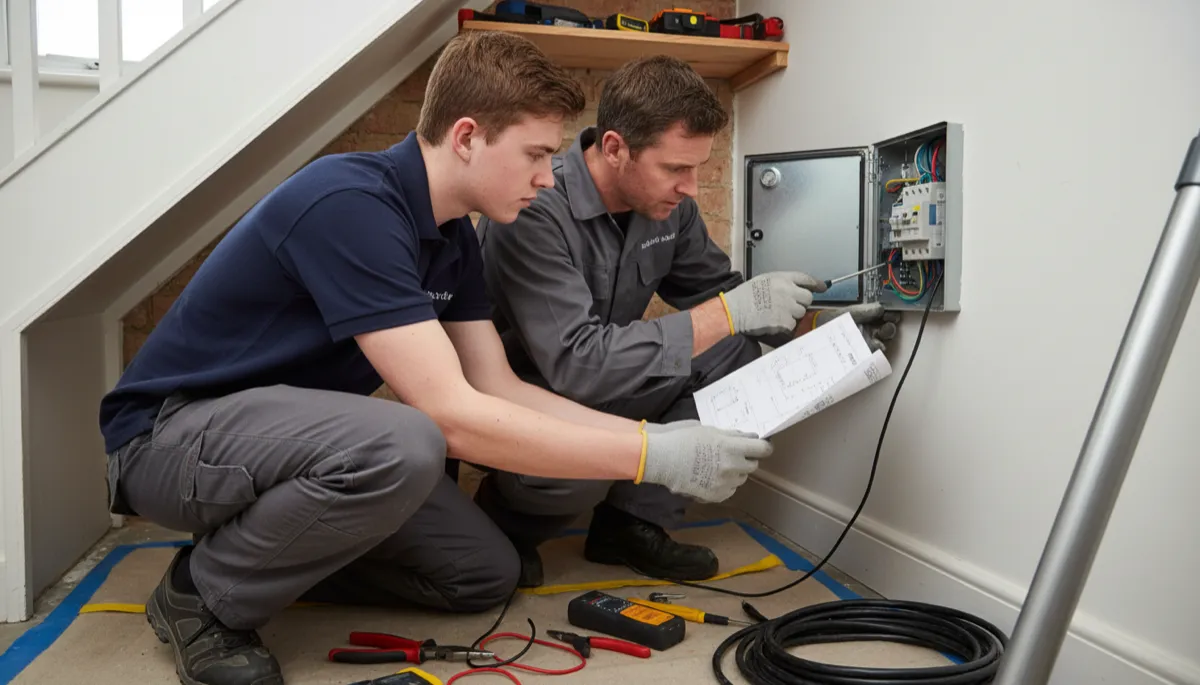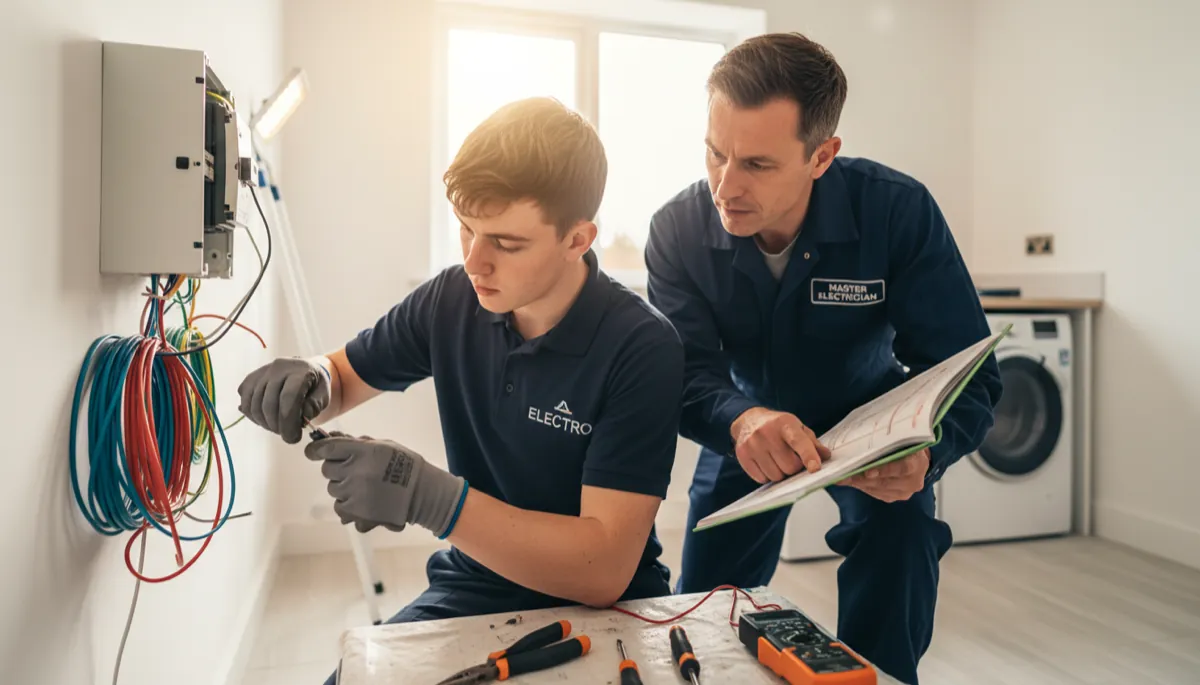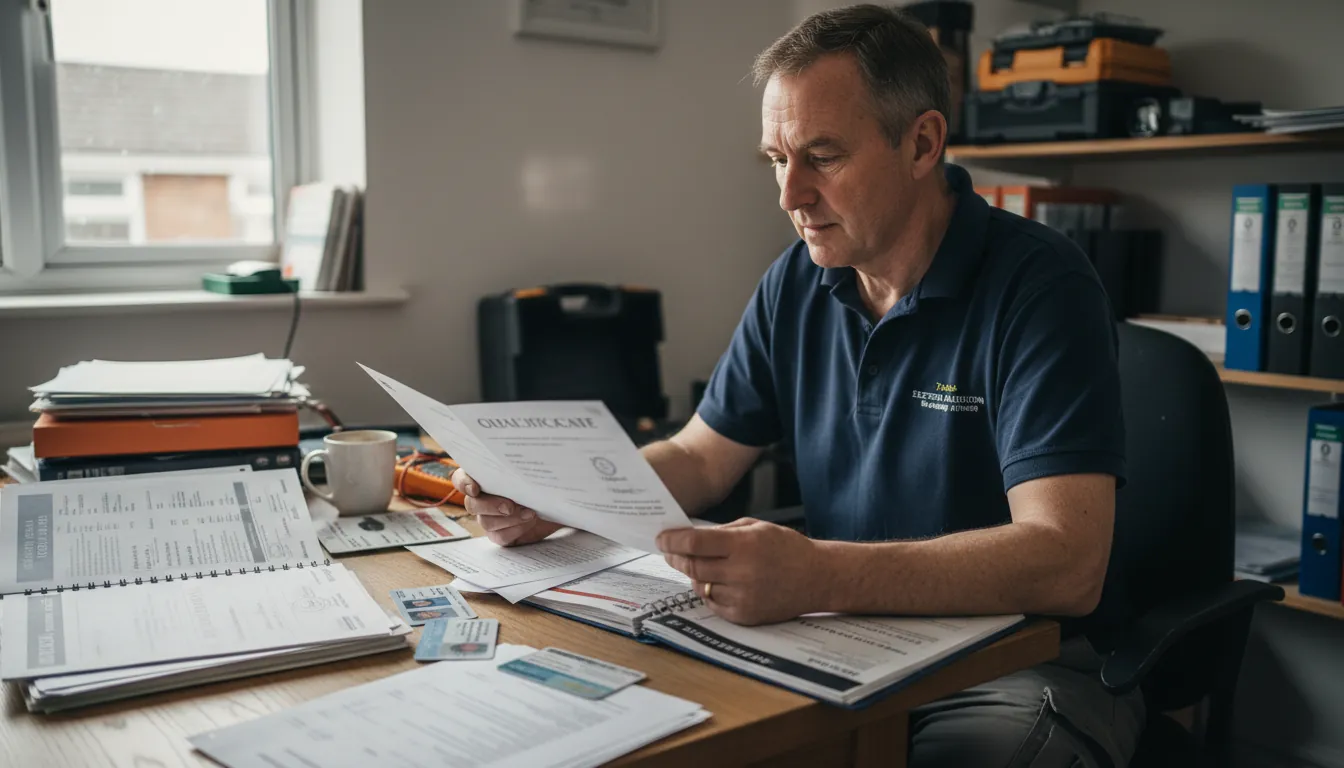
Starting an electrical business in the UK is one of the more straightforward moves a qualified electrician can make. Demand for domestic and commercial electrical work is consistent, the barriers to entry are lower than most trades, and a well-run sole trader operation can clear £45,000–£60,000 a year once the diary fills up. But there’s a checklist of things to get right before you take on your first job as a business owner rather than an employee.
This guide covers each step in order — from confirming your qualifications are in place to getting found online and winning your first customers.
Key Takeaways
- You need a Level 3 NVQ in Electrical Installation and an ECS Gold Card before going solo — most lenders, insurers, and commercial clients expect these as a baseline
- Registering as a sole trader with HMRC is free and takes around 10 minutes online — do it within three months of starting to trade
- Public liability insurance is non-negotiable before taking your first job; most domestic customers accept £1–2 million cover, but some letting agents and local authorities require £5 million
- Joining NICEIC, NAPIT, or another Competent Person Scheme lets you self-certify domestic electrical work under Part P — without it, you must apply for building regulations approval on every notifiable job
- A professional website and an optimised Google Business Profile are among the fastest routes to steady enquiries — most electrical work is found online before a call is made
- Setting clear day rates and minimum call-out charges from the start protects your margins and sets expectations with customers
Step 1: Confirm Your Qualifications Are in Place
You can’t trade legally as an electrician without the right qualifications. The UK industry benchmark is a Level 3 NVQ in Electrical Installation (or an equivalent City & Guilds 2357). If you’re already working as an employed electrician and have these in place, you’re ready to go. If you’re partway through training, finish before going solo — insurance becomes difficult without them and commercial clients often won’t book you.
The ECS Gold Card is the standard site access credential across the UK construction industry. Issued by the Electrotechnical Certification Scheme, it confirms you hold a recognised electrical qualification. Annual renewal costs around £30–£35. Without it, you’ll be turned away from most commercial and new-build sites.
If you’re working on domestic properties and installing anything that falls under Part P of the Building Regulations — consumer units, new circuits, work in kitchens or bathrooms — you need to either register with a Competent Person Scheme or apply for building regulations approval through your local council on each notifiable job. The approval route adds cost and delay. The scheme route is simpler.
For the full qualification breakdown, see our guide: Electrician Qualifications UK.
Step 2: Join a Competent Person Scheme
This step is specific to domestic electrical work and catches a lot of electricians out when they go self-employed. Under Part P, certain electrical installations in homes are notifiable works — meaning someone with authority needs to certify them. As an employed electrician, your employer’s registration covered this. On your own, you need your own registration.
The main schemes for electricians:
| Scheme | Annual Fee (approx.) | What It Covers |
|---|---|---|
| NICEIC (Domestic Installer) | £570–£650 | Part P self-certification for domestic electrical work |
| NAPIT | £450–£550 | Part P, also covers gas and other disciplines |
| ELECSA | £420–£500 | Part P self-certification |
| SELECT (Scotland only) | £350–£450 | Scottish Building Regulations equivalent |
The assessment to join involves an inspection of your work and a competency check. Allow 4–8 weeks from application to approval. Many electricians join NICEIC because of the brand recognition — customers recognise the logo and it shortens the trust gap on quotes.
Step 3: Register Your Business
Most electricians starting out register as sole traders — it’s free, straightforward, and means you keep all profits after tax. A limited company makes sense later on (typically once you’re earning above £40,000–£50,000/year) because of the tax advantages, but it brings more admin: corporation tax, confirmation statements, a Companies House listing.
| Structure | Setup Cost | Annual Filing | Best For |
|---|---|---|---|
| Sole trader | Free | Self-assessment tax return | Starting out, lower turnover |
| Limited company | £12 via Companies House | Corporation tax + confirmation statement | Higher earners, commercial contracts |
| Partnership | Free | Shared self-assessment | Two electricians starting together |
To register as a sole trader, go to gov.uk/register-for-self-assessment and complete the online form. You’ll receive a Unique Taxpayer Reference (UTR) within 10 working days. Register as soon as you start trading — HMRC’s deadline is 5 October in the tax year following the year you started trading, but earlier registration avoids fines and confusion.
You’ll file a self-assessment return each January covering the previous tax year. Keep receipts for everything: tools, van costs, insurance, materials, training, accountant fees — all are legitimate expenses that reduce your taxable income.
Step 4: Get Your Insurance Sorted
Insurance needs to be in place before you take your first job. Not optional — some customers will ask for proof before letting you start work.
The minimum policies for a self-employed electrician:
| Cover | What It Pays For | Typical Annual Cost |
|---|---|---|
| Public liability insurance | Injury to someone or damage to their property caused by your work | £150–£300/year |
| Tools and equipment cover | Stolen or damaged tools — van break-ins are common | £100–£200/year |
| Personal accident / income protection | Replaces income if you’re injured and can’t work | £300–£600/year |
| Professional indemnity | Covers claims arising from design or advice errors | £200–£400/year |
For most domestic work, £2 million public liability cover is standard. Housing associations, local councils, and some letting agents require £5 million — check before quoting. If you’ll be working on commercial sites, £5 million is the safer minimum.
Specialist trade insurers typically offer better rates than general business insurers. Providers like PolicyBee, Tradesman Saver, and Simply Business all offer online quotes. Get at least three before committing.
For a detailed breakdown, see: Public Liability Insurance for Electricians.
Step 5: Get Your Van and Tools Set Up
Your van is your most visible marketing asset. A van with a clean livery parked outside a customer’s house generates enquiries from neighbours — it’s passive advertising that runs 24/7. Budget for it properly.
Van costs:
- Used van (3–5 years old, 50,000–80,000 miles): £5,000–£12,000
- New van (Ford Transit Connect, Vauxhall Combo, Volkswagen Caddy): £20,000–£28,000
- Van insurance (trade plates, tools in vehicle cover): typically £1,200–£2,000/year
Finance is common — monthly payments of £250–£450 for a new van are manageable against a full diary. A vinyl wrap with your business name, phone number, and trade accreditation logos costs £400–£800 from most sign-writing companies and is money well spent.
Basic starter tool kit (used / mixed new): Expect to spend £3,000–£8,000 before you take your first job as a sole trader. A multifunction tester and loop impedance tester alone run £500–£1,000 new. Buy quality — cheap test equipment fails at the worst moments and can result in inaccurate certification.
Step 6: Set Your Day Rate and Minimum Call-Out Charge
Pricing is where new self-employed electricians consistently undercharge. You’re no longer just covering a wage — you’re covering van running costs, insurance, equipment, public liability, downtime between jobs, and unpaid admin time.
According to industry data, the average UK electrician day rate in 2026 runs £200–£300/day for domestic work, with rates higher in London (£280–£400/day) and Scotland (£180–£260/day). For a full breakdown of typical job prices:
| Job | Typical Price Range (UK, 2026) |
|---|---|
| Consumer unit replacement | £500–£1,500 |
| Full rewire (3-bed house) | £3,000–£6,500 |
| EV charger installation | £800–£1,200 |
| EICR (landlord inspection) | £150–£300 per property |
| New circuit (e.g. shower, cooker) | £200–£400 |
| Fault finding and repair | £75–£120/hour |
Set a minimum call-out charge — typically £60–£100 — to cover the time and travel cost of attending small jobs. Without one, you’ll spend half the week driving across town for jobs that barely cover fuel.
See our full guide on Electrician Hourly Rates UK for a detailed breakdown.
Step 7: Set Up Your Online Presence
Most new electrical enquiries in 2026 start with a Google search. If you’re not showing up when someone types “electrician near me” or “EICR [your town]”, those jobs go to a competitor who is.
The two non-negotiables:
1. Google Business Profile (free)
Claim and verify your business at business.google.com. Fill in every field: services, areas covered, hours, photos of your work and van, NICEIC registration number. Ask your first satisfied customers to leave a Google review — even three or four genuine reviews push you above competitors with none.
2. A professional website A website with your name, trade, location, services, accreditations, and a phone number is the baseline. It’s where customers check you’re legitimate before calling. It also lets you show up in Google results for specific searches beyond your business name.
Services like Digital Tradies build professional websites for electricians from £49/month — no upfront cost, live in three days. You get a site built around your trade, hosted and maintained, with your accreditation logos, service list, and contact details set up properly from the start.
Without a website, you’re relying on word of mouth alone — which is fine for a while, but puts a ceiling on growth.
For more on the digital side, see: Web Design for Electricians and How to Get More Electrical Work.
Step 8: Get Your First Customers
The first few months are about generating initial momentum. You probably won’t have reviews or a full portfolio yet — that’s fine. Focus on:
Word of mouth from your existing network: Tell everyone you know you’ve gone self-employed. Former colleagues, friends, family, neighbours. Your first three or four jobs will almost certainly come through people who already know you.
Local Facebook groups: Most towns have a “Recommend a Tradesperson” or local community group. Post once introducing yourself. Respond to any requests for electrician recommendations — be quick, polite, and include your qualifications and area covered.
Lead generation platforms: Checkatrade, Rated People, and TrustATrader all send job leads directly to you. There are subscription fees and per-lead costs involved, but they can bridge the gap while your own online presence builds authority. According to BrightLocal’s 2025 Local Consumer Review Survey, 98% of consumers used the internet to find a local business in the past year.
Letting agents and property managers: Landlords in England must have EICRs done every five years under the Electrical Safety Standards in the Private Rented Sector (England) Regulations 2020. One relationship with a letting agent can generate 10–20 inspection jobs per year on a recurring cycle.
New build and refurb builders: Introduce yourself to local builders who need a reliable electrician for first and second fix. Leave your card and availability. One builder who likes your work can keep a diary full with project work for months.
Frequently Asked Questions
Do I need to be NICEIC registered to start an electrical business? Not legally — but without registration with a Competent Person Scheme (NICEIC, NAPIT, or ELECSA), you can’t self-certify domestic electrical work under Part P of the Building Regulations. You’d need to apply for building regulations approval from your local council on every notifiable job, which adds cost and delay. Most sole-trader electricians join a scheme within their first month of trading.
How much does it cost to start an electrical business? Realistically, budget £8,000–£20,000 to start properly. This covers a used van (£5,000–£12,000), essential test equipment (£1,000–£3,000), initial insurance (£400–£700 for year one), Competent Person Scheme membership (£450–£650), and working capital while your diary builds. Starting on the lower end is possible with second-hand tools and a cheaper van.
Can I start an electrical business while employed? Yes — many electricians take on small private jobs in evenings and weekends before going fully self-employed. You’ll need your own insurance and Competent Person Scheme registration regardless. Inform HMRC you have additional self-employment income and declare it on your tax return. Once private work consistently replaces your employed income, transitioning full-time becomes lower risk.
What qualifications do I need to start an electrical business? At minimum: a Level 3 NVQ in Electrical Installation (or City & Guilds 2357 equivalent), an AM2 practical assessment pass, and an ECS Gold Card. For domestic work, you’ll also need membership of a Competent Person Scheme. Without these, you can’t certify your own work, won’t be covered by most insurers, and will struggle to win commercial contracts.
How long does it take to build a full diary? Most electricians who go self-employed report filling their diary within 3–6 months if they’re proactive about getting online, asking for referrals after every job, and building relationships with builders and letting agents. The first month is usually the slowest. Building a Google Business Profile and getting your first five reviews makes a measurable difference to inbound enquiry volume.