To become a qualified electrician in the UK, you need a Level 3 Electrotechnical Qualification (NVQ or apprenticeship standard), the 18th Edition Wiring Regulations (BS 7671), and a pass on the AM2 practical assessment. Together, these lead to an ECS Gold Card — the industry card that proves you’re qualified to work unsupervised on most UK sites.
There are two main routes in: an apprenticeship (the traditional path, usually 4 years) or the adult learner route (theory college course + on-site NVQ, typically 2–3 years). Both reach the same destination.
Key Takeaways
- Five GCSEs (grades 4–9) including Maths and English are typically required for an apprenticeship — according to the National Careers Service
- The core qualifications are City & Guilds 2365 Level 2 and 3, followed by NVQ Level 3 and the AM2 assessment
- Apprenticeship route: 4 years, mostly employer and government-funded, best for school leavers
- Adult learner route: 2–3 years, self-funded (£5,000–£12,000 total), suited to career changers
- The ECS Gold Card is the end goal — required on most construction sites and by most main contractors
The Two Routes Into the Trade
Route 1: Apprenticeship
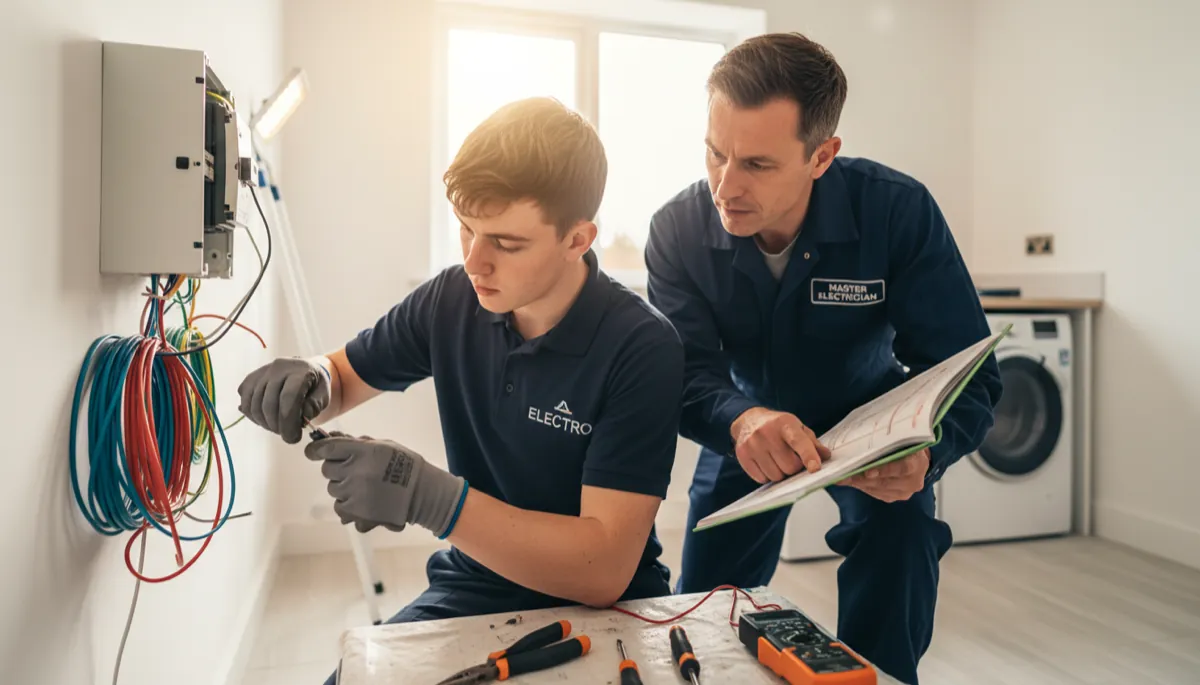
An apprenticeship combines paid employment with structured training. You work for an employer while studying at college one or two days per week.
The electrical apprenticeship is typically the Installation and Maintenance Electrician Level 3 Apprenticeship Standard, which takes around 4 years. According to the UK government’s apprenticeships data, there are over 4,000 electrical apprenticeship starts per year in England alone.
How funding works: Employers with a payroll above £3 million pay into the Apprenticeship Levy, which covers training costs. For smaller employers, the government pays 95% of training costs, and the employer covers the remaining 5%. As an apprentice, you earn a wage throughout — the minimum is the apprenticeship minimum wage (£7.55/hour in 2026), though most electrical employers pay more.
Prerequisites for most apprenticeships:
- 5 GCSEs at grades 4–9 (A*–C) including English, Maths, and ideally Science
- No formal upper age limit, though most apprentices start at 16–19
Route 2: Adult Learner (College + NVQ)
If you’re changing careers or didn’t take an apprenticeship route, you can study the same City & Guilds qualifications at college alongside on-the-job experience. Many adult learners complete Level 2 and Level 3 theory at college while gaining site hours through an employer or by working as a mate to an established electrician.
This route gives you more control over timing, but the costs sit with you rather than an employer.
The Qualification Pathway Step by Step
| Step | Qualification | What It Covers | Typical Cost |
|---|---|---|---|
| 1 | City & Guilds 2365 Level 2 Diploma | Fundamental wiring theory, basic installation, safe isolation | £2,000–£4,000 |
| 2 | City & Guilds 2365 Level 3 Diploma | Three-phase systems, testing basics, commercial work principles | £2,000–£4,000 |
| 3 | NVQ Level 3 in Electrical Installation | Workplace competence — assessed on real jobs by an NVQ assessor | £500–£1,500 |
| 4 | 18th Edition (BS 7671) | Current UK wiring regulations — required before working commercially | £400–£600 |
| 5 | AM2 Assessment | Final practical exam: installation, testing, fault-finding | £350–£500 |
| 6 | ECS Gold Card | Industry card confirming full qualification | £30/year |
Source: Logic4Training qualification cost guide 2025, City & Guilds published course fees.
You can’t skip steps. The AM2 requires your NVQ Level 3 to be complete. The ECS Gold Card requires the AM2 pass, the NVQ, and a current 18th Edition certificate.
Qualification Timeline Comparison
| Route | Total Duration | Cost to You | Best For |
|---|---|---|---|
| Apprenticeship | ~4 years | Minimal (funded) | School leavers, those who find an employer |
| Adult learner | 2–3 years | £5,000–£12,000 | Career changers, self-funders |
| Accelerated adult | 18–24 months (intensive) | £6,000–£15,000 | Those who want to qualify faster |
The adult learner route is shorter in calendar time, but that’s because you can study full-time and stack qualifications back to back. The apprenticeship spreads training over 4 years because you’re working and learning simultaneously.
City & Guilds 2365: The Theory Foundation
City & Guilds is the dominant awarding body in electrical training in the UK. The 2365 Diploma in Electrical Installations runs at two levels:
Level 2 covers the fundamentals: how electricity works, circuit protection, cable types, safe isolation, and basic domestic installation. It’s the starting point for anyone new to the trade.
Level 3 builds on that: three-phase systems, earthing arrangements, advanced testing, and commercial installation principles. You must complete Level 3 before sitting the AM2.
Most colleges offer both levels. Full-time study takes around 12 months per level. Part-time (one or two days per week) takes 18–24 months per level. Some private training providers offer intensive programmes that compress both levels into 9–12 months, though these tend to cover theory quickly — you’ll still need real site hours for your NVQ.
NVQ Level 3: Proving You Can Do It on Site
The NVQ (National Vocational Qualification) Level 3 in Electrical Installation is assessed in the workplace, not in a classroom. An NVQ assessor observes you carrying out real jobs and signs off your competence over time.
You can’t get an ECS Gold Card without it. It’s the practical counterpart to the City & Guilds theory qualifications — the industry’s way of confirming you can actually do the work, not just describe it.
If you’re doing an apprenticeship, your employer and assessor handle this during your training period. If you’re on the adult learner route, you’ll need to arrange workplace assessments yourself, usually through a training provider who can connect you with an assessor.
The AM2: The Final Exam
The AM2 (Achievement Measurement 2) is an independently invigilated practical test run by the JIB (Joint Industry Board). It takes about eight hours across two days. You complete a set of installation tasks — containment, wiring, testing, fault diagnosis — in a mock scenario, assessed against fixed criteria.
There’s no instructor present during the assessment. You need to know what you’re doing before you walk in.
Cost: £350–£500 for the assessment itself. Resit fees run around £250. Most training providers run AM2 preparation days to help candidates before the assessment — these are worth doing.
Passing the AM2 is the final qualification hurdle. Once it’s done, you can apply for your ECS Gold Card.
The ECS Gold Card: Your Industry ID
The ECS (Electrotechnical Certification Scheme) Gold Card is the recognised proof that you’re a fully qualified electrician. Most construction sites, main contractors, and housing developers require it before you can work on site.
To apply for the ECS Gold Card, you need:
- NVQ Level 3 in Electrical Installation (or apprenticeship standard equivalent)
- AM2 pass
- Current 18th Edition (BS 7671) certificate
- Valid CSCS Health and Safety test pass
The card costs £30 per year to renew and is valid for five years, managed through the JIB. While you’re training, you can hold an ECS Apprentice card (blue) and then a Trainee card (red) as interim credentials.
What Happens After You Qualify?
Getting qualified is step one. If you’re planning to work for yourself, you’ll also need:
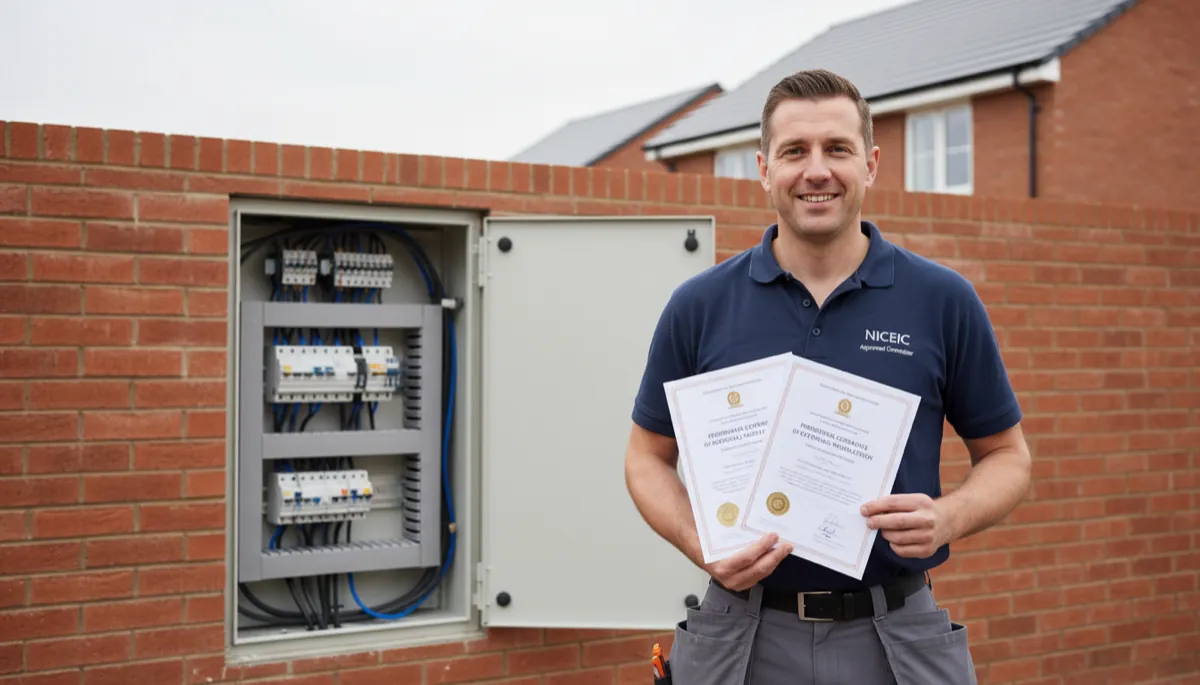
- NICEIC or NAPIT membership (around £300–£450/year) to self-certify domestic work without notifying Building Control on every job
- Public liability insurance — most domestic clients and letting agents require it
- A professional online presence, particularly if you’re competing for local work
For a full breakdown of what certifications you need once you’re qualified and working commercially, see our guide to electrician certification UK. If you want to understand what electricians typically earn once they’re running their own business, see electrician day rates UK.
Frequently Asked Questions
What qualifications do you need to become an electrician in the UK? You need the City & Guilds 2365 Level 2 and Level 3 Diplomas, an NVQ Level 3 in Electrical Installation, the 18th Edition Wiring Regulations certificate (BS 7671), and a pass on the AM2 practical assessment. These lead to an ECS Gold Card, the industry-standard qualification card.
How long does it take to become a qualified electrician? Via apprenticeship, around 4 years. Via the adult learner route, typically 2–3 years depending on how quickly you complete your college training and workplace hours. Intensive adult programmes can bring this down to 18–24 months, but you’ll still need to accumulate real site hours for the NVQ.
How much does it cost to become an electrician in the UK? The adult learner route typically costs £5,000–£12,000 in training fees, covering City & Guilds Levels 2 and 3, NVQ assessment, AM2, and 18th Edition. Via apprenticeship, most training costs are covered by the employer and government, and you earn a wage throughout.
What GCSEs do you need to become an electrician? Most employers and training providers ask for at least five GCSEs at grades 4–9 (A*–C), including Maths and English, and ideally Science. These are most important for apprenticeship applications. Some adult learner courses don’t have formal entry requirements, though strong numeracy is essential.
Can I become an electrician as a career changer? Yes. The adult learner route was designed for career changers. You study City & Guilds Level 2 and 3 at college (full-time or part-time), then complete your NVQ workplace hours with an employer or by working alongside a qualified electrician. Many private training centres offer flexible and accelerated programmes specifically for adults.
Setting Up as a Self-Employed Electrician
Once qualified, your next job is making yourself visible to the customers who need you. Around 88% of people search online before booking a tradesperson, according to Google’s consumer research data.
A professional website showing your qualifications, service area, and customer reviews builds the kind of trust that turns searches into phone calls. Digital Tradies builds websites specifically for electricians — NICEIC badge placement, click-to-call on mobile, and local SEO foundations — from £49/month with no upfront cost and live within 3 days. If you’re setting up on your own, it’s worth sorting your online presence before you need the work, not after.