Becoming a qualified electrician in the UK takes between two and four years depending on the route you choose. The two realistic paths are an apprenticeship (you’re paid while you learn) or the adult learner route (you fund your own training at college). Both lead to the same destination: a Level 3 Electrotechnical qualification and, eventually, the ECS Gold Card that lets you work unsupervised on any UK site.
This guide walks through each step of the journey — from choosing your route, to finding an employer, to what happens the day after you qualify.
Key Takeaways
- Two main routes: apprenticeship (4 years, employer-funded) or adult learner (2–3 years, self-funded at £5,000–£12,000)
- The Level 3 NVQ in Electrical Installation is the core qualification — you need it before applying for the ECS Gold Card
- The AM2 practical assessment is the final hurdle before full qualification — it tests real installation, testing, and fault-finding skills
- After qualifying, most electricians join a Competent Person Scheme (NICEIC or NAPIT) to self-certify domestic work — annual fees run £300–£600/year
- Self-employed electricians in the UK typically earn £35,000–£55,000/year; employed rates start lower but rise steadily with experience
- There’s no upper age limit for any of these routes — retraining in your 30s or 40s is common
Route 1: Electrical Apprenticeship
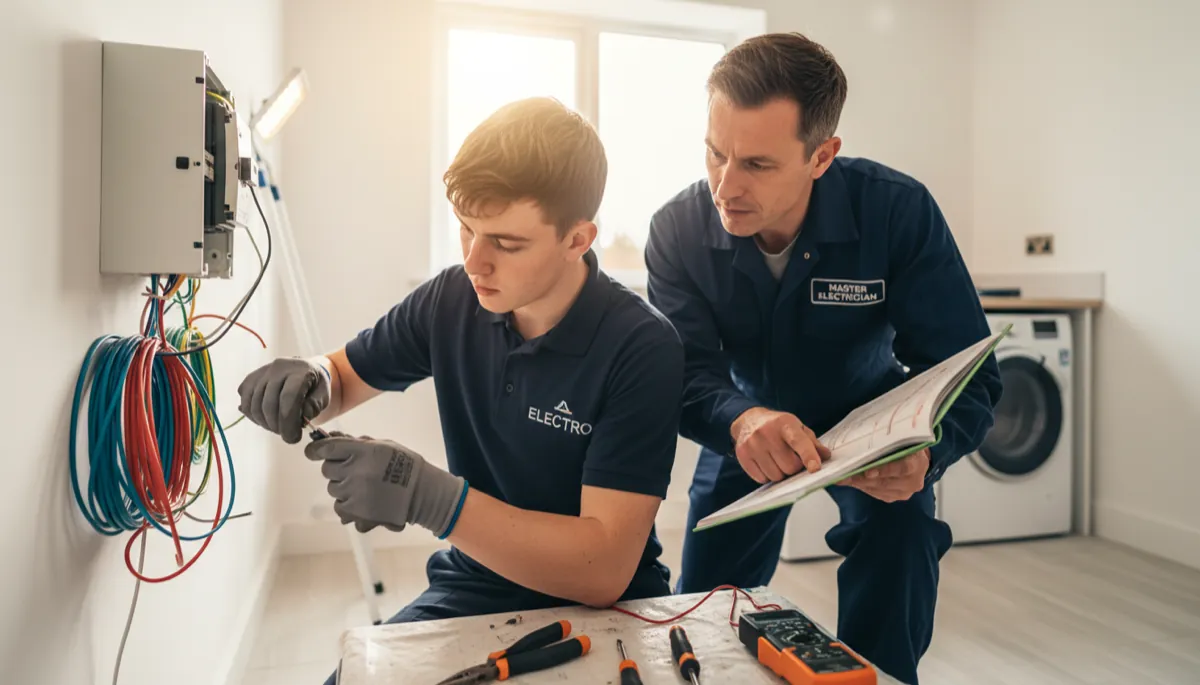
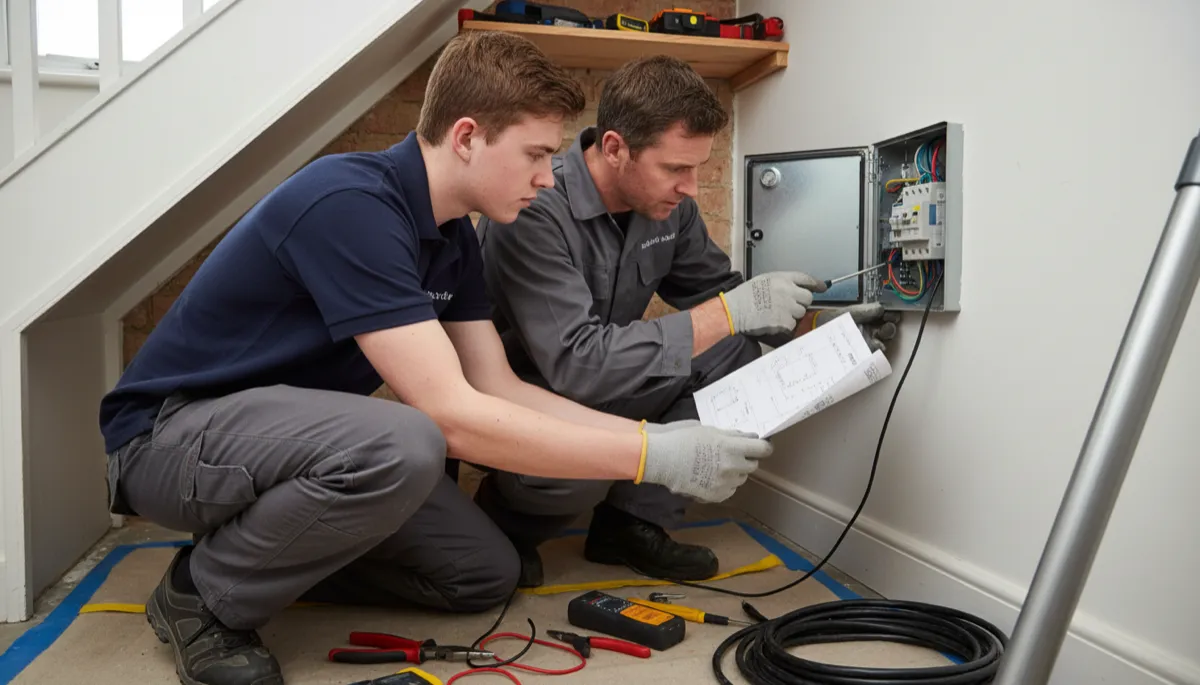
An apprenticeship is the traditional route. You work for an electrical contractor while studying at college — usually one or two days a week. You earn a wage throughout, which makes it the most accessible option for school leavers without savings.
What the Apprenticeship Covers
The standard apprenticeship is the Installation and Maintenance Electrician Level 3 Apprenticeship, which takes around four years. According to the UK government’s apprenticeship data, England alone sees over 4,000 electrical apprenticeship starts each year.
During the apprenticeship, you work toward:
- City & Guilds 2365 Level 2 Diploma (first two years)
- City & Guilds 2365 Level 3 Diploma (years three and four)
- NVQ Level 3 in Electrical Installation (assessed in the workplace)
- AM2 practical assessment (end-point assessment)
How to Find an Electrical Apprenticeship
Three reliable places to look:
- Find an Apprenticeship (gov.uk) — the official government portal, free to use, lists live vacancies by location and sector
- Select Electrical’s apprenticeship board and similar trade employer boards — many large contractors advertise directly
- Cold approach local contractors — many electrical firms take on apprentices without posting ads. A CV drop or phone call directly to a local firm often works
The Electrical Contractors’ Association (ECA) and National Inspection Council for Electrical Installation Contracting (NICEIC) both maintain databases of approved employers who take on apprentices.
Apprenticeship Entry Requirements
Most employers and training providers ask for:
- 5 GCSEs at grades 4–9 (A*–C) including English and Maths — Science is an advantage but not always mandatory
- Practical aptitude (often tested with a short assessment before the offer)
- Right to work in the UK
There’s no formal upper age limit, though most apprentices start at 16–19.
What Apprentices Earn
The national minimum apprenticeship wage is £7.55/hour in 2026. Most electrical employers pay above this — typical rates are £8–£10/hour in year one, rising to £12–£16/hour by year three or four. As your skills develop, so does your pay.
Route 2: Adult Learner (College + NVQ)
If you’re changing careers or missed the apprenticeship window, you can take the same qualifications through a college-based programme. You study the theory full-time or part-time at college, then complete the practical NVQ component on-site with an employer.
This route is faster in terms of total time — you can compress the theory into 18 months to two years — but the costs sit with you rather than an employer.
Typical Costs
| Stage | Qualification | Typical Cost |
|---|---|---|
| Year 1 | City & Guilds 2365 Level 2 Diploma | £2,000–£4,000 |
| Year 2 | City & Guilds 2365 Level 3 Diploma | £2,000–£4,000 |
| Year 3 | NVQ Level 3 in Electrical Installation | £500–£1,500 |
| — | 18th Edition Wiring Regulations (BS 7671) | £400–£600 |
| — | AM2 Assessment | £350–£500 |
| Total | £5,250–£10,600 |
Source: Logic4Training and City & Guilds published course fees, 2025.
For the NVQ component, you’ll need to log workplace hours — typically 200+ hours of evidenced on-site work. Some adult learners do this while working as a labourer or electrician’s mate to keep income coming in.
The Final Steps Before Full Qualification
Whichever route you take, the last two stages are the same.
18th Edition Wiring Regulations (BS 7671)
This is a regulations update course, not a career qualification — but it’s required before you can join any Competent Person Scheme or apply for the ECS Gold Card. The exam takes one day. Most candidates self-study using the IET On-Site Guide and then sit the City & Guilds 2382 exam. Cost: around £400–£600 including course materials.
AM2 Assessment
The AM2 is the end-point practical assessment. It tests your ability to install a wiring system from scratch, test it correctly, and fault-find under exam conditions. It’s not something you can memorise — it requires genuine hands-on competence.
The assessment is run by EAL (formerly C&G Assessment Centres) at approved venues. You book it once your NVQ Level 3 is signed off. Pass rate is reasonably high among properly prepared candidates. Cost: approximately £350–£500.
ECS Gold Card
Once you hold the NVQ Level 3 and pass the AM2, you can apply for the Electrotechnical Certification Scheme (ECS) Gold Card. This is the industry card that confirms you’re a qualified electrician. It costs around £30/year to maintain and is required to work on most construction sites and with most main contractors.
After Qualifying: Your Options
This is where most “how to become an electrician” guides stop. But the day after you qualify is when the real decisions start.
Option 1: Stay Employed
Many newly qualified electricians stay with their employer or move to a larger contractor for a few years. Employed electricians in the UK earn an average of £28,000–£40,000/year according to ONS 2025 earnings data, with experienced sparks at larger firms or in specialist sectors (rail, industrial, data centres) earning £45,000–£60,000+.
Staying employed means no admin, no chasing invoices, and structured progression — but your ceiling is lower than going self-employed.
Option 2: Go Self-Employed
Most electricians eventually set up on their own. To legally self-certify domestic electrical work in England (without notifying Building Control on every job), you need to join a Competent Person Scheme (CPS):
| Scheme | Annual Fee | Notes |
|---|---|---|
| NICEIC (Domestic Installer) | £350–£600 | Most widely recognised by main contractors |
| NAPIT | £300–£500 | Good for smaller domestic specialists |
| ELECSA | £300–£500 | Popular in the south of England |
| STROMA | £300–£450 | Accepted by most house builders |
Source: Scheme providers’ published pricing, 2025/26.
In Scotland and Wales, Building Regulations requirements differ slightly — check with your local authority if you’re working outside England.
Beyond scheme registration, you’ll need:
- Public liability insurance — minimum £1m, most domestic electricians carry £2–5m. Costs from around £150–£400/year depending on turnover. Our guide to public liability insurance for electricians covers what to look for
- Employers’ liability insurance — required by law if you take on even one employee or labour-only subcontractor
- Tools and van — a working electrician needs £3,000–£8,000 worth of test equipment (multifunction tester, socket tester, RCD tester), plus installation tools, a cable drum, and a reliable van
Self-employed electricians typically charge £200–£400/day for domestic work, and £250–£500/day for commercial projects. At typical utilisation rates (200–230 working days per year), that puts annual turnover at £40,000–£90,000 before expenses — putting take-home in the £35,000–£55,000 range for most.
Can You Retrain as an Electrician Later in Life?
Yes — and it’s more common than people think. There’s no upper age limit on any of these qualifications. The adult learner route suits career changers at 30, 40, or beyond because you can set your own study pace and the college-based timetable fits around other commitments.
The main practical consideration is funding. If you’re switching from another career, you’ll typically self-fund the £5,000–£10,000 training costs. Government Advanced Learner Loans cover some adults studying Level 3 qualifications — check the GOV.UK eligibility guidance to see if you qualify.
Building Your Business Once You’re Qualified
The technical qualification gets you to the starting line. What grows a self-employed electrician’s income from there is reputation, online presence, and consistent referrals.
A professional website makes a real difference — customers searching “electrician near me” overwhelmingly choose tradespeople with a credible web presence over those without one. If you’re wondering whether it’s worth the effort, the data on electricians and websites is fairly clear. A study by BrightLocal found 98% of consumers used the internet to find local businesses in 2023, and electricians are no exception.
If you’re setting up as self-employed after qualifying, a website, Google Business Profile, and a handful of genuine reviews are worth prioritising early. Services like Digital Tradies build professional trade websites from £49/month with no upfront cost — typically live within three days of providing your details.
Frequently Asked Questions
How long does it take to become a qualified electrician in the UK? Four years via the apprenticeship route, or two to three years via the adult learner (college + NVQ) route. The difference is mainly in how the learning is structured — apprentices work and study simultaneously, while adult learners typically front-load the theory before completing workplace hours.
Do you need GCSEs to become an electrician? Most apprenticeship employers ask for five GCSEs at grades 4–9, including English and Maths. For the adult learner route, formal entry requirements are less strict — colleges assess suitability through interviews and sometimes short aptitude tests. A genuine interest in the trade matters more than specific grades.
What does the AM2 assessment involve? The AM2 is a practical exam taken at an approved assessment centre. You’ll install a wiring system from a drawing, carry out testing and inspection, and fault-find within a set time. It’s assessed against National Occupational Standards. Most candidates who are properly prepared pass first time.
How much do self-employed electricians earn? Self-employed electricians in the UK typically earn £35,000–£55,000/year after expenses, based on day rates of £200–£400 for domestic work and 200–230 working days per year. Electricians in London or those working in commercial/industrial sectors often earn more.
Is it worth becoming an electrician in 2026? The trade remains in strong demand — the UK has a structural shortage of qualified electricians, driven partly by an ageing workforce and partly by growing demand from EV charging point installation, solar panel work, and home automation. The ECA (Electrical Contractors’ Association) estimates the UK needs to recruit around 15,000 new electricians per year to meet demand.