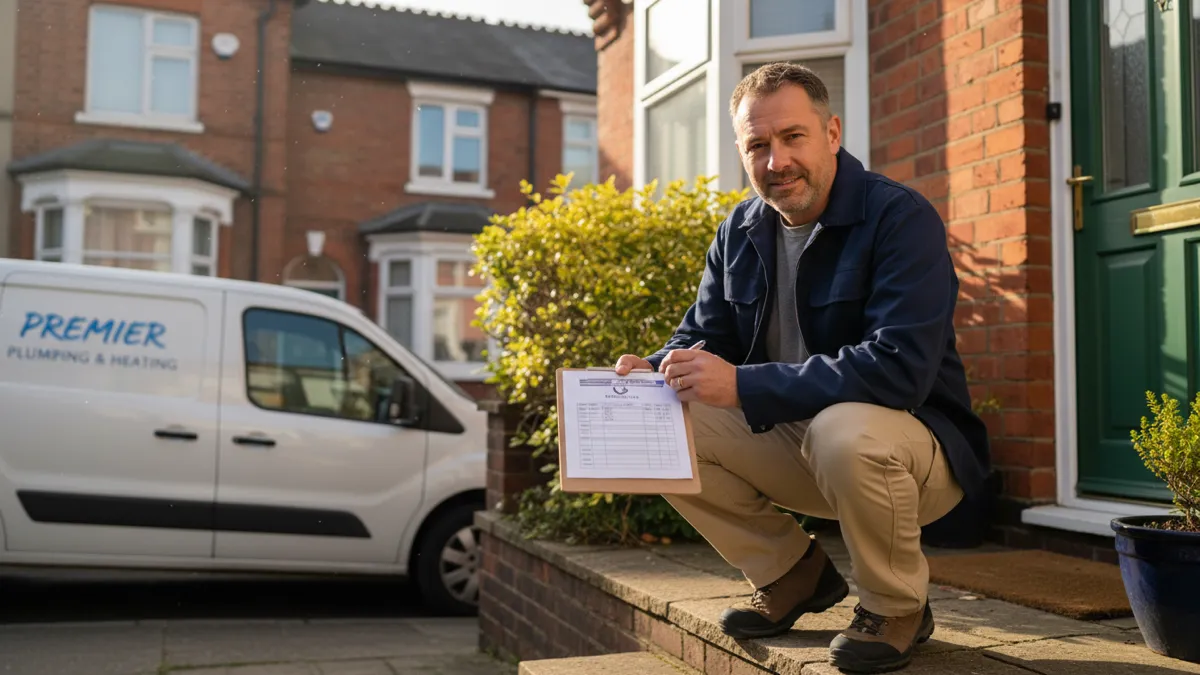
A good trade quote does two things: it wins the job, and it protects you if anything goes wrong. A bad one loses work to a competitor — or leaves you in a dispute over what was agreed. The difference is usually what’s written down and how it’s presented.
This guide walks through exactly what to include in a UK trade quote, gives you a template to copy, and covers the common mistakes that cause problems further down the line.
Key Takeaways
- A written quote is a legal offer — once accepted, it becomes a binding contract
- Include a full breakdown of labour, materials, and VAT (if registered) rather than just a total figure
- State a quote validity period — typically 14–30 days — to protect yourself from price increases
- Sending your quote quickly (within 24 hours) is one of the biggest factors in winning the work
- Digital quotes sent by email are just as legally valid as paper ones, and easier to track
- A clear quote sets expectations upfront and reduces the risk of disputes when the job finishes
What Is a Trade Quote?
A trade quote is a written offer to carry out specific work for a fixed price. Once a customer accepts it, that quote becomes a contract. It sets out what you’ll do, what it’ll cost, and the terms you’re working under.
This is different from an estimate, which is an approximate figure that can change. A quote is a firm price. If you tell a customer a job will cost £800 and they accept, that’s what they’ll expect to pay — unless the scope changes and you tell them in advance.
Because a quote is legally binding once accepted, it pays to get it right before you send it.
What to Include in a Trade Quote
1. Your Business Details
Your quote should clearly show:
- Your full name or business name
- Your address and contact details (phone and email)
- Your VAT registration number if you’re VAT-registered
- Any relevant certification numbers (e.g., [Gas Safe Register](/blog/gas-safe-registration-explained/) number for heating engineers, NICEIC registration for electricians)
This isn’t just professional — it’s a legal requirement if you’re VAT-registered.
2. Customer Details
Include the customer’s name, address of the property where the work will be carried out, and their contact details. This identifies the job clearly and makes the quote unambiguous.
3. A Reference Number and Date
Give every quote a reference number (Q001, Q002, etc.) and include the date it was issued. This makes it easy to track in your records and refer back to in conversation — “as per quote Q014 dated 5th April” is cleaner than trying to describe it from memory.
4. A Clear Description of the Work
Spell out exactly what you’re going to do. Be specific enough that there’s no room for misunderstanding. Vague descriptions cause disputes.
| Vague | Specific |
|---|---|
| ”Fit new bathroom" | "Supply and fit a new shower enclosure, replace toilet and basin, re-tile walls to full height, connect all waste and supply pipework, install extractor fan" |
| "Rewire house" | "Full rewire of 3-bed semi-detached property including new consumer unit (18-way), all first and second fix wiring, fitting of sockets, switches and light fittings as discussed" |
| "Roof repair" | "Replace 14 broken/slipped tiles on rear pitch, re-bed ridge tiles, inspect and seal lead flashings around chimney stack” |
5. Itemised Costs
Break down your costs into labour and materials at a minimum. This shows the customer where the money is going and makes it easier to have a conversation if they want to value-engineer anything out.
| Item | Cost |
|---|---|
| Labour (2 days @ £300/day) | £600.00 |
| Materials — consumer unit, cable, fittings | £240.00 |
| Subtotal | £840.00 |
| VAT (20%) | £168.00 |
| Total | £1,008.00 |
If you’re not VAT-registered (the threshold in 2026 is £90,000 annual turnover, per HMRC guidance), you don’t charge VAT — but stating “VAT: N/A — not VAT registered” makes this explicit and avoids confusion.
6. Quote Validity Period
Prices for materials change. Labour rates change. A quote you send today might not be achievable in three months if timber prices have jumped or you’ve taken on more work. Include a validity period: “This quote is valid for 30 days from the date of issue.”
7. Exclusions
Be clear about what’s NOT included. If you’re quoting for a bathroom install but not the tiling, say so. If replastering is required after the work but you’re not doing it, write it down.
Common exclusions to state:
- Decorating and making good after work is complete
- Disposal of waste (or state your waste disposal charge separately)
- Any additional work found once the job is underway
- Structural work if it turns out to be needed
8. Payment Terms
State how and when you expect to be paid. This is part of your quote — which means once accepted, the customer has agreed to it.
For most jobs:
- Deposits of 25–50% on jobs over £500 are standard practice
- Remainder on completion, due within 7–14 days
- Accepted payment methods (bank transfer, card, cash)
“25% deposit required to confirm booking. Balance due within 7 days of completion by bank transfer.”
For guidance on what to do when payment doesn’t arrive on time, see our guide to getting paid on time as a tradesperson.
9. Your Signature and a Space for Customer Acceptance
If you’re sending a paper quote, leave space for the customer to sign and date. For email quotes, ask them to reply confirming acceptance. That reply is your record.
Trade Quote Template (Copy and Adapt)
QUOTATION

[Your Name / Business Name]
[Address]
[Phone] | [Email]
[VAT Number if applicable] | [Certification Number if applicable]

Quote Reference: Q[NUMBER]
Date: [DATE]
Valid Until: [DATE + 30 DAYS]

Prepared for:
[Customer Name]
[Property Address]

---

DESCRIPTION OF WORKS

[Clear description of exactly what will be done]

---

COST BREAKDOWN

Labour:            £[AMOUNT]
Materials:         £[AMOUNT]
---------------------------
Subtotal:          £[AMOUNT]
VAT (20%):         £[AMOUNT]
---------------------------
TOTAL:             £[AMOUNT]

---

EXCLUSIONS

This quote does not include:
- [List anything not covered, e.g. plastering, decorating, waste disposal]

---

PAYMENT TERMS

- [X]% deposit required to confirm booking
- Balance due within [X] days of completion
- Payment by bank transfer to: [Sort code / Account number]

---

TERMS

This quotation is valid for 30 days from the date of issue. Any work found to be
necessary beyond the scope above will be discussed and agreed before proceeding.

Customer acceptance:

Signature: ___________________    Date: _______________
How to Price a Trade Quote
Getting the price right comes down to three things: knowing your costs, knowing the market rate, and covering your time properly.
Labour costs. Work out your day rate or hourly rate. For 2026, typical UK trade rates run from £150–£250/day for sole traders depending on trade and region, rising to £300–£450/day for specialist trades (according to rate surveys by Checkatrade and MyBuilder across UK regions). See the rate guides on this site for your specific trade.
Materials. Price materials at trade cost plus a mark-up of 15–25%. This covers your time to source and collect them, and the risk of price changes between quoting and buying.
Overheads. Every job contributes to your van, insurance, tools, and other running costs. Build a daily overhead rate (total annual overheads ÷ chargeable days) and add it to your labour cost.
Contingency. On larger jobs, add 5–10% for unforeseen issues. State in the quote that additional work found will be agreed separately before proceeding — this protects you if you discover something unexpected.
Common Quoting Mistakes to Avoid
Quoting too low to win the job. If you underprice, you either lose money or have to have an awkward conversation mid-job about why it’s going to cost more. Both damage trust. Price correctly, then justify the quote.
No breakdown of costs. A single total figure looks like a guess. An itemised breakdown shows the customer exactly what they’re paying for and makes you look more professional than the person who texts “£600”.
Not stating what’s excluded. Leaving assumptions unaddressed leads to disputes. The customer who assumed skimming was included, but you assumed it wasn’t, becomes a problem when you’re packing up the tools.
Slow turnaround. Research published in 2024 by Checkatrade found that tradespeople who follow up within 24 hours are significantly more likely to win the job than those who take three or more days. Get quotes out the same day if you can.
No payment terms. Sending a quote with no mention of payment terms means the customer gets to set them informally — often in their favour. Put your terms in writing upfront.
Paper vs Digital Quotes
Paper quotes work fine. But digital quotes — sent by email or through an invoicing app — have real practical advantages:
- You can send them from your phone immediately after viewing the job
- The customer can accept with a reply email (a timestamped record)
- You can turn a quote directly into an invoice when the job is done
- You’re less likely to lose track of which quotes are outstanding
Apps like Tradify, Invoice Simple, and Zoho Invoice all let you create and send trade quotes quickly. Our guide to the best invoicing apps for tradespeople covers them in detail.
Frequently Asked Questions
Does a trade quote have to be in writing? No — verbal quotes are legally valid in the UK. But proving what was agreed verbally is extremely difficult if a dispute arises. A written quote, accepted in writing, is what protects you. Get it in writing every time.
What’s the difference between a quote and an estimate? A quote is a fixed price — once accepted, that’s what the customer pays (unless scope changes). An estimate is approximate and can change. Use “quote” when you’re confident in the price; use “estimate” only when there are genuine unknowns.
Can I change the price after a customer accepts my quote? Generally, no. Once a customer accepts a written quote, you’ve formed a contract. You can charge more if the scope changes, but you need to agree that in writing before doing the extra work — not after.
Do I need to charge VAT on my quote? Only if you’re VAT-registered. The 2026 VAT registration threshold is £90,000 annual turnover (see HMRC). Below that, you don’t charge VAT and should state “Not VAT registered” on your quote to avoid confusion.
How long should a quote be valid for? Most tradespeople use 30 days as standard. For jobs involving significant materials (joinery, roofing, groundworks), 14 days gives you more protection against price increases. State the validity clearly on every quote.
One More Thing
A professional quote tells a customer more about your business than almost anything else. It shows you’re organised, you communicate clearly, and you’ll probably approach the job the same way.
If that professionalism extends to your online presence too — a proper website where customers can read about your work, see examples, and get in touch — it completes the picture. If you’re a tradesperson without a website, or you’ve got one that doesn’t do you justice, Digital Tradies builds professional trade websites from £49/month with no upfront cost, live in 3 days.
A well-written quote and a professional website. Two things that do more for your reputation than any amount of word-of-mouth.