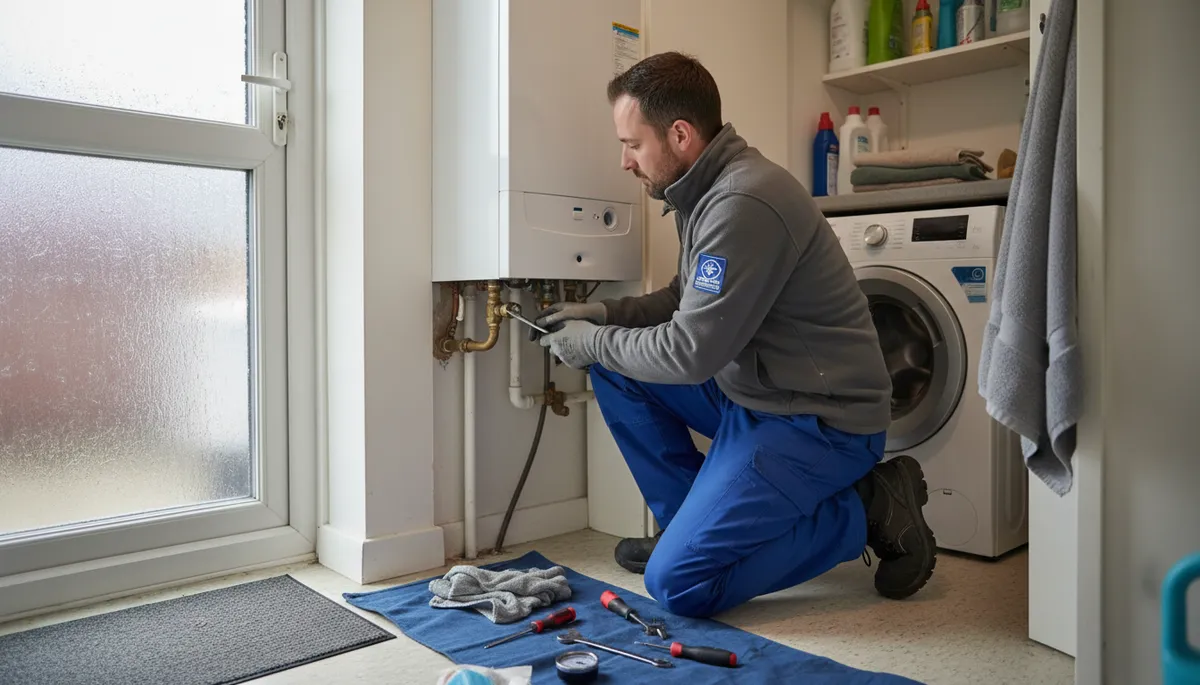
Gas Safe registration is a legal requirement for anyone who carries out gas work in the UK. Without it, you can’t legally touch a gas appliance, pipe, or fitting — and working unregistered is a criminal offence that carries fines of up to £20,000 and a potential custodial sentence. This guide explains what the register is, how to get on it, what it costs, and what your Gas Safe ID card actually proves.
Key Takeaways
- Gas Safe registration is mandatory by law under the Gas Safety (Installation and Use) Regulations 1998 for anyone doing gas work in the UK
- You must hold the relevant ACS (Approved Competency Scheme) qualifications before applying — starting with CCN1 for domestic natural gas work
- Registration fees are paid annually directly to the Gas Safe Register; costs vary depending on how many appliance categories you’re registered for
- Your Gas Safe ID card lists the specific gas appliances you’re qualified to work on — engineers can only work within those categories
- Working on gas without registration is a criminal offence — the maximum penalty is a £20,000 fine and/or six months’ imprisonment under UK law
- Registration must be renewed every 12 months — lapsed registration means you can’t legally work
What Is the Gas Safe Register?
The Gas Safe Register is the official list of gas businesses and engineers who are legally permitted to carry out gas work in the United Kingdom, Isle of Man, and Guernsey.
It replaced CORGI (Council for Registered Gas Installers) in April 2009. The Gas Safe Register is managed by Capita Gas Registration and Ancillary Services Ltd on behalf of the Health and Safety Executive (HSE). According to the Gas Safe Register, over 128,000 engineers are currently registered in the UK.
The register exists because gas work is inherently dangerous. Poorly installed or maintained appliances cause carbon monoxide poisoning, gas leaks, explosions, and fires. Registration ensures that only engineers who have passed formal competency assessments can legally work on gas systems.
Is Gas Safe Registration a Legal Requirement?
Yes. Under the Gas Safety (Installation and Use) Regulations 1998 (SI 1998/2451), it is illegal to carry out gas work unless you are registered with a body approved by the HSE. The Gas Safe Register is the only approved body in the UK.
This applies to all gas work — not just boiler installations. Servicing a gas fire, connecting a gas cooker, commissioning a new boiler, fitting a gas meter, or any work involving the gas supply system all require registration.
There are no exemptions for:
- Self-employed engineers working for private households
- Part-time work or one-off jobs
- Work on your own property (you cannot legally carry out your own gas work unless you are registered)
- Newly qualified engineers completing supervised work (supervision doesn’t remove the legal requirement — the supervising engineer takes responsibility, but the business must be registered)
What Qualifications Do You Need First?
Before you can apply to join the Gas Safe Register, you must hold valid ACS (Approved Competency Scheme) qualifications. These are trade-specific competency assessments — not qualifications you study for at college, but practical assessments of your ability to work safely.
Core Domestic Units
For anyone working on domestic natural gas systems, the starting point is:
| Unit | What It Covers |
|---|---|
| CCN1 | Core Domestic Natural Gas Safety — mandatory for all domestic gas engineers |
| CKR1 | Gas Fired Central Heating Boilers (domestic) |
| HTR1 | Gas Fires, Decorative Fuel Effect Fires & Heating Stoves |
| CPA1 | Gas Cookers, Ranges & Hobs |
| MET1 | Meters & Emergency Controls (domestic) |
You only need the units relevant to the work you’ll actually carry out. Most domestic heating engineers start with CCN1 and CKR1, which covers boiler installation and servicing.
Commercial Units
Engineers working on commercial or industrial gas systems need different core units — typically CEN1 (Commercial Gas Safety) rather than CCN1. Commercial ACS covers catering equipment, space heaters, commercial heating systems, and process gas.
Where to Do Your ACS Assessments
ACS assessments are delivered by approved certification bodies. The main ones in the UK are:
- LOGIC Certification (operated by the Energy & Utilities Skills Partnership)
- BPEC Certification (plumbing and heating focused)
- Stroma Certification
- GTAUK (Gas Training Accreditation UK)
According to LOGIC Certification, a standard domestic ACS reassessment covering CCN1 and two appliance units typically costs £200 to £400 depending on the provider and location, as of 2026.
How Long Does ACS Last?
ACS qualifications are valid for five years. After that, you must complete a reassessment to maintain your Gas Safe registration. The reassessment is a practical test — not a theory exam — carried out by an approved assessor, either at a training centre or on live work.
How to Apply for Gas Safe Registration
Once you hold the relevant ACS qualifications, the registration process has four steps:
1. Gather your documents You’ll need: your ACS certificates, proof of identity, public liability insurance documentation, and your Gas Safe employer reference number (if registering under an existing business).
2. Register your business (if you haven’t already) Gas Safe registration is primarily a business registration, not an individual one. Sole traders register as a business. Your business gets a Gas Safe Register number, and you as the engineer are listed under it.
3. Apply via the Gas Safe Register website Applications are made at gassaferegister.co.uk. The process is online. You’ll need to upload your ACS certificates and select the appliance categories you’re qualified to work in.
4. Pay the annual fee Once your application is reviewed and approved, you pay the annual registration fee. Your Gas Safe ID card is then issued by post, usually within a few working days.
How Much Does Gas Safe Registration Cost?
Fees are set by the Gas Safe Register and are reviewed periodically. The cost depends on:
- The number of appliance categories you’re registered for
- Whether you’re a sole trader or registering multiple engineers under a business
- Whether you’re a new applicant or renewing
| Registration Type | Approximate Annual Fee (2026) |
|---|---|
| Sole trader, 1–4 domestic categories | £150 — £175 |
| Sole trader, 5+ categories | £175 — £215 |
| Business with 2–5 engineers | £300 — £550 |
| Commercial-only categories | Varies — check gassaferegister.co.uk |
These are approximate ranges. The Gas Safe Register publishes current fee schedules on their website, and fees are subject to change. You’ll also pay separately for your ACS assessments (typically every five years) and your public liability insurance, which most insurers require as a condition of covering gas work.
What Is the Gas Safe ID Card?
Every registered Gas Safe engineer carries a photo ID card. The card shows:
- The engineer’s full name and photograph
- A unique License Holder Number (LHN)
- The business name the engineer is registered under
- The appliance categories the engineer is qualified to work on (shown as category codes on the back of the card)
- An expiry date — cards are issued annually and expire when registration lapses
The category codes on the back are what customers and building control officers check. If you’re registered for CCN1 and CKR1 but not HTR1, you can’t legally service a gas fire — even if you know how to do it.
Customers and contractors can verify an engineer’s registration by visiting gassaferegister.co.uk/check-a-engineer or by scanning the QR code on the card.
What Happens If You Work Without Registration?
Working on gas without Gas Safe registration is a criminal offence under the Gas Safety (Installation and Use) Regulations 1998.
Penalties include:
- A fine of up to £20,000
- Up to six months’ imprisonment
- HSE enforcement action, including prohibition notices
In practice, prosecutions tend to follow incidents — a gas leak, a carbon monoxide case, a house fire. An unregistered engineer who causes an accident faces not just the regulatory penalties but also full civil liability for any injury, death, or property damage.
Beyond the legal consequences, unregistered work has commercial implications:
- Home insurance can be voided if gas work isn’t carried out by a Gas Safe registered engineer
- Buildings insurance often carries the same clause
- Landlord obligations — under the Gas Safety (Installation and Use) Regulations 1998, landlords must have annual gas safety checks carried out only by Gas Safe registered engineers. An unregistered check certificate is worthless.
Annual Renewal
Gas Safe registration expires every 12 months. About six weeks before your expiry date, the Gas Safe Register sends a renewal reminder. You’ll need to:
- Confirm your details are still correct (business address, insurance, appliance categories)
- Pay the annual fee for the next 12 months
If your ACS qualifications are due for reassessment (every five years), you’ll need to complete those before renewing. Letting registration lapse — even by a day — means you can’t legally carry out gas work until it’s reinstated.
Gas Safe and Landlord Gas Safety Certificates
If you work on rental properties, landlord gas safety certificates (CP12) are a significant part of your business. Under the Gas Safety (Installation and Use) Regulations 1998, landlords in England, Wales, and Scotland must have a gas safety check carried out annually by a Gas Safe registered engineer. The certificate records the results of that check.
Only Gas Safe registered engineers can issue CP12 certificates. According to the HSE, failure to arrange a gas safety check is a criminal offence for landlords — and failure to use a registered engineer makes any certificate invalid.
Building Your Heating Engineering Business
Gas Safe registration opens the door to residential and commercial gas work. But the engineers who build strong businesses combine technical credibility with a professional digital presence. According to research by the Federation of Master Builders, customers search online before making contact — and a Gas Safe-registered engineer with a professional website converts more enquiries than one relying on word of mouth alone.
Digital Tradies builds professional websites for heating engineers and gas engineers from £49/month, with no upfront cost and sites live in three days. If you want a site that shows your Gas Safe registration, highlights your qualifications, and gets you found online, take a look at what’s included.
You might also find these useful:
- Heating Engineer Qualifications UK: Gas Safe, ACS & More Explained
- Heating Engineer Day Rate UK 2026
- Heating Engineer Hourly Rate UK 2026
Frequently Asked Questions
What does it mean to be Gas Safe registered? Being Gas Safe registered means your business is listed on the official register of gas engineers approved by the Health and Safety Executive. It confirms that you hold valid ACS qualifications for the gas appliances you work on, and that you’re legally permitted to carry out gas work in the UK. Engineers carry a Gas Safe ID card showing exactly which appliances and systems they’re qualified to work on.
How often do you need to renew Gas Safe registration? Gas Safe registration must be renewed every 12 months. The Gas Safe Register sends renewal reminders around six weeks before your expiry date. If you let registration lapse, you cannot carry out gas work legally until it’s reinstated. ACS qualifications that underpin registration are valid for five years before reassessment is required.
How much does Gas Safe registration cost? Fees vary depending on how many appliance categories you’re registered for. For a sole trader covering domestic natural gas work, expect to pay approximately £150 to £175 per year as of 2026. Businesses registering multiple engineers pay more. The Gas Safe Register publishes current fee schedules at gassaferegister.co.uk. This is separate from the cost of ACS assessments, which are required every five years.
What happens if you carry out gas work without being Gas Safe registered? It’s a criminal offence under the Gas Safety (Installation and Use) Regulations 1998. The maximum penalty is a fine of £20,000 and/or six months’ imprisonment. Beyond the legal risk, unregistered gas work can void home insurance and buildings insurance policies, and landlord gas safety certificates issued by unregistered engineers are invalid.
What qualifications do you need to join the Gas Safe Register? You need valid ACS (Approved Competency Scheme) qualifications in the gas appliance categories you’ll be working on. For domestic natural gas work, the core unit is CCN1 (Core Domestic Natural Gas Safety). Additional units cover specific appliances — CKR1 for central heating boilers, HTR1 for gas fires, CPA1 for cookers, and so on. ACS assessments are carried out by approved bodies including LOGIC Certification, BPEC, and Stroma Certification.