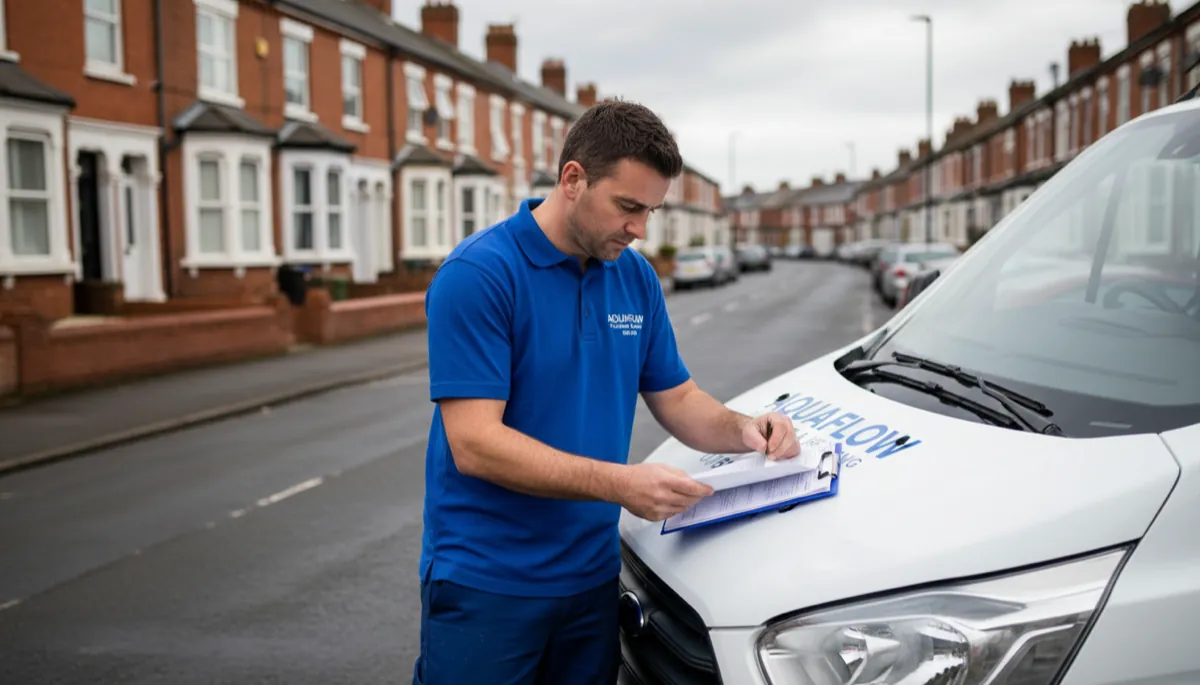
Public liability insurance for plumbers covers you if a client, neighbour, or member of the public suffers injury or property damage as a result of your work. In plumbing, the risks are real — a burst connection, an overflow, or an accidental flood can cause thousands of pounds of damage in minutes. Without cover, you pay that bill yourself.
This guide explains what PLI covers, what it costs, how much you need, and what other policies a self-employed plumber should consider.
Key Takeaways
- Public liability insurance is not a legal requirement for plumbers, but many clients and platforms (Checkatrade, MyBuilder) require proof of it before you can work or list
- Sole traders typically pay between £150 and £400 per year for £1 million cover, with monthly options from around £22/month
- Plumbing-related water damage claims can easily reach tens of thousands of pounds — well beyond what most tradespeople could absorb without insurance
- PLI does not cover your tools, your van, injuries to employees, or the cost of repairing your own defective workmanship
- If you have any employees or labour-only subcontractors working exclusively for you, employers’ liability insurance is legally required — minimum £5 million cover
Do Plumbers Need Public Liability Insurance?
No UK law requires plumbers to hold public liability insurance. It’s not a statutory obligation in the same way that employers’ liability is (which is legally required if you employ anyone).
In practice though, not having it cuts off a significant amount of work:
- Domestic clients — Many homeowners now ask for proof of insurance before signing off on work, particularly for larger jobs like bathroom installations or boiler replacements
- Checkatrade and MyBuilder — Both platforms require valid PLI to join and maintain your listing. No certificate, no profile.
- Letting agents and property managers — Most insist on a minimum of £1 million PLI for any contractor working on managed properties
- Commercial contracts — Any commercial or public sector site will require proof of cover before you set foot on the premises
So while it’s not legally required, operating without PLI means losing a growing portion of the available market.
What Does Public Liability Insurance Cover for Plumbers?
PLI responds to third-party claims — injuries or damage suffered by someone who isn’t you or your employee. In plumbing, the most common scenarios involve water.
| Scenario | Covered? |
|---|---|
| Accidental flooding damages client’s kitchen or flooring | Yes |
| Burst connection soaks a neighbour’s property | Yes |
| Client slips on water left on the floor | Yes |
| Pipe work disturbs an asbestos ceiling tile, causing exposure | Yes (check policy for pollution/contamination cover) |
| Tools stolen from the client’s property | No — needs tools and equipment insurance |
| One of your workers is injured on site | No — needs employers’ liability insurance |
| Your boiler installation fails and causes injury years later | Depends — check for “completed works” cover |
| You make a mistake that requires the job to be redone | No — PLI covers damage to third parties, not your own workmanship costs |
Completed works cover is particularly relevant for plumbers. Standard PLI only covers incidents that happen while you’re on site. Completed works cover extends protection to claims arising after you’ve left — for example, a hot water system you installed develops a fault that scalds a resident six months later. Not all policies include this automatically, so check before buying.
What Does Public Liability Insurance Not Cover?
Knowing the exclusions prevents nasty surprises when you need to claim:
- Your tools and equipment — Covered separately under tools and equipment insurance
- Your van — Needs commercial vehicle insurance (standard motor insurance doesn’t cover business use)
- Injuries to your employees or regular subcontractors — Covered under employers’ liability (legally required)
- Your own injuries or illness — Covered under personal accident insurance
- The cost of redoing defective work — PLI covers third-party losses, not the direct cost of repairing your own mistakes
- Gas-related work done without [Gas Safe registration](/blog/gas-safe-registration-explained/) — Any claim arising from gas work carried out illegally will not be covered. Gas Safe registration is a legal requirement for any work on gas appliances or pipework.
- Deliberate acts or criminal behaviour — Never covered by any insurer
How Much Does Public Liability Insurance Cost for Plumbers?
Costs vary based on your cover level, the type of work you do, and your annual turnover.
| Plumber Type | Typical Annual Premium |
|---|---|
| Self-employed sole trader, general domestic plumbing | £150 – £350/year |
| Bathroom and wet room installer | £200 – £400/year |
| Plumber working on commercial properties | £300 – £600/year |
| Heating and gas engineer (combined plumbing/gas) | £350 – £700/year |
| Small firm with employees | £500 – £1,200+/year |
According to Rhino Trade Insurance, public liability cover for plumbers starts from around £22.83 per month — roughly £274 a year — for basic sole trader cover. Admiral Business quotes from £39.68 for a single-plumber policy, though final pricing depends on your specific circumstances.
Factors that push your premium up:
- Higher cover limits — £2 million or £5 million costs more than £1 million
- Commercial work — Higher exposure than domestic jobs
- Gas and heating work — Treated as higher risk than general plumbing
- Claims history — Any previous claims will increase your premium
- Higher turnover — Insurers correlate more work with more risk
How Much Cover Do Plumbers Need?
| Work Type | Recommended Cover |
|---|---|
| Small domestic jobs — repairs, tap replacements, bathroom fitting | £1 million |
| Larger domestic installs — full bathroom suites, underfloor heating | £2 million |
| Commercial properties or landlord contracts | £2 – £5 million |
| Local authority or housing association work | £5 million (check the contract) |
Most self-employed plumbers doing domestic work start with £1 million. If you’re planning to take on commercial work or work for letting agents and property managers, buy at least £2 million from the outset — upgrading mid-policy is possible but typically costs extra.
What Other Insurance Do Plumbers Need?
PLI is usually the foundation. A complete insurance setup for a self-employed plumber looks like this:
| Insurance Type | Who Needs It | Legally Required? |
|---|---|---|
| Public liability | All self-employed plumbers | No |
| Employers’ liability | Any plumber with employees or exclusive subcontractors | Yes — minimum £5 million |
| Tools and equipment | Anyone with van-mounted tools, power tools, pipe threading machines | No |
| Commercial van insurance | Anyone using a van for work | Yes — standard motor doesn’t cover commercial use |
| Personal accident | Sole traders with no sick pay | No, but important |
| Professional indemnity | Plumbers offering design advice or project management | No, but some clients require it |
Employers’ liability deserves particular attention. According to the Health and Safety Executive (HSE), if you have a single employee working for you — including a family member or a subcontractor who works exclusively for your business — you’re legally required to hold a minimum of £5 million in employers’ liability cover. The fine for not holding this cover is up to £2,500 per day that you operate without it.
Where to Get Public Liability Insurance as a Plumber
Comparison sites — Simply Business, comparethemarket.com, and Go.Compare all list plumber-specific PLI. Good for getting a fast overview of the market, though not all specialist insurers appear on comparison sites.
Specialist trade insurers — Companies like Rhino Trade Insurance, Tradesman Saver, and Trade Direct Insurance focus exclusively on trades and tend to understand the specifics of plumbing work better than generalist providers.
Trade body schemes — The Chartered Institute of Plumbing and Heating Engineering (CIPHE) and the Association of Plumbing and Heating Contractors (APHC) both offer member insurance schemes. Membership also demonstrates credibility to clients, which helps win work.
What to check before buying:
- Does the policy include completed works cover?
- Does it cover the full range of work you do — including gas and heating if relevant?
- Is there a 24-hour emergency claims line?
- Can you adjust cover mid-year if you take on different types of work?
Frequently Asked Questions
Do plumbers need public liability insurance by law? No — UK law doesn’t require plumbers to hold public liability insurance. However, employers’ liability insurance is legally required if you employ anyone, including family members or subcontractors who work exclusively for you. In practice, most clients, trade platforms, and letting agents require proof of PLI before they’ll work with you.
How much does public liability insurance cost for a plumber? For a sole trader doing general domestic plumbing, expect to pay between £150 and £350 per year for £1 million cover. Monthly options typically start from around £22–£25/month. Heating and gas engineers, and those doing commercial work, pay more. Get at least three quotes — premiums can vary significantly between providers.
Does public liability cover poor workmanship? No. PLI covers third-party claims for injury or property damage — it doesn’t cover the direct cost of fixing or redoing your own work. If your workmanship causes flood damage to a client’s home, the damage to their property is covered. The cost of redoing your own work isn’t. Some policies offer “defective workmanship” extensions, but these vary — always read the policy wording carefully.
How much public liability cover do most plumbers need? £1 million is sufficient for most domestic work. If you take on commercial properties, work for landlords or letting agents, or want to keep your options open for bigger contracts, start with £2 million. Local authority and housing association contracts often specify £5 million minimum — check before you quote.
The Bottom Line
Public liability insurance isn’t a legal requirement for plumbers, but the financial exposure from a single water damage claim makes it non-negotiable in practice. A flood in a client’s kitchen can cost tens of thousands of pounds — far beyond what most sole traders can absorb without cover.
Get quotes from a comparison site and at least one specialist trade insurer. Make sure the policy covers your actual work — including gas and heating if you do that too — and check whether completed works cover is included.
If you’re building out your plumbing business properly, a professional website is worth considering alongside your insurance setup. It signals to clients that you’re legitimate, helps you show up when people search for a plumber in your area, and means you’re less dependent on Checkatrade for leads. See how we build websites for plumbers or get started today.