Starting a plumbing business in the UK is one of the more achievable moves in the trades. Demand is steady, the barriers to entry are manageable, and a well-run one-man operation can clear £40,000–£50,000 a year within a few years of going solo. But “achievable” doesn’t mean simple — there’s a checklist of things to get right before you take your first job as a self-employed plumber.
This guide covers every step, from registering with HMRC to getting your first paying customers.
Key Takeaways
- Registering as a sole trader with HMRC is free and takes 10 minutes online — you must do it within three months of starting to trade
- You need public liability insurance before you take your first job; most plumbers start with £1–2 million cover (some customers require £5 million)
- Tools, van, and basic equipment realistically cost £8,000–£20,000 to start properly — second-hand kit reduces this significantly
- If you’ll be working for builders or main contractors, you’ll operate under the Construction Industry Scheme (CIS) — your customer deducts 20% tax before paying you
- Getting found online matters from day one — the majority of new plumbing enquiries now start with a Google search
- You don’t need to be Gas Safe registered to start plumbing, but it limits the work you can take on significantly
Step 1: Get Your Qualifications in Order
You can’t legally run a plumbing business without the relevant qualifications in place. The industry baseline is an NVQ Level 2 in Plumbing and Domestic Heating, with Level 3 expected for anything beyond basic domestic work.
If you’re already qualified and working as an employed plumber, you likely have what you need. If you’re still training, you’ll want Level 3 before going solo — clients and larger contracts often require it.
Gas Safe registration is separate and essential. Under the Gas Safety (Installation and Use) Regulations 1998, it’s illegal to carry out gas work without being Gas Safe registered. The annual fee is around £190–£350 depending on your ACS qualifications. Without it, you cannot service boilers, fit gas hobs, or touch any gas appliances — which rules out a substantial chunk of the domestic plumbing market.
For more on the qualification side, see our full guide: How to Become a Plumber in the UK.
Step 2: Register Your Business
Most plumbers starting out go sole trader — it’s simpler, free to set up, and you keep all the profits after tax. A limited company gives you more credibility with commercial clients and can be tax-efficient once you’re earning above around £40,000/year, but it comes with more admin.
| Structure | Setup Cost | Tax Filing | Best For |
|---|---|---|---|
| Sole trader | Free | Self-assessment (annual) | Starting out, lower turnover |
| Limited company | £12 via Companies House | Corporation tax + payroll | Higher earners, commercial contracts |
| Partnership | Free | Shared self-assessment | Two plumbers going in together |
To register as a sole trader, go to gov.uk/register-for-self-assessment and complete the online form. You’ll receive a Unique Taxpayer Reference (UTR) number within 10 days. Do this as soon as you start trading — there’s a deadline of 5 October in the second year of self-employment to register, but earlier is better.
Once registered, you’ll submit a self-assessment tax return each January covering the previous tax year. HMRC’s deadline for online returns is 31 January. Keep receipts for everything: tools, van running costs, materials, insurance, training — all are legitimate business expenses that reduce your tax bill.
Step 3: Get Your Insurance Sorted
Insurance isn’t optional if you’re working in customers’ homes. The minimum you need before taking your first job:
| Cover Type | What It Pays For | Typical Annual Cost |
|---|---|---|
| Public liability insurance (PLI) | Injury to a third party or damage to their property | £100–£300/year |
| Tools and equipment cover | Stolen or damaged tools (van theft is common) | £100–£200/year |
| Personal accident / income protection | Covers you if you’re injured and can’t work | £300–£600/year |
Most domestic customers are happy with £1 million PLI, but some letting agents and housing associations require £2 million or £5 million. Check before quoting for managed properties.
If you take on employees at any point, employers’ liability insurance becomes a legal requirement — minimum £5 million cover, required from the day the first employee starts.
Specialist trade insurers (PolicyBee, Tradesman Saver, Simply Business) typically offer lower premiums than general business insurers. Get at least three quotes before committing.
Step 4: Get Your Van and Tools Set Up
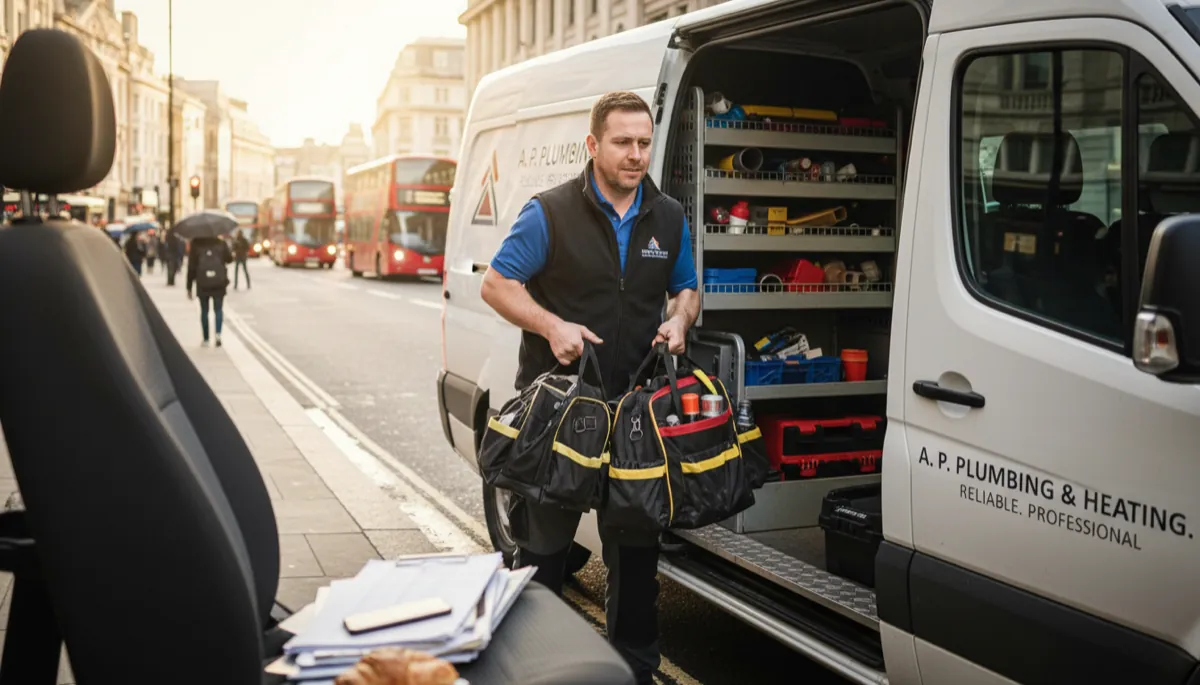
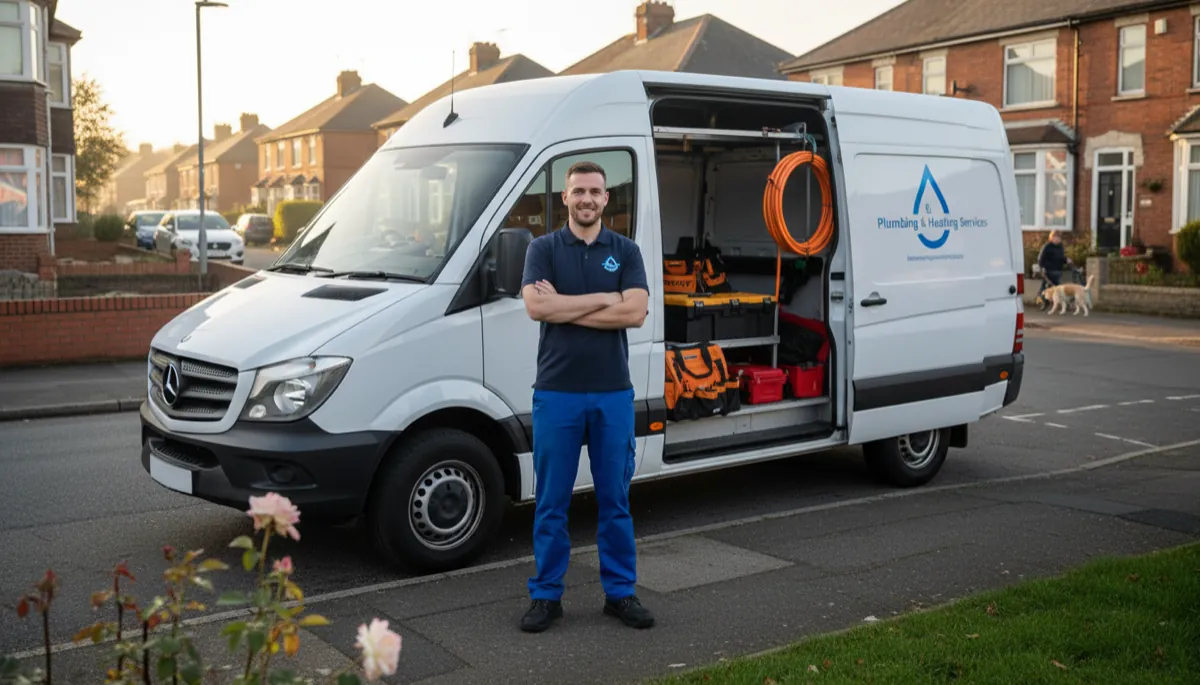
Your van is your office, your storage, and your main marketing asset. A plain white van with a professional wrap is how most potential customers find you parked outside someone’s house. Budget accordingly.
Van costs:
- Used van (3–5 years old, 50,000–80,000 miles): £5,000–£12,000
- New van (Ford Transit Connect, Vauxhall Combo, VW Caddy): £18,000–£28,000 new
Finance is common — monthly payments of £250–£400 for a new van are manageable against a full diary. Insurance for a plumbing van (trade plates, tools in vehicle cover) typically runs £1,200–£2,000/year.
Basic tool kit to start:
| Category | Examples | Approx Cost |
|---|---|---|
| Pipe work tools | Pipe bender, cutters, soldering kit | £400–£800 |
| Power tools | Cordless drill, jigsaw, multi-tool | £400–£700 |
| Test equipment | Pressure gauge, leak detector, multimeter | £300–£500 |
| General hand tools | Spanners, grips, chisels, hammer | £200–£400 |
| Drain and blockage tools | Drain snake, plunger, CCTV camera (optional) | £200–£600 |
A reasonable starter kit costs £2,000–£3,500 if you already own personal tools. Add van racking and storage boxes (£500–£1,500) to keep it organised.
Step 5: Set Your Rates
Most new plumbers underprice because they’re nervous about losing work. Charge what the market supports — underpricing doesn’t help you long-term and undercuts the trade for everyone.
According to Checkatrade, plumber day rates in the UK average:
| Region | Day Rate (2026) | Hourly Rate |
|---|---|---|
| London | £300–£450 | £75–£110 |
| South East | £250–£350 | £60–£90 |
| Midlands / North | £175–£275 | £45–£70 |
| Scotland | £150–£250 | £40–£65 |
Emergency callouts command a premium — typically £100–£150 callout fee on top of labour, with out-of-hours rates running 50–100% higher than daytime.
Don’t just quote an hourly rate. Quote job-by-job where possible — it’s more predictable for the customer and more profitable for you when jobs go well. For larger jobs (bathroom refit, full system installation), always quote in writing with a breakdown of labour, materials, and any contingency.
Step 6: Understand CIS If You’ll Work for Builders
If you’ll be doing subcontract work for building companies, main contractors, or developers, you’ll operate under the Construction Industry Scheme (CIS). This is a HMRC scheme where your customer (the contractor) deducts 20% from your labour payments and pays it directly to HMRC on your behalf. You then reclaim it through your tax return.
Register for CIS via gov.uk/register-for-cis — it takes about 10 minutes. Once registered, the deduction drops from 30% (unregistered) to 20%.
Keep good records of all CIS deductions — you’ll need them when filing your self-assessment. Most plumbers reclaim some or all of these deductions when they complete their annual return, since 20% is usually more than the actual tax owed once expenses are accounted for.
Step 7: Find Your First Customers
No customers, no business. Here’s where to start:
Tell everyone you know. Your first handful of jobs will come from friends, family, former colleagues, and word of mouth. Text your contacts, post on Facebook, and ask your existing network to spread the word. Don’t be awkward about it — people want to support new businesses.
Set up on free directories. Checkatrade, MyBuilder, and Rated People all have free listings. Paid membership gives you more visibility, but a free profile with good photos and a clear description is better than nothing while you’re getting started.
Google Business Profile is free and essential. A completed profile means you appear on Google Maps when someone nearby searches “plumber near me.” According to Google’s own data, 46% of all searches have local intent — this is the most cost-effective visibility you can get. Set it up at business.google.com, add your phone number, service area, and a few photos.
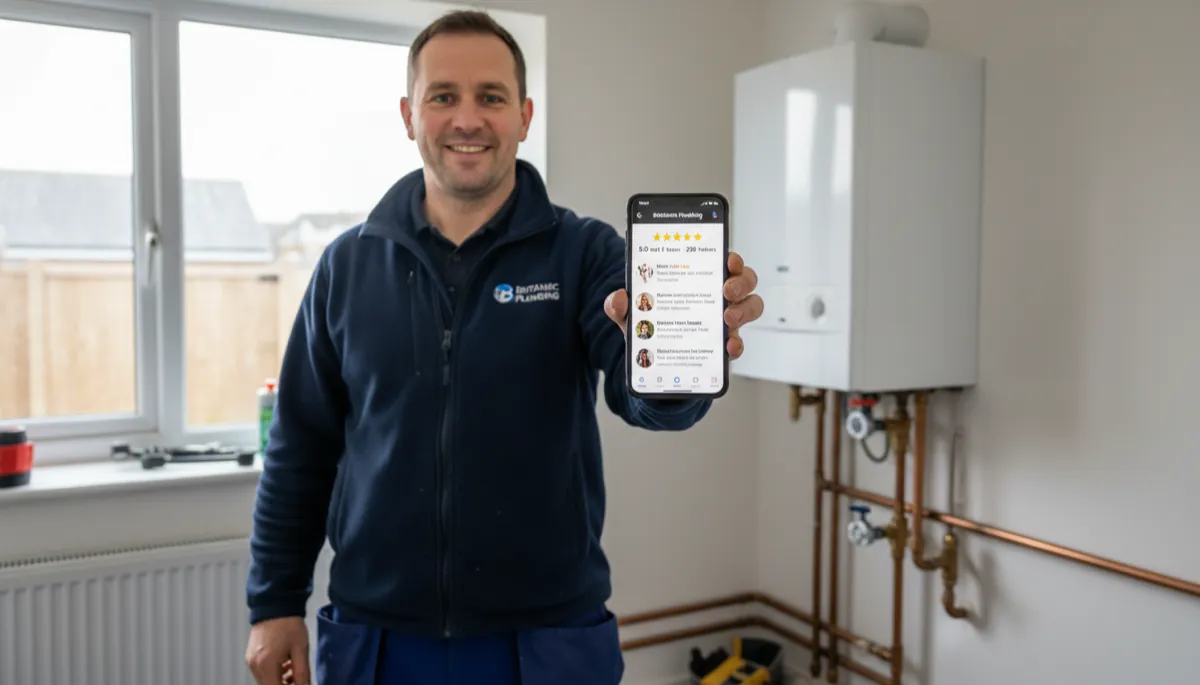
Ask every satisfied customer for a review. Google reviews are the most valuable thing a new plumbing business can accumulate. Five genuine five-star reviews put you ahead of most of your local competition.
Step 8: Build Your Digital Presence
Most new plumbers skip this because it feels like something for later. It isn’t.
The majority of homeowners who need a plumber don’t ask a neighbour — they search Google. If you’re not findable online, you’re invisible to that pool of potential customers. A basic professional website does the job from day one.
You don’t need anything fancy. A website that shows your name and face, your trade and location, your phone number prominently displayed, and a handful of photos of completed work will convert enquiries. Services like Digital Tradies build plumber websites from £49/month with no upfront cost — the site is live within three working days and includes hosting and ongoing support.
A website also legitimises your business. Customers are more likely to trust a plumber with a professional-looking site over one with just a Facebook page or a Checkatrade profile. As your business grows, your website becomes the hub that everything else points to.
See our full guide: Plumber Web Design: What a Good Plumbing Website Looks Like.
Step 9: Sort Your Admin Systems Early
Admin is where a lot of self-employed plumbers fall down — not because the work is hard, but because they leave it to pile up. Getting systems in place from the start takes an hour and saves dozens of headaches later.
Invoicing: Use software like QuickBooks, FreeAgent, or even a simple spreadsheet. Send invoices the day you finish a job, not a week later. Payment terms of 7–14 days are standard for domestic work.
Expenses tracking: Keep a folder (physical or digital) for every receipt — fuel, tools, materials, parking, insurance, phone. These reduce your tax bill directly.
Business bank account: Keep business and personal finances separate from day one. Starling Bank and Tide both offer free business accounts and are popular with sole traders.
Emergency fund: Aim to keep 2–3 months of operating costs in reserve. Tools break, vans need repairs, and there are quiet weeks even for good plumbers.
Frequently Asked Questions
Do I need to be Gas Safe registered before starting my plumbing business? No — Gas Safe registration is required only for gas work. You can legally run a plumbing business without it, but you won’t be able to service boilers, fit gas hobs, or work on any gas appliances. Most domestic plumbing businesses add Gas Safe registration within 12–18 months because it significantly increases the range of jobs available.
How much does it cost to start a plumbing business in the UK? Realistically, budget £8,000–£20,000 to start properly, covering tools (£2,000–£3,500), van (£5,000–£12,000 used), insurance (£500–£800/year all in), and registration. You can start leaner if you lease a van and already own some tools — some plumbers go solo for £3,000–£5,000 upfront.
Do I need a plumbing business plan? Not a formal one to start. But knowing your target day rate, your break-even point (what you need to earn monthly to cover van, insurance, materials, and living costs), and where your first jobs will come from is essential. Most plumbers don’t write formal plans — they run the numbers in their head. Writing them down gives you clarity and spots gaps.
Can I start a plumbing business while still employed? Yes, but check your employment contract first — some include non-compete clauses or restrictions on working in the same trade. If you’re in the clear, taking small weekend jobs while still employed is a sensible way to build a customer base before going fully solo.
How long before a plumbing business becomes profitable? Most plumbers who go solo are cash-flow positive within 2–3 months if they come with existing contacts and reputation. Full-time profitability (enough to replace a employed wage) typically takes 6–12 months. The bottleneck is almost always customers, not work quality — which is why getting your digital presence and referral network in place early matters.