Google Ads puts your plumbing business at the top of search results within hours of going live. No waiting months for SEO to kick in. When someone types “emergency plumber Manchester” at 11pm, your ad can appear at the top — but only if your campaign is set up right.
This guide covers the specifics for plumbing: which keywords actually drive calls, what you should pay per click in the UK, how to structure emergency and non-emergency campaigns differently, and when Google’s Local Services Ads are a better option than standard pay-per-click.
For a broader introduction to how paid search works for tradespeople, see our Google Ads guide for tradespeople.
Key Takeaways
- Emergency plumber keywords in the UK cost £5–£12 per click — more expensive than standard trade keywords but converting traffic is highly motivated
- Non-emergency keywords (boiler service, bathroom installation) cost roughly £2–£5 per click and tend to attract larger job values
- Local Services Ads (Google’s pay-per-verified-lead product) often deliver better cost per acquisition than standard Google Ads for most plumbers
- A realistic test budget for a sole-trader plumber is £15–£25 per day — enough to gather data within 2–3 weeks
- Plumbing demand spikes in November to February when boiler breakdowns and frozen pipes peak — this is when ad spend pays off fastest
- Sending ad traffic to a poor or missing website wastes your budget — visitors who can’t verify your credibility won’t call
Why Google Ads Works Well for Plumbing
Plumbing has two qualities that make paid search perform well compared to many other trades.
High urgency. A burst pipe, a boiler that’s stopped working, or a blocked drain aren’t problems people research for weeks. They search, they click the first credible result, and they call. That urgency means click-to-call conversion rates for emergency plumbing are among the highest across all trade searches.
Clear job values. Even a callout and basic repair might be worth £150–£300. A boiler replacement is typically £2,000–£4,000. When a single job can cover weeks of ad spend, the maths can work even with modest conversion rates.
Compare that to SEO for plumbers, which takes months to build but then delivers free traffic indefinitely. Google Ads and SEO serve different purposes — see our SEO guide for plumbers for the longer-term strategy.
Plumbing Keywords: What to Target and What to Pay
Plumbing searches fall into three broad categories. Each one behaves differently and needs its own approach.
| Keyword Category | Examples | Typical UK CPC | Job Value |
|---|---|---|---|
| Emergency | ”emergency plumber near me”, “burst pipe repair”, “24 hour plumber” | £5–£12 | £150–£450 |
| Boiler work | ”boiler service”, “boiler repair”, “Worcester Bosch installer” | £3–£7 | £300–£4,000 |
| Installation / bathroom | ”bathroom installation”, “new radiator fitted”, “underfloor heating” | £2–£5 | £1,000–£10,000+ |
| Maintenance | ”leak detection”, “powerflush”, “central heating service” | £1.50–£4 | £100–£500 |
Emergency keywords are the most expensive per click because multiple plumbers are bidding on the same urgent searches. But the person clicking is ready to book — they’re not comparing options for two weeks.
Installation keywords cost less per click and attract larger jobs. The trade-off is a longer sales cycle; someone planning a bathroom renovation might click your ad in February and not book until April.
Emergency vs Scheduled: Two Campaign Types Plumbers Need
Running a single campaign that mixes emergency and non-emergency keywords is a common mistake. The bid strategies, ad copy, landing pages, and time-of-day settings should differ.
Emergency campaign:
- Target keywords with “emergency”, “24 hour”, “same day”, “urgent”, “near me”
- Bid higher than your average — you’re competing for immediate intent
- Run 24/7, or at minimum from 6am to midnight (emergencies don’t follow office hours)
- Ad copy should confirm availability: “Available Now”, “Same Day Response”, phone number prominent
- Send traffic directly to a page with your phone number above the fold and clear service areas listed
- Enable call extensions — many emergency searches happen on mobile and people will call directly from the ad
Non-emergency campaign:
- Target installation, service, and maintenance keywords
- Normal bid levels — less competition, less urgency
- Running during business hours is sufficient; you can apply bid adjustments to reduce spend on evenings and weekends
- Ad copy can focus on value: guarantees, [Gas Safe registration](/blog/gas-safe-registration-explained/), years of experience
- Landing page can afford more detail — project photos, testimonials, and a contact form work well here
Separating these means you’re not using a single budget to compete on both high-urgency and low-urgency searches simultaneously.
Local Services Ads: Often Better Value Than Standard Google Ads
Google runs a separate product called Local Services Ads (LSAs). These appear above standard pay-per-click ads and are marked “Google Guaranteed” or “Google Screened.”
The key difference: you pay per verified lead (a call or message), not per click. Google verifies the lead met minimum criteria before charging you.
| Feature | Standard Google Ads | Local Services Ads |
|---|---|---|
| What you pay for | Each click | Each verified lead |
| Typical cost per lead (plumbing) | Variable — depends on conversion rate | £20–£60 per verified lead |
| Google badge | None | ”Google Guaranteed” badge |
| Setup complexity | Higher — keyword lists, bids, ad copy | Lower — Google manages placement |
| Control over targeting | High | Lower |
| Requirements | None | Background check, licence verification, insurance |
For plumbers, the “Google Guaranteed” badge carries real weight. A customer searching at midnight for an emergency plumber sees two ads — one standard, one showing “Google Guaranteed” with your star rating. Many will choose the one with the badge.
LSAs do require you to pass Google’s verification process, which includes confirming your Gas Safe registration and public liability insurance. Most qualified UK plumbers can complete this within a few days.
Start with LSAs if you want the simplest route to paid leads. Add standard Google Ads later once you understand which keywords and areas convert best for you.
How Much Should a UK Plumber Spend on Google Ads?
There’s no universal answer, but here’s a practical framework.
Work out what a new customer is worth. A plumber with an average job value of £400 who converts 1 in 5 leads into a booking can afford £80 per lead and still make money. If emergency keywords cost £8 per click and 10% of clicks convert to calls, that’s £80 per lead — right at the break-even point.
For testing purposes:
| Business Type | Suggested Daily Budget | Monthly Spend |
|---|---|---|
| Sole trader, local area | £15–£25/day | £450–£750 |
| 2–5 person business | £30–£50/day | £900–£1,500 |
| Larger plumbing firm | £75–£150+/day | £2,250–£4,500 |
Run the test budget for at least 30 days before drawing conclusions. The first two weeks often produce skewed data while Google’s algorithm learns your campaign.
December to February is when plumbing ad spend produces the fastest returns. Cold weather drives boiler breakdowns and frozen pipe calls. If your budget is limited, concentrate it on winter.
What You Need Before Running Ads
Ad spend is wasted if the destination doesn’t convert.
A professional website. When someone clicks your ad, they land on your site in seconds. If it looks outdated, doesn’t show your phone number prominently, or isn’t mobile-optimised, they’ll go back and click a competitor. According to Google’s own research, 53% of mobile visitors leave a page that takes longer than 3 seconds to load.
Clear service areas. Your landing page should state exactly where you work. “Covering Leeds, Bradford, and Harrogate” tells a potential customer whether to bother calling. Vague pages waste ad budget on unqualified clicks.
Click-to-call enabled. Most plumbing searches happen on mobile. Your phone number should be a clickable link at the top of every page, not buried in a footer.
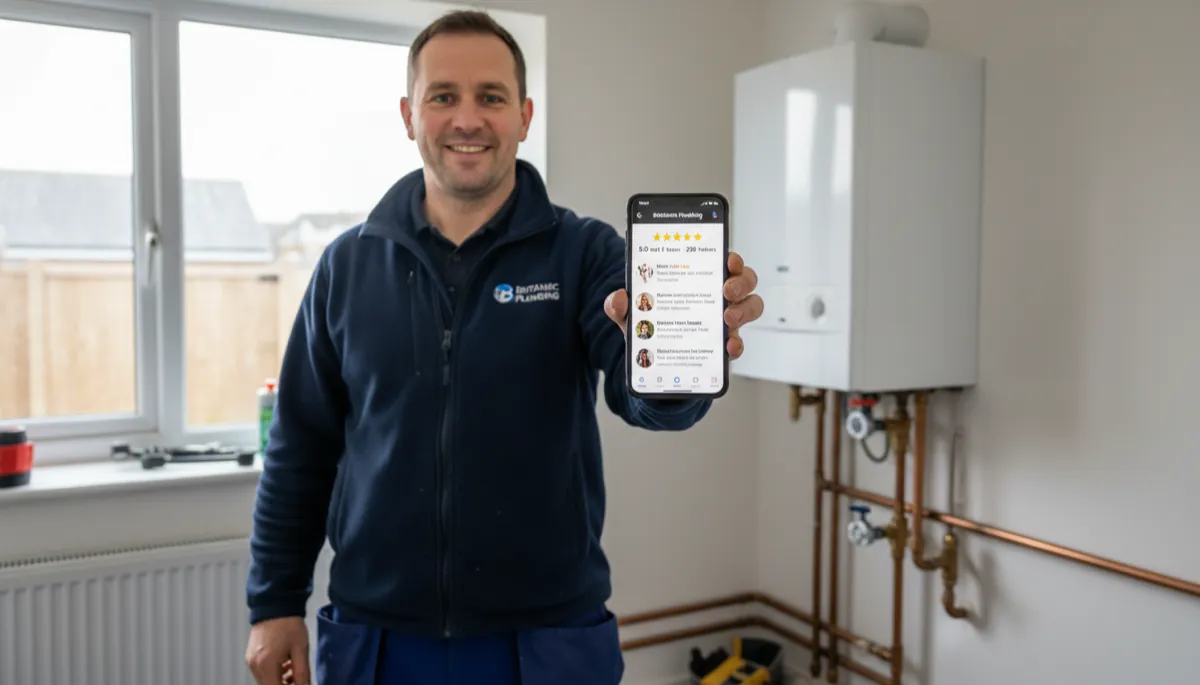
Reviews visible. Gas Safe registration and a handful of Google reviews on your site (or linked from your Google Business Profile) dramatically improve conversion rates. A plumber with 30 reviews at 4.8 stars will beat an identical plumber with no visible social proof every time.
If your website isn’t doing this job well, Digital Tradies builds professional plumber websites from £49/month — no upfront cost, live in three days, with your service areas and contact details exactly where they need to be.
5 Mistakes Plumbers Make with Google Ads
1. Targeting the whole country. Unless you’re a national firm, restrict your ads to your actual service area. Paying for clicks from two counties away serves no one.
2. Sending traffic to the homepage. Create a dedicated landing page for each campaign type. An emergency plumber landing page is different from a boiler service landing page.
3. Ignoring negative keywords. Add negative keywords like “jobs”, “training”, “apprenticeship”, “DIY” immediately. Otherwise you’ll pay for people searching for plumbing careers rather than plumbing services.
4. Not tracking calls. Most plumbing enquiries come by phone, not form. Set up call tracking from day one so you know which keywords are generating actual calls, not just clicks.
5. Stopping the campaign after a bad week. Google Ads needs data to optimise. A bad week in week one often becomes a profitable week by week four as the algorithm improves. Give it 30 days before making significant changes.
Frequently Asked Questions
Are Google Ads worth it for a plumber? They can be — particularly for emergency plumbing searches where intent is very high and jobs are booked fast. The maths work if your average job value is high enough to cover the cost per click and conversion rate. Local Services Ads are often the better starting point since you pay per verified lead rather than per click.
How much do plumbing keywords cost on Google Ads in the UK? Emergency plumbing keywords typically cost £5–£12 per click in the UK. Standard keywords like “boiler service” or “bathroom installation” are cheaper at £2–£5 per click. Exact costs depend on your location, competition, and Quality Score.
Should plumbers use Local Services Ads or standard Google Ads? Start with Local Services Ads if you haven’t run paid search before. They’re simpler to manage, carry the “Google Guaranteed” badge, and charge per verified lead. Add standard Google Ads later to expand reach and target keywords LSAs don’t cover.
What’s the minimum budget to test Google Ads as a plumber? Around £15–£25 per day gives you enough data within 3–4 weeks to judge whether Google Ads is working for your business. Less than this and you’ll struggle to get statistically meaningful data.
Do I need a website to run Google Ads? Yes. You need a destination page to send traffic to, and it needs to be professional enough to convert visitors into calls. Running ads to a weak website is one of the fastest ways to waste budget. Your plumber website needs to be mobile-friendly, fast, and show your contact details immediately.