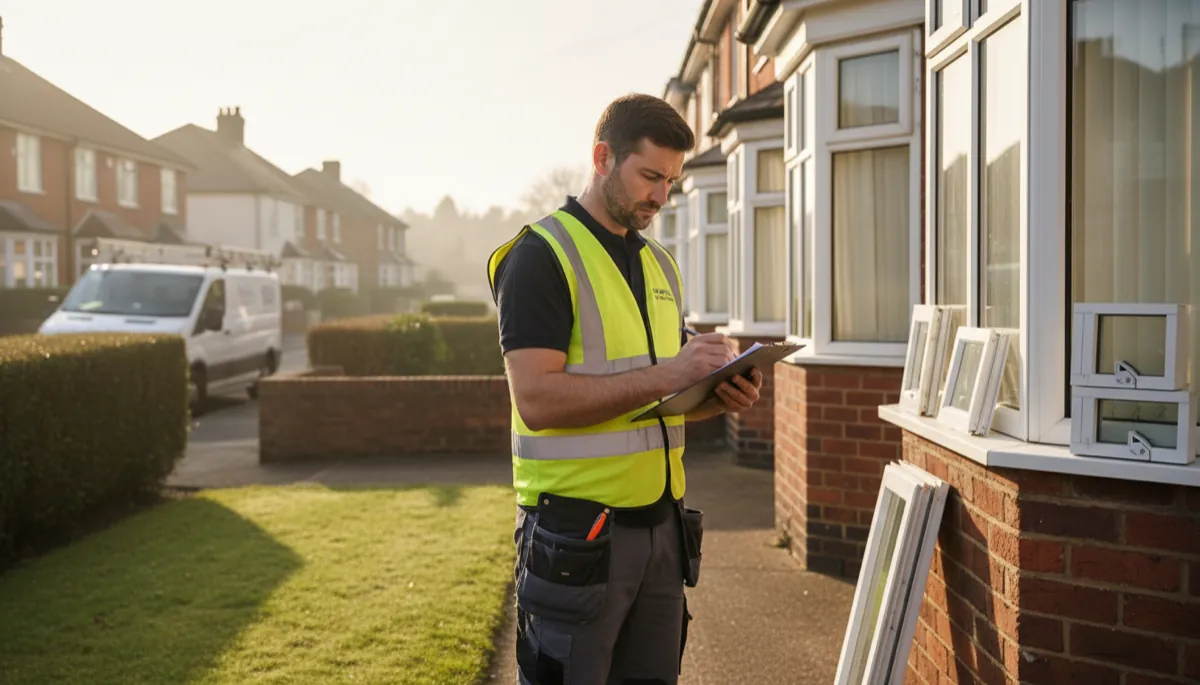
Self-employed window fitters in the UK typically charge between £150 and £350 per day for labour-only work in 2026. Supply-and-fit jobs — where you source the windows and fit them — work differently, and most window fitters price these per unit or per job rather than by the day. If you’re pricing work from instinct or matching a competitor’s quote without checking the numbers, this guide breaks down what the market actually pays and how to set a rate that works financially.
Key Takeaways
- Labour-only day rates average £180–£280/day nationally for experienced sole traders
- London and South East window fitters typically charge £280–£400/day for labour-only
- Most residential window jobs are priced supply-and-fit per unit — day rates underpin the maths but don’t appear on the customer quote
- FENSA-registered fitters command a premium over unregistered competitors and can self-certify building regulations compliance
- An experienced window fitter can fit 3–6 standard casements per day depending on job complexity
- Your day rate must cover public liability insurance, FENSA fees, van costs, tools, and non-billable admin time
What Is a Window Fitter’s Day Rate?
A window fitter’s day rate is the labour charge for one working day — usually 8 hours on site. It covers your time, expertise, and the physical work of removing old frames, fitting new ones, sealing, and finishing. On a labour-only job, materials are supplied by the customer or the window manufacturer, and you charge purely for your time.
Day rates are most relevant when:
- A customer provides windows and wants fitting only
- You’re quoting multi-day commercial or new-build contracts
- You’re working as a subcontractor for a window company
For the majority of residential work, you’ll quote per window or per job — but your day rate is the foundation of that calculation. Know your number before you price anything.
UK Window Fitter Day Rates 2026
Based on trade data from Checkatrade, Rated People, and Hamuch’s 2026 rate analysis, here’s where day rates sit for labour-only window fitting:
| Experience Level | Typical Day Rate (Labour Only) |
|---|---|
| New to trade / first year solo | £90–£140 |
| Qualified, 2–4 years experience | £140–£200 |
| Experienced sole trader, most regions | £180–£280 |
| Experienced sole trader, South East | £240–£340 |
| Experienced sole trader, London | £280–£400 |
| Specialist (sash windows, conservation areas) | £300–£450+ |
| FENSA-registered, fully certified | 10–20% premium over uncertified rate |
Hamuch’s national data puts the average for experienced window fitters around £220–£250/day for labour-only work. Sole traders consistently earn more per day than employed fitters — who typically take home £100–£160/day — because they carry overheads, insurance, and business risk.
Regional Day Rates: What the Market Pays
Location affects what you can charge more than almost any other factor. According to Checkatrade’s 2026 pricing data, regional labour rates for window fitting vary significantly:
| Region | Average Day Rate (Labour Only) |
|---|---|
| London | £280–£400 |
| South East | £240–£340 |
| East of England | £200–£290 |
| South West | £175–£260 |
| West Midlands | £160–£240 |
| East Midlands | £160–£235 |
| Yorkshire & Humber | £155–£230 |
| North West | £155–£235 |
| North East | £145–£215 |
| Scotland | £160–£230 |
| Wales | £150–£215 |
Don’t price below what the market in your area will bear. If you’re working in Leeds and charging South East rates, you won’t get work. If you’re in London charging £180/day, you’re leaving real money on the table and barely covering your operating costs in one of the UK’s most expensive cities to run a vehicle.
Supply-and-Fit: How Most Window Jobs Are Actually Priced
On most residential window replacement jobs, you supply the windows and fit them. The customer doesn’t buy the frames — they hire you to handle everything. This is the standard model for double glazing replacements, and it means you need to understand per-unit pricing, not just day rates.
Typical supply-and-fit pricing for standard double-glazed uPVC windows:
| Window Type | Supply-and-Fit Cost (per unit) |
|---|---|
| Small casement (under 1m wide) | £300–£600 |
| Standard casement (1–1.5m wide) | £450–£900 |
| Bay window (3-panel) | £1,000–£2,500 |
| Sliding sash (uPVC) | £700–£1,500 |
| Tilt-and-turn | £450–£950 |
| French casement (per pair) | £600–£1,200 |
According to the Double Glazing Network’s 2025 cost data, a full detached house window replacement (10–12 windows) typically costs the homeowner £6,000–£12,000 supply-and-fit, with materials accounting for 55–65% of that figure.
Your margin on supply-and-fit comes from two places: the markup on frames (usually 20–40% on trade price) and your labour, which is built into the per-unit price. The risk is that material costs go up or a job takes longer than planned.
The day rate check: If a supply-and-fit job with 5 windows takes 2 days and your quote is £3,500, your implied day rate on labour is around £200–£250/day after material costs. Run this check on every job — if the implied daily labour rate is below your target, your quote is too low. See our guide to writing trade quotes for a template that covers materials, labour, and contingency.
FENSA Registration: Does It Affect What You Can Charge?
FENSA is the government-authorised Competent Person Scheme for replacement windows and doors in England and Wales. If you’re FENSA-registered, you can self-certify your installations comply with Building Regulations without needing a separate local authority inspection.
What this means for pricing:
- FENSA-registered fitters can include the FENSA certificate in their quote — homeowners need this for future property sales
- Registration typically costs around £400–£600/year depending on installation volume
- Registered fitters generally command a 10–20% premium over unregistered competitors because they offer a complete, certifiable service
- Unregistered fitters must arrange a local authority Building Regulations inspection (around £200–£400 per job) — which either eats into your margin or gets passed to the customer
CERTASS is the alternative registration body — also government-approved, similar cost, same legal standing as FENSA. Either registration gives you the same pricing advantage.
If you’re not registered and you’re fitting replacement windows in England or Wales, factor in the Building Regulations inspection cost when quoting. And if you’re serious about running window fitting as a long-term business, registering pays for itself quickly.
How Many Windows Can You Fit Per Day?
This is the practical question that connects your day rate to your per-unit pricing. The answer depends heavily on job type:
| Job Type | Typical Units Per Day (Solo) |
|---|---|
| Standard uPVC casement replacement | 4–6 windows |
| Bay window (full unit) | 1–2 per day |
| Sliding sash (timber or uPVC) | 2–3 per day |
| Velux / roof windows | 2–4 per day |
| Bi-fold or sliding patio doors | 1 per day |
| New-build first fit (smaller frames, no removals) | 6–10 per day |
Removals add time — stripping out old frames, managing rubble, disposal. A replacement job always takes longer than a first-fit on a new build. Factor this in when building per-unit quotes rather than assuming best-case speed.
If you’re regularly fitting 5 casements a day at £500 per unit supply-and-fit, you’re turning over £2,500 daily in revenue. Once materials (say £1,500–£1,800) are subtracted, your daily labour return is £700–£1,000 — well above a straight labour-only day rate. That’s the appeal of supply-and-fit when the pricing is done properly.
What Your Day Rate Needs to Cover
Many window fitters base their rate on what a local competitor charges, or what they think sounds reasonable. Neither approach accounts for your actual costs. Here’s what your day rate needs to recover before you’re profitable:
| Cost Item | Typical Annual Cost |
|---|---|
| Public liability insurance (£1–2m cover) | £400–£800/year |
| Van insurance (commercial, tools in transit) | £1,200–£2,500/year |
| Van running costs (fuel, servicing, tyres) | £3,500–£7,000/year |
| FENSA or CERTASS registration | £400–£600/year |
| Tools and equipment (drills, sealant guns, etc.) | £400–£900/year |
| Unpaid sick days (no statutory sick pay when self-employed) | 5–10 days/year |
| Non-billable time (quoting, admin, travel) | 1–2 days/week |
| Tax and Class 4 National Insurance | ~28–32% of profit |
If you work 210 billable days per year and your annual overhead (excluding materials) runs to £14,000, you need £67/day just to break even on costs — before wages. That’s why a target of £180–£200/day as a sole trader isn’t generous; it’s the floor needed to make the business work outside of London.
Frequently Asked Questions
What do window fitters charge per day in the UK? Self-employed window fitters charge around £150–£350/day for labour-only work in 2026, with the national average sitting at roughly £200–£250 for experienced sole traders. London and South East rates reach £280–£400. The actual day rate depends on experience, location, and whether the fitter is FENSA-registered.
Is it better to charge per window or per day? Most window fitters quote per window on supply-and-fit jobs — it gives customers a clear price and lets you factor in unit complexity. Day rates apply on labour-only contracts or commercial subcontracting work. Your day rate is the backbone of both approaches: even when you quote per unit, the implied daily labour return should meet your rate target.
How much profit do window fitters make? A self-employed window fitter working 200 billable days per year at £220/day labour-only earns £44,000 gross. After overheads (van, insurance, FENSA, tools: typically £9,000–£13,000/year) and tax, take-home is around £22,000–£28,000. On supply-and-fit work with good volume and margins, net earnings can exceed £35,000–£45,000 per year for a well-run sole trader.
Does FENSA registration affect how much I can charge? Yes. FENSA-registered fitters can self-certify Building Regulations compliance, which homeowners need for property sales. This lets you include the FENSA certificate in your service — something unregistered fitters can’t offer without a third-party inspection. Most registered fitters charge 10–20% more than unregistered competitors as a result.
How long does it take to fit 10 windows? A full house of 10 standard uPVC casement replacements typically takes 2–3 days for a sole trader working efficiently. That’s assuming standard openings, no structural complications, and reasonable access. Bay windows, sash units, or awkward access (scaffolding needed, first floor with no extension roof) will extend the timeline. Always allow time for the removal and disposal of existing frames.
Getting More Window Fitting Work
Most window fitters get the majority of their work through recommendation, Checkatrade listings, or by subcontracting for glazing companies. That’s fine for a steady workflow — but it means your income depends on other people’s activity and platforms you don’t control.
A professional website changes that. When someone searches “window fitter near me” or “double glazing installer [town],” they click through to websites — not just directory listings. A site that shows your certifications, previous work, and a clear way to get a quote puts you in front of customers actively looking for a fitter.
Digital Tradies builds websites for window fitters and other trades from £49/month, no upfront cost, live in three days. It’s one way to build a source of leads you actually own.