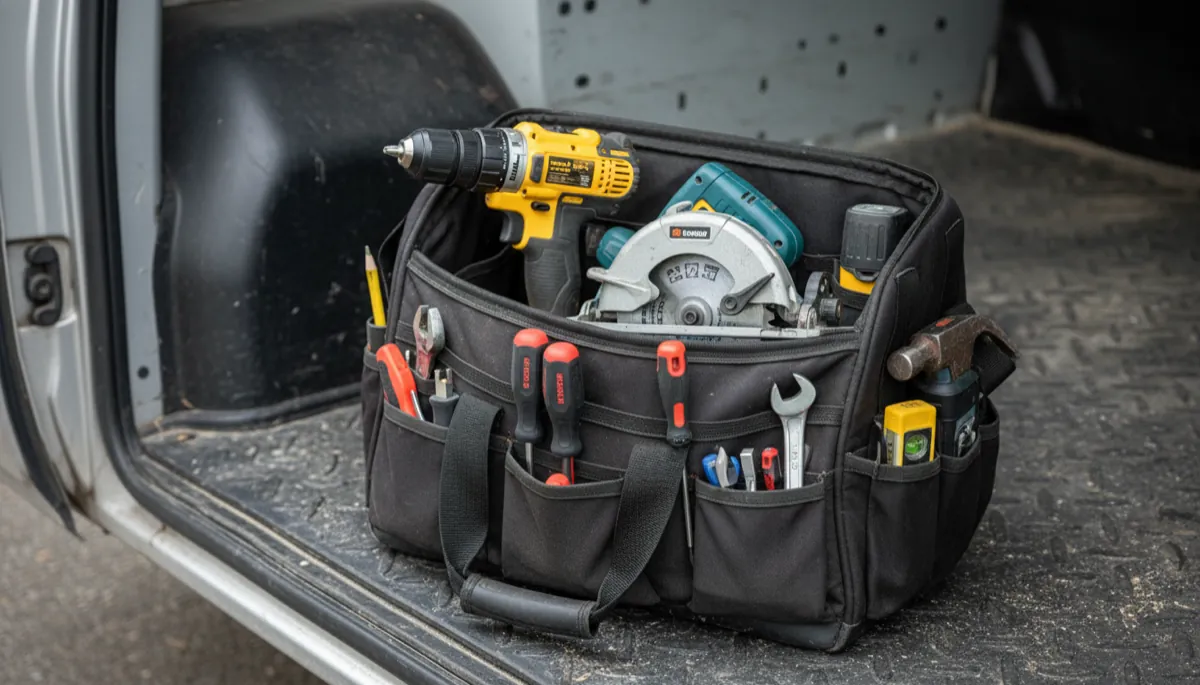
Your tools are how you earn. If they’re stolen from your van overnight or damaged on site, you could be looking at thousands of pounds to replace them — plus the cost of turning down work while you wait. Tool insurance covers exactly that risk.
This guide explains what tool insurance actually covers, what it costs, what it won’t pay for, and what to check before you buy.
Key Takeaways
- Tool insurance covers your equipment against theft, loss, and accidental damage — whether on site, in your van, or in storage
- Standard van insurance does not cover tools — most fully comp van policies exclude the contents unless you add a specific tools extension
- Policies start from around £4.74/month (Rhino Trade Insurance, 2026), with most sole traders paying £80–£300/year depending on total tool value
- Most policies have a per-item limit of £250–£500 — expensive items like cordless drill sets may need to be listed separately
- The most common reason claims are rejected: tools left in an unlocked or unalarmed van overnight
- You can buy tool cover as a standalone policy or bundled into a combined tradesman’s insurance package
What Tool Insurance Covers
Tool insurance is a specialist policy that covers your work equipment against unexpected loss, theft, or damage. A standard policy typically includes:
| Risk | Covered? | Notes |
|---|---|---|
| Theft from a locked van | Yes (with conditions) | Van usually needs to be locked; tools stored out of sight |
| Theft from a job site | Yes | Usually requires evidence of forced entry or break-in |
| Accidental damage | Yes | Dropped tools, water damage, on-site breakage |
| Fire or flood damage | Yes | At a site, workshop, or storage location |
| Loss in transit | Yes (most policies) | Tools in a secure bag or case |
| Hired-in tools | Sometimes | Needs to be listed or added as an extension |
| Tools used by employees | Sometimes | Depends on policy wording — check carefully |
What Tool Insurance Does Not Cover
This is where claims get rejected. Read the exclusions before assuming you’re covered.
Mechanical or electrical breakdown — a drill that stops working due to a fault or worn-out parts isn’t an insurable event. Tool insurance covers accidents and theft, not normal deterioration.
Unattended tools left unsecured — leaving tools on an open site overnight without locking them away typically voids a claim. Policies require tools to be locked or supervised.
Theft from an unlocked vehicle — if there’s no sign of forced entry, many insurers will reduce the payout substantially or decline the claim entirely.
Personal items — phones, wallets, or non-trade equipment in your van bag aren’t covered under a tools policy.
Gradual deterioration — a tool that slowly loses performance over years of use isn’t a valid claim. The loss needs to be sudden and accidental.
Items over the per-item limit — most policies cap payouts per individual item. High-value kit above that limit needs to be listed separately or it won’t be fully covered.
How Much Does Tool Insurance Cost?
The main factor is the total replacement value of your tools. Other variables include your trade, location, and overnight storage arrangements.
| Total Tool Value | Approximate Annual Premium |
|---|---|
| Up to £1,500 | £80–£140 |
| £1,500–£3,000 | £120–£200 |
| £3,000–£6,000 | £175–£280 |
| £6,000–£10,000 | £250–£400 |
Figures are indicative, based on published rates from providers including Rhino Trade Insurance, Admiral Business, AXA, and Trade Direct Insurance. Your actual premium will vary based on your trade, claims history, and specific cover level.
Monthly or annual?
Most insurers offer monthly payment options. Paying monthly typically adds 10–15% to the annual cost. If you can pay annually, it’s usually cheaper overall.
Your Van Insurance Won’t Cover Your Tools
This is the most common misconception among tradespeople. A comprehensive van policy covers the vehicle — and sometimes fitted items like shelving or racking. Loose tools, equipment bags, and power tools stored in the back are almost always excluded, or covered only up to a very low limit (sometimes as little as £250).
If you carry £3,000+ of tools in your van, a separate tool insurance policy is the only way to properly cover them. Some insurers offer a tools-in-transit extension to existing van policies, but standalone tool cover typically offers more complete protection and a higher overall limit.
For more on what van insurance does and doesn’t include, see our guide to van insurance for tradespeople.
What to Check Before You Buy
Per-item limit — most policies cap how much they’ll pay for any single piece of equipment. A £250 per-item limit on a tool bag containing a £400 Makita drill set means you’re underinsured. Check whether high-value items need to be listed individually.
Overnight storage clause — some policies restrict or exclude overnight theft between roughly 10pm and 6am, unless tools are kept in a locked garage or alarmed storage unit. If you routinely leave tools in your van overnight, read this clause carefully before you buy.
New-for-old vs indemnity — new-for-old policies replace your tools with the current equivalent regardless of age. Indemnity policies deduct depreciation based on how old the item is. New-for-old costs more but prevents the frustration of receiving £90 for a three-year-old tool that costs £180 to replace.
Hired tools — tools you’ve rented or borrowed are usually excluded from standard policies. If you regularly hire in kit, check whether this needs to be added as an extension.
Excess — the amount you contribute to each claim. A £150 excess on a claim for tools worth £180 means you’ll get £30 back. Tool insurance is most valuable for large losses — a full kit stolen from a van, or damage to expensive specialist equipment.
Standalone Tool Cover vs a Combined Tradesman’s Package
You’ve got two main routes:
Standalone tool insurance covers just your tools. It’s the simpler starting point if you already have van insurance and public liability insurance sorted separately.
Combined tradesman’s insurance bundles tool cover with public liability, and sometimes employer’s liability and van cover, into a single policy. These packages can be cheaper than buying each type separately, and they simplify renewals to a single date.
For most new sole traders, a standalone tool policy plus separate public liability is a sensible start. As you take on more work — or staff — a combined package becomes easier to manage. Providers offering combined tradesman’s policies include Simply Business, Premierline, and Trade Direct Insurance.
Practical Tips for Claims
Keep an up-to-date tool inventory with photographs, serial numbers, and purchase receipts. Store these somewhere accessible — photos in cloud storage, not just on your phone. Without evidence of ownership and value, insurers can reduce payouts or dispute claims.
If tools are stolen, report it to the police immediately and get a crime reference number. Insurers require this to process theft claims. Without it, they can legitimately decline to pay.
Don’t make small claims. Claiming for a £80 tool when your excess is £150 isn’t worth it — and every claim affects your next renewal premium.
Frequently Asked Questions
Does van insurance cover tools stolen from my van? Usually not. Standard van insurance covers the vehicle itself but typically excludes tools and equipment stored inside. Some insurers offer a tools-in-transit extension, but standalone tool insurance generally provides better coverage at a higher overall limit.
Is tool insurance a legal requirement? No. Unlike employers’ liability insurance, tool insurance isn’t required by law. But the cost of replacing a complete toolkit can easily reach £2,000–£5,000 for a sole trader, making insurance low cost relative to the risk.
Is tool insurance tax-deductible? Yes. HMRC classes tool insurance as an allowable business expense for self-employed tradespeople. You can deduct the premium from your self-assessment tax return as a business running cost.
What if I have no receipts for stolen tools? Insurers will still process the claim but may dispute the value without proof of purchase. Photographs, serial numbers, or bank statements showing the original purchase all help. This is the main reason keeping a tool inventory is recommended — not just for insurance, but for any loss.
Does tool insurance cover tools hired from a hire company? Not automatically. Hired tools are usually excluded from standard policies. If you regularly rent equipment, ask your insurer about adding hired tools cover as an extension, or look for a policy that includes it as standard.
Running a trade business involves more costs than most people plan for — insurance, tools, fuel, materials. A professional website is one investment that works for you around the clock, bringing in enquiries while you’re on the job. Digital Tradies builds websites for UK tradespeople from £49/month with no upfront cost, live in three working days.