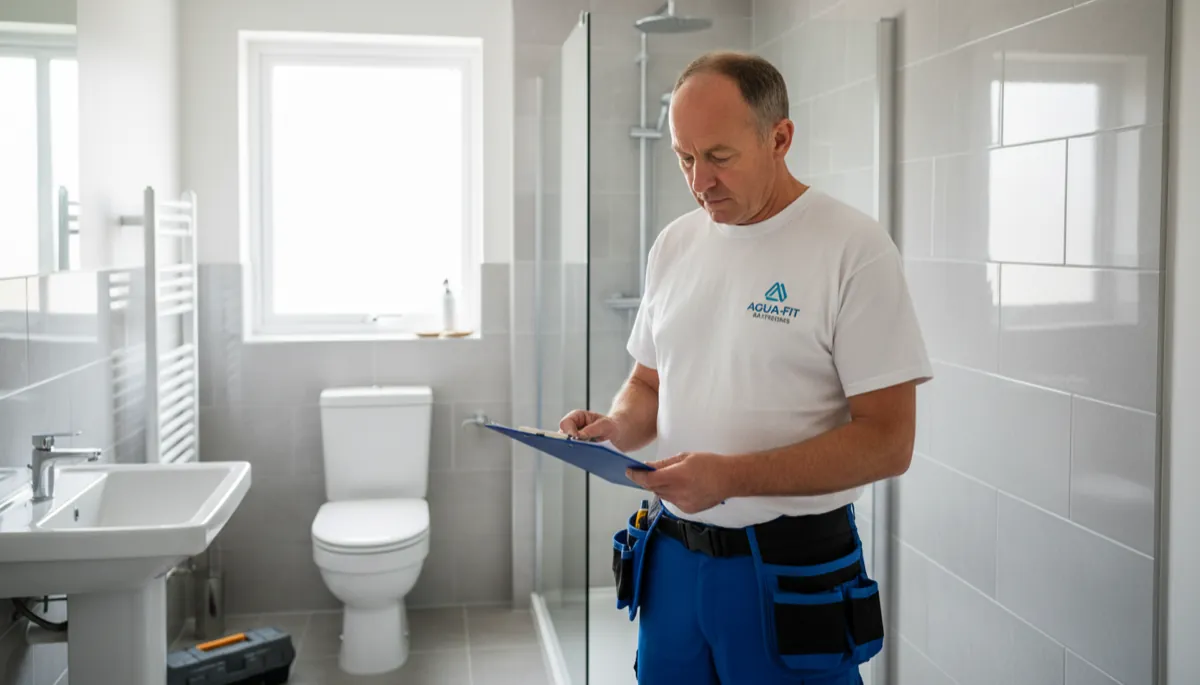
Public liability insurance for bathroom fitters covers you if your work causes injury or property damage to a client, neighbour, or member of the public. Bathroom fitting carries some of the highest-risk work in the trades: water damage from a failed seal or an incorrectly fitted pipe can cost tens of thousands to put right. This guide covers what PLI actually covers for bathroom fitters, how much you should expect to pay, what levels of cover you need, and what other policies are worth considering.
Key Takeaways
- PLI isn’t legally required for bathroom fitters, but clients, main contractors, and trade directories expect you to have it
- Annual premiums typically run from £90 to £400 per year for self-employed bathroom fitters — around £8 to £33 per month
- According to Simply Business, 10% of bathroom fitters pay £89.96 or less per year for £2 million cover
- Water damage from failed seals, silicone, or misconnected pipes is the most common cause of bathroom fitting claims
- Most sole traders start with £1 million cover; main contractors and commercial work usually require £2 million or £5 million
- A completed works extension is essential for bathroom fitters — leaks and seal failures often appear weeks after you’ve finished
Do Bathroom Fitters Need Public Liability Insurance?
No law in England, Scotland, or Wales requires bathroom fitters to hold PLI. However, in practice you’ll find it’s almost impossible to avoid needing it.
- Domestic clients fitting bathrooms worth £5,000–£20,000+ are increasingly cautious. Many will ask to see proof of insurance before work starts. A water damage claim from a seal failure or misconnected waste pipe can easily exceed £10,000 — clients know this.
- Main contractors running renovation projects will typically require subcontractors to carry their own PLI before setting foot on site.
- Trade directories including Checkatrade, Rated People, and TrustATrader require valid PLI as a condition of membership. You won’t get verified without it.
- Insurance-backed guarantees — some clients want an IBG on their bathroom installation. Most IBG providers require the installer to have PLI in place.
The Association of Plumbing and Heating Contractors (APHC) and the Guild of Master Craftsmen both recommend PLI for bathroom installers. It won’t protect you in every scenario, but it will cover the scenarios most likely to result in a claim.
What Insurance Does a Bathroom Fitter Need?
Bathroom fitting usually involves plumbing, tiling, carpentry, and electrical first fix. That range of tasks means you need a policy that covers all of them — not a narrow product designed for a single trade.
| Insurance Type | What It Covers | Required? |
|---|---|---|
| Public liability insurance | Third-party injury and property damage from your work | No (but expected) |
| Employers’ liability insurance | Injuries to employees or labour-only subcontractors | Yes, if you employ staff |
| Tools and equipment cover | Loss, theft, or damage to your tools | No (but recommended) |
| Personal accident cover | Loss of income if you’re injured and can’t work | No (but recommended) |
| Contractors all-risk | Plant, materials, and contract works in progress | For larger projects |
If you’re self-employed and work alone, PLI is the policy you need to start with. Employers’ liability becomes mandatory the moment you take on a member of staff or a labour-only subcontractor. For a full guide to employers’ liability for trades, see Employers’ Liability Insurance for Tradespeople.
What Does PLI Cover for Bathroom Fitters?
PLI covers third-party claims made against you — not claims you make yourself. For bathroom fitters, the scenarios most likely to result in a claim are specific to the work you do.
| Scenario | Covered by PLI? |
|---|---|
| A client slips on a wet floor while you’re working | Yes |
| A silicone seal fails and water leaks into the floor below | Yes (with completed works cover if discovered later) |
| You misconnect a waste pipe and the bathroom floods | Yes |
| Drilling through a wall damages a concealed pipe or cable | Yes |
| A client’s tiles crack because you fitted the wrong board substrate | Yes |
| A neighbour’s ceiling is damaged by a leak traced to your installation | Yes |
| Your tools are stolen from site or your van | No — needs tools insurance |
| You injure yourself on site | No — needs personal accident cover |
| An employee or labour-only subcontractor is injured | No — needs employers’ liability |
| A client disputes the quality of your work but there’s no physical damage | No — this is a contract dispute, not an insured event |
Completed works cover deserves its own mention. Standard PLI covers incidents that happen while you’re on site. Completed works cover — sometimes included as standard, sometimes an optional add-on — extends protection to claims that come in after you’ve finished. Water damage from bathroom fittings is one of the most common causes of completed works claims. A shower tray that starts leaking six weeks after installation is a completed works scenario, not a standard PLI scenario. Always check whether your policy includes this.
How Much Does Public Liability Insurance Cost for Bathroom Fitters?
According to Simply Business, 10% of bathroom, bedroom and kitchen fitters pay £89.96 or less per year for £2 million public liability cover. That works out to roughly £7.50 per month at the lower end. Typical premiums across the market run higher — most self-employed bathroom fitters pay between £90 and £400 per year depending on turnover and risk profile.
| Annual Turnover | Typical Annual Premium | Cover Level |
|---|---|---|
| Under £50,000 | £90–£170 | £1m–£2m |
| £50,000–£100,000 | £140–£250 | £2m |
| £100,000–£250,000 | £200–£400 | £2m–£5m |
These are approximate figures. The actual premium depends on:
- Annual turnover — higher turnover means more exposure
- Type of work — wet room and underfloor heating installations carry more risk than basic bathroom refits
- Cover level — £1m, £2m, and £5m policies are priced differently
- Claims history — a clean record keeps premiums down
- Extras — completed works, tools cover, and personal accident add-ons all affect the price
Specialists in trade insurance — including Simply Business, AXA, Rhino Trade Insurance, and Trade Direct Insurance — offer policies specifically for kitchen and bathroom fitters. You can also compare these figures with what plumbers pay for public liability insurance, since bathroom fitters often take on similar plumbing tasks. Getting two or three quotes takes under 30 minutes and can save a significant amount year-on-year.
How Much Cover Do Bathroom Fitters Need?
Most self-employed bathroom fitters start with £1 million cover. For domestic work — fitting a bathroom suite, replacing a shower, retiling — this is usually sufficient.
You’ll need to go higher in certain situations:
- Main contractor requirements — many main contractors specify £2 million minimum PLI before subcontractors can work on site
- Commercial contracts — offices, hotels, and public buildings typically require £5 million or more
- Housing association and local authority work — public sector clients nearly always specify minimum cover levels in their contracts
- Larger residential projects — high-value properties with expensive finishes and furnishings increase potential claim values significantly
If you’re quoting for work that specifies a minimum cover level, make sure your policy matches that requirement before submitting the quote. Upgrading cover mid-year is possible, but it’s easier to get it right from the start.
Is PLI Included in a Tradesman Insurance Package?
Many insurers sell combined tradesman or contractor policies that bundle PLI with tools cover, personal accident, and employers’ liability. The tool insurance guide for tradespeople covers what to look for in tools cover if you want to add that alongside your PLI. For bathroom fitters who want everything in one place, a package policy is often simpler than buying each cover separately.
The main UK providers offering combined policies for bathroom fitters include AXA Business Insurance, Simply Business, Rhino Trade Insurance, Hiscox, and Trade Direct Insurance. Prices vary, so it’s worth comparing across at least three providers before choosing.
Buying through a broker is another option if your situation is more complex — for example, if you do a mix of plumbing, electrics, and bathroom fitting, you’ll want a policy that specifically covers all those activities.
Frequently Asked Questions
What insurance does a bathroom fitter need? At minimum, you need public liability insurance. If you employ any staff or labour-only subcontractors, employers’ liability is a legal requirement. Tools cover and personal accident insurance are optional but worth considering — tools theft is common, and losing income due to injury can be financially damaging for self-employed tradespeople.
What does public liability insurance not cover? PLI doesn’t cover your own tools, equipment, or vehicle. It won’t pay out if you or an employee is injured, and it doesn’t cover professional mistakes that don’t result in physical damage or injury — those need professional indemnity insurance. It also won’t cover deliberate acts or criminal behaviour.
How much does public liability insurance cost for a bathroom fitter? Most self-employed bathroom fitters pay between £90 and £400 per year, depending on turnover and cover level. According to Simply Business, 10% of bathroom and kitchen fitters pay £89.96 or less per year for £2 million cover. The cheapest way to find the right price is to compare quotes from specialist trade insurance providers.
Do you need PLI to work on Checkatrade? Yes. Checkatrade requires bathroom fitters and other tradespeople to hold valid public liability insurance as a condition of membership. You’ll need to provide proof of cover — typically a certificate of insurance — when you sign up and when it renews.
Building Your Bathroom Fitting Business
Insurance is one part of running a professional bathroom fitting business. The other part is making sure clients can find you in the first place. Most bathroom fitters get new work through word of mouth when they’re starting out, but that has a ceiling.
A professional website helps in two ways: it gives you somewhere to direct enquiries, and it helps you show up on Google when someone in your area searches for a bathroom fitter. Digital Tradies builds websites for bathroom fitters and other tradespeople from £49/month — no upfront cost, live in 3 days.
This article is for general information only. Insurance products vary between providers — always read your policy wording carefully and consult a qualified insurance adviser if you’re unsure about your cover requirements.