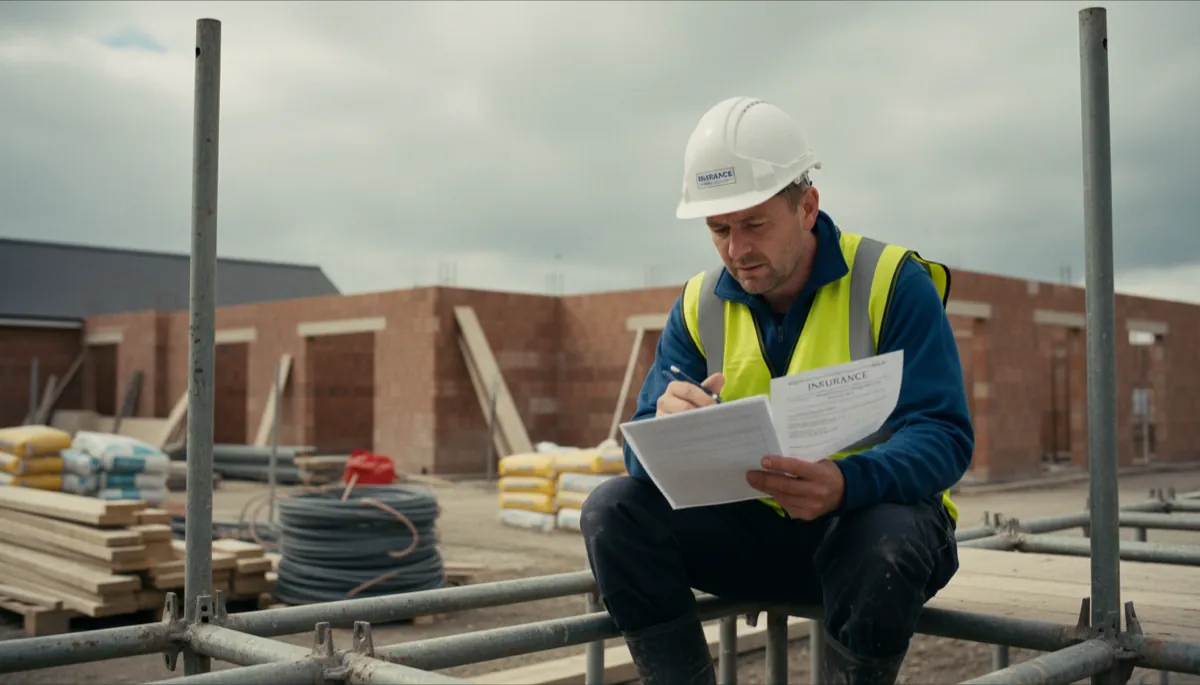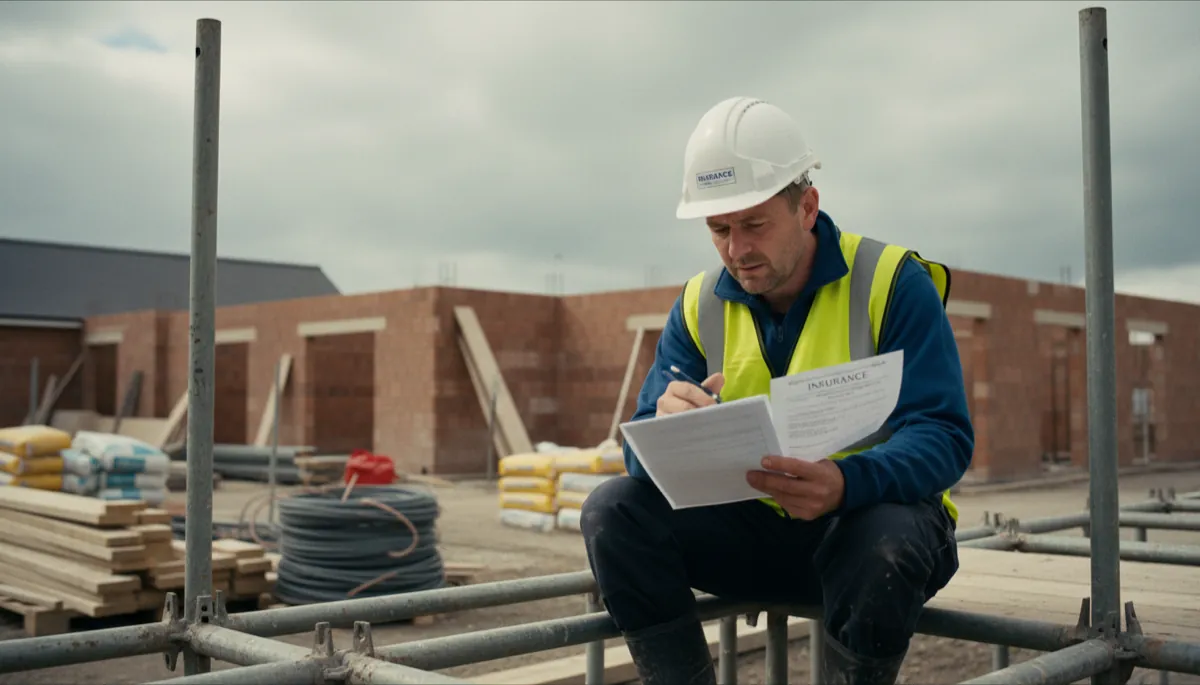
Public liability insurance for builders covers you if a third party — a client, a member of the public, or a neighbour — suffers injury or property damage because of your work. Claims can run into tens of thousands of pounds. Without cover, you pay that out of your own pocket.
This guide covers what PLI actually covers, how much it costs, how much cover you need, and what other policies sit alongside it.
Key Takeaways
- Public liability insurance is not legally required for builders in England, Wales, or Scotland — but many clients and contractors will refuse to hire you without it
- Most self-employed builders need at least £1 million in cover; larger contracts typically require £2 million or £5 million
- Typical costs range from £150 to £600 per year for sole traders, depending on the type of work and turnover
- PLI does not cover your tools, your van, or injuries to your own employees — you need separate policies for those
- Property damage claims are the most common type of PLI claim in building work — a cracked floor, a flooded kitchen, a damaged neighbouring property
Does a Builder Have to Have Public Liability Insurance?
No UK law requires builders to hold public liability insurance. It’s not a legal obligation in the way that employers’ liability insurance is (which is legally required if you employ staff).
That said, not having it creates serious practical problems:
- Domestic clients — Many homeowners ask for proof of insurance before you start work. Without it, you lose the job.
- Commercial contracts — Most commercial sites and contractors require a minimum level of PLI as a contractual condition. No certificate, no contract.
- Checkatrade and similar directories — Many trade platforms require valid PLI to join or maintain your listing.
- Local authority work — Councils typically require at least £5 million cover.
In practice, operating without PLI means losing a significant chunk of available work.
What Does Public Liability Insurance Cover for Builders?
PLI covers claims made against you by third parties. In building work, the most common scenarios are:
| Scenario | Covered? |
|---|---|
| Client trips over equipment and breaks their wrist | Yes |
| You accidentally damage a neighbour’s fence or property | Yes |
| A passer-by is hit by falling materials | Yes |
| Your work causes a flood that damages the client’s home | Yes |
| Your tools are stolen from site | No — needs tools insurance |
| One of your workers is injured | No — needs employers’ liability |
| Defects appear in your work years later | Depends on policy — check for “completed works” cover |
Completed works cover is worth paying attention to. Standard PLI covers incidents that happen while you’re on site. Completed works cover extends that protection to claims that arise after the job is finished — for example, a wall you built develops a structural fault six months later.
What Does Public Liability Insurance Not Cover?
Understanding the exclusions is just as important as knowing what’s covered:
- Your own tools and equipment — Covered under tools and equipment insurance (separate policy)
- Your vehicle — Covered under commercial vehicle or van insurance
- Injuries to your employees or subcontractors — Covered under employers’ liability insurance (legally required if you have employees)
- Your own injuries — Covered under personal accident insurance
- Deliberate acts or criminal behaviour — Never covered
- Work done while under the influence of alcohol or drugs — Never covered
- Claims from work outside your policy scope — If you describe yourself as a general builder but take on specialist work like structural steelwork, you may not be covered
Always read the policy schedule carefully and be honest when declaring the type of work you do.
How Much Does Public Liability Insurance Cost for Builders?
Costs vary based on the level of cover, the type of work, and your turnover.
| Builder Type | Typical Annual Premium |
|---|---|
| Self-employed sole trader, general building work | £150 – £350/year |
| Small limited company (2–4 employees) | £300 – £700/year |
| Specialist work (structural, demolition, groundworks) | £400 – £1,200/year |
| Large building firm or main contractor | £1,000+/year |
According to Simply Business, the average UK tradesperson pays around £200–£300 per year for £1 million PLI. Builders tend to sit at the higher end of that range because of the nature of the work.
Factors that affect your premium:
- Cover level — £1m, £2m, or £5m (higher cover = higher premium)
- Type of work — High-risk work like roofing, demolition, or groundworks costs more to insure
- Turnover — Higher turnover generally means higher premiums
- Claims history — Previous claims push your premium up
- Location — Working in central London or other high-cost areas can affect rates
How Much Cover Do Builders Need?
| Type of Work | Recommended Minimum |
|---|---|
| Small domestic jobs (extensions, renovations) | £1 million |
| Larger domestic or small commercial | £2 million |
| Commercial contracts, main contractor roles | £5 million |
| Local authority or public sector work | £5–10 million (check contract requirements) |
The most common mistake builders make is buying the cheapest £1 million policy and then winning a commercial contract that requires £5 million cover. You then either have to upgrade mid-year (and pay extra) or lose the contract.
If you’re doing mostly domestic work, £1 million is usually sufficient. If you want to keep your options open for commercial work, starting with £2 million makes sense.
What Other Insurance Do Builders Need?
PLI is usually the starting point, but a complete insurance setup for a self-employed builder looks like this:
| Insurance Type | Who Needs It | Legal Requirement? |
|---|---|---|
| Public liability | All builders | No |
| Employers’ liability | Anyone with employees or labour-only subcontractors | Yes — minimum £5 million |
| Tools and equipment | Anyone with expensive kit on site | No |
| Commercial van insurance | Anyone using a van for work | Yes (standard motor insurance doesn’t cover business use) |
| Personal accident | Sole traders especially | No — but important with no sick pay |
| Professional indemnity | Design-and-build contractors, project managers | No — but often required by clients |
| Contract works insurance | Larger projects | No — but often required by clients |
Employers’ liability deserves special mention. If you have a single employee — including family members or labour-only subcontractors who work exclusively for you — you’re legally required to hold a minimum of £5 million in employers’ liability cover. According to the Health and Safety Executive (HSE), failure to hold this cover carries fines of up to £2,500 per day that you operate without it.
Where to Get Public Liability Insurance as a Builder
Comparison sites — comparethemarket.com, Simply Business, and Go.Compare all offer builder-specific PLI. Useful for getting multiple quotes quickly.
Specialist trade insurers — Companies like Tradesman Saver, Trade Direct Insurance, and Hiscox specialise in trades and often understand the specifics of building work better than generalist insurers.
Trade body schemes — The Federation of Master Builders (FMB) and the National Federation of Builders (NFB) offer member insurance schemes, sometimes at preferential rates. Worth comparing against the open market.
What to look for in a policy:
- Does it include completed works cover?
- Does it cover the specific types of work you do — not just generic “builder” cover?
- Can you adjust cover mid-year if you take on different work?
- Is there a 24-hour claims line?
Frequently Asked Questions
Does a builder have to have public liability insurance by law? No. UK law doesn’t require builders to hold public liability insurance. However, employers’ liability insurance is legally required if you employ anyone, including labour-only subcontractors who work solely for you. In practice, most clients and contractors will require proof of PLI before hiring you.
How much does public liability insurance cost for a builder in the UK? Sole traders doing general domestic building work typically pay between £150 and £350 per year for £1 million cover. Specialist or higher-risk work costs more. Get at least three quotes before buying — premiums can vary significantly between providers for the same level of cover.
What level of cover do most builders need? Most domestic builders start with £1 million in cover. For larger domestic projects or any commercial work, £2 million is more appropriate. Commercial contracts, main contractor roles, and local authority work often require £5 million minimum — always check the contract requirements before quoting for the job.
Does public liability insurance cover defective workmanship? Standard PLI doesn’t cover the cost of repairing your own defective work — that falls under commercial disputes, not third-party claims. However, if your defective workmanship causes physical damage or injury to a third party, PLI would typically respond. Some policies include “completed works” cover, which handles claims that arise after the job is done.
The Bottom Line
Public liability insurance isn’t a legal requirement for builders, but it’s a practical one. Without it, you’ll lose contracts, struggle to join trade directories, and carry serious financial exposure on every job.
Get quotes from a comparison site and at least one specialist trade insurer. Check the policy covers your actual work, not just generic builder cover, and confirm whether you need completed works cover as well.
If you’re building a proper trade business, a professional website is the next logical step. It shows clients you’re legitimate, helps you rank on Google, and means people can find you when they search for a builder in your area. See how we build websites for builders or get started today.