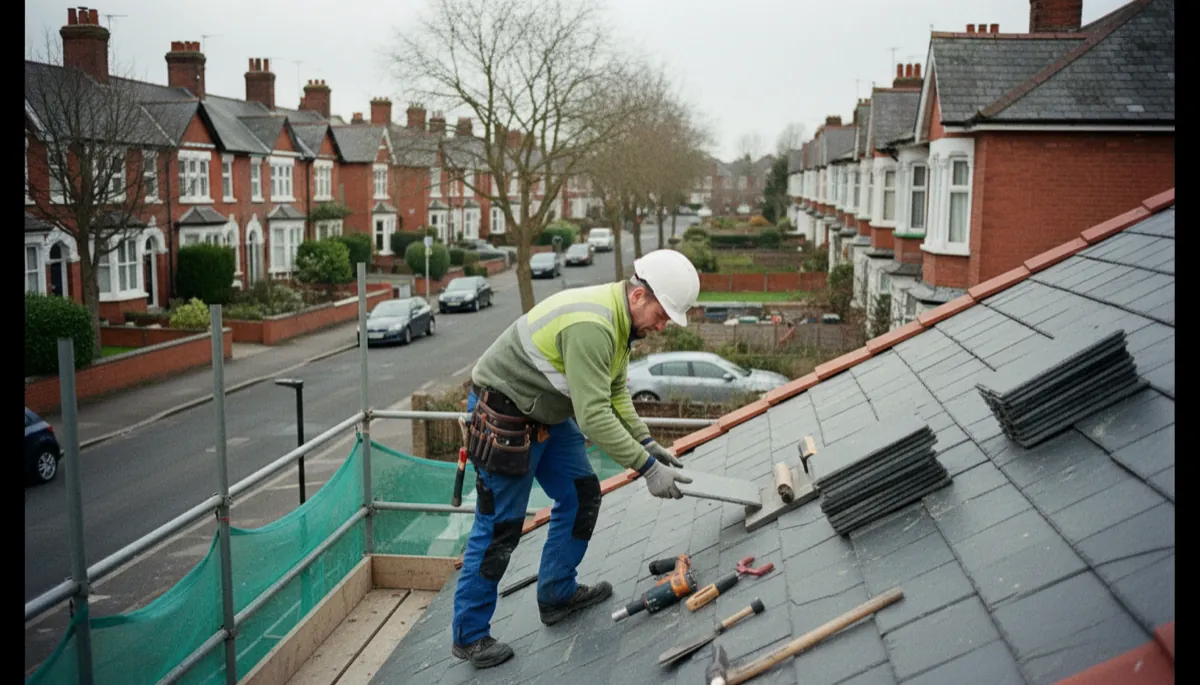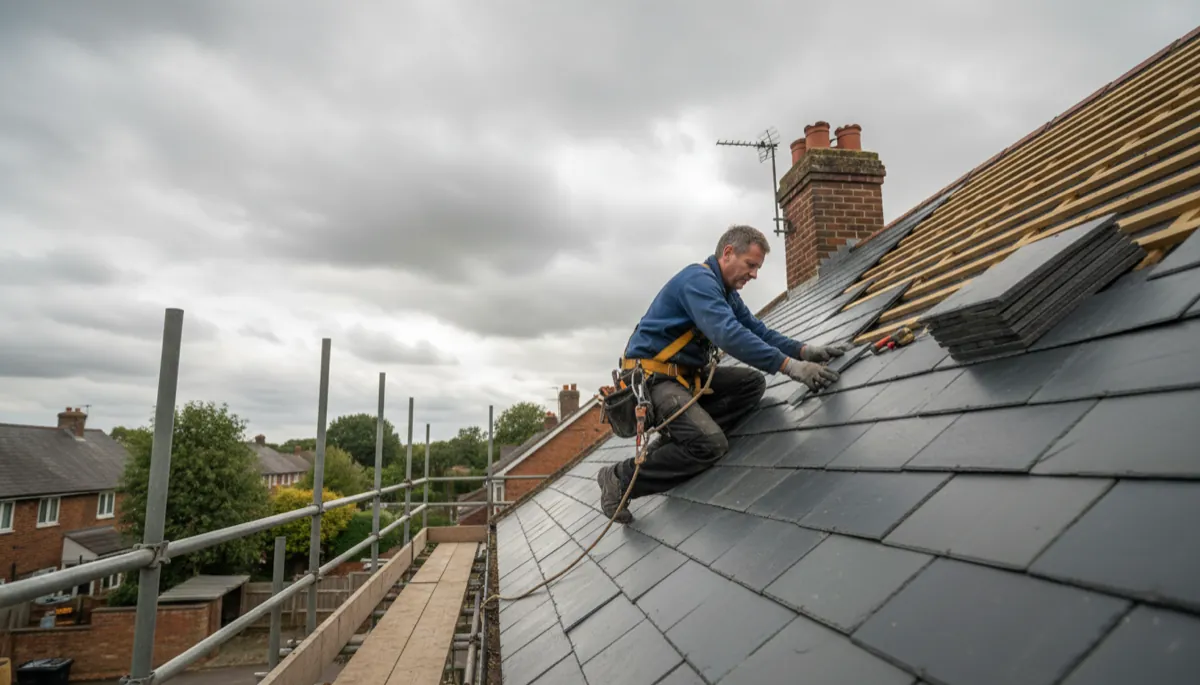
A self-employed roofer in the UK typically charges £200 to £400 per day for standard domestic work, based on industry data from Checkatrade, Hamuch, and roofing trade sources. Experience, region, and job type all push that figure up or down — London roofers regularly charge £400–£600/day, while those working in lower-cost regions can price competitively at £150–£250/day and still run a profitable operation.
This guide is written for self-employed roofers working out what to charge, not homeowners wondering what to pay. It covers what rates look like in 2026, how to build your rate from the bottom up, and when a day rate actually makes sense. For other trades, the electrician day rate guide and plumber hourly rate guide use the same cost-up approach.
Key Takeaways
- Typical UK roofer day rate: £200–£400/day for domestic work; more for specialist or commercial jobs
- London and the South East sit 40–60% above the UK average on most roofing work
- Your day rate needs to cover van, insurance, tools, and admin — not just your labour
- Day rates suit pitched roof replacements, felt and batten jobs, and multi-day repairs; hourly suits short call-outs
- Most self-employed roofers price a working day as 8–9 hours, materials quoted separately
Average Roofer Day Rates UK 2026
| Experience Level | Day Rate Range | Notes |
|---|---|---|
| Starting out (0–2 years self-employed) | £150–£220/day | Building reputation, often lower to win early work |
| Established (2–5 years) | £220–£320/day | Consistent client base, good reviews |
| Experienced (5–10 years) | £300–£400/day | Specialist knowledge, referral-led work |
| Highly experienced (10+ years) | £380–£500/day | Specialist roofing, listed buildings, large projects |
| Commercial / flat roofing specialist | £400–£600/day | GRP, EPDM, single-ply — specialist materials and methods |
Source: Checkatrade Roofer Earnings Guide 2024, Hamuch UK Trade Rates Index 2026, Osborne Roofing Day Rate Analysis 2025.
If you’re working in domestic roofing and charging below £180/day as an established sole trader, run through your costs — it’s very hard to stay profitable once you account for insurance, tools, and the time you don’t bill for.
Roofer Day Rates by Region
Location makes a significant difference to what the market will support.
| Region | Typical Day Rate |
|---|---|
| London | £400–£650 |
| South East (excluding London) | £320–£500 |
| South West | £240–£360 |
| East of England | £240–£340 |
| East Midlands | £220–£320 |
| West Midlands | £220–£320 |
| Yorkshire & Humber | £200–£310 |
| North West | £210–£320 |
| North East | £180–£280 |
| Scotland | £210–£330 |
| Wales | £190–£290 |
| Northern Ireland | £180–£270 |
Source: Checkatrade regional pricing data 2026, Hamuch roofer rate comparisons.
These figures are for standard domestic pitched roof work. Specialist jobs — listed building repairs, flat roof systems, dormers, or large commercial roofs — command premiums above these ranges in most areas.
Day Rate vs Hourly Rate: Which to Use
Both are common in roofing. The right choice depends on the job.
Use a day rate when:
- The job spans a full day or more (re-tiles, full felt and batten, chimney rebuilds)
- You’re working alongside other trades and need to commit your time
- The client wants a predictable cost and the scope is clear
- You’re doing work for a developer or property company on a schedule
Use an hourly rate when:
- The repair is short and the duration is uncertain (ridge tile re-bed, one loose slate, lead flashing repair)
- You’re doing emergency call-outs — hourly with a minimum charge protects you better
- The job could run from one hour to four depending on what you find
Half-day rates are worth having too. Most roofers charge 60–70% of their day rate for a morning or afternoon slot. Anything shorter than four hours is usually better quoted hourly with a minimum call-out fee.
What Your Day Rate Should Cover
A day rate isn’t just your wage for the day. It’s a business charge that needs to carry all your operating costs.
| Cost | Typical Daily Amount |
|---|---|
| Labour (your wage equivalent) | £120–£180 |
| Van (fuel, depreciation, insurance) | £35–£60 |
| Public liability insurance | £4–£8 |
| Tools and equipment (amortised daily) | £15–£25 |
| Unpaid time (quoting, travel, admin) | £25–£45 |
| Pension, tax buffer | £20–£40 |
| Total daily costs before profit | £219–£358 |
Add a profit margin of 15–30% and you get to your target day rate. A roofer with £270/day in costs and a 25% margin target needs to charge £340/day to hit that goal.
This maths is why pricing below £200/day as an established roofer tends to create problems. The costs are already eating most of the revenue before you’ve paid yourself properly.
Materials — felt, tiles, ridge tiles, lead, batten — should always be quoted separately on top of your day rate. Some roofers include a markup on materials; others pass them at cost and recover margin through labour. Either works, but be clear in your quote which you’re doing.
How to Quote a Day Rate Job
When a customer asks for a quote on a multi-day job:
- Walk the job properly — don’t quote off a phone call or a photo. Roof condition, access, number of squares, existing felt and batten state all affect your time estimate
- Give a day rate range, not a fixed day count — “2–4 days at £320/day, so approximately £640–£1,280 labour, plus materials” is honest and protects you from scope creep
- List what’s included — which areas of the roof, which tasks (stripping, re-felt, re-batten, re-tile, ridge work)
- Separate materials — itemise them or state they’ll be invoiced at cost plus your markup
- Add a variation clause — if you find rotten rafters or damaged sarking boards once you’ve stripped the roof, that’s extra work at your day rate
A written quote — even a WhatsApp message laying out the numbers — protects you far better than a verbal agreement if a dispute arises later.
Setting Your 2026 Rate
If you haven’t reviewed your pricing in the last year, it’s worth doing now. The cost of running a roofing operation has gone up — fuel, van insurance, public liability, and tool replacement costs have all increased since 2024.
A practical approach:
- Add up your annual costs — insurance, van, tools, fuel, accounting, phone, PPE, marketing
- Work out your billable days — 52 weeks minus holidays, training, wet weather, and admin typically gives you around 200 billable days
- Add your target income — what do you want to take home before tax?
- Divide total costs + target income by billable days — that’s your minimum day rate
- Check against local market rates — if you’re well below the regional average, you likely have room to increase; if you’re above, check your positioning
For example: £30,000 target income + £20,000 annual costs = £50,000 needed from 200 billable days = £250/day minimum. Add a 20% profit margin and your target rate becomes £300/day.
Competing on Something Other Than Price
Cutting your day rate to win work is a short-term fix that erodes your business over time. The roofers who stay busy at good rates tend to compete on:
- Google reviews — a 4.8-star rating with 40+ reviews beats the cheapest quote for most domestic customers
- Response time — calling back within the hour when a customer’s roof is leaking wins the job before you’ve quoted
- Professional presentation — a clean quote, a consistent brand, and a proper invoice process signals quality
- A website that works — customers Google roofers before they call. A site that shows your work, your reviews, and your contact details clearly makes a real difference. See our guide to getting found online as a roofer for the basics
A professional trade website from Digital Tradies starts from £49/month with no setup cost — it’s built for roofers, includes hosting and support, and typically pays for itself with one extra job per month. You can see what a roofing website should include too.
Frequently Asked Questions
How much would a roofer charge per day in the UK? A self-employed roofer in the UK typically charges between £200 and £400 per day for domestic work. According to Checkatrade’s 2024 roofer earnings data, day rates range from around £160/day for those starting out to £356/day and above for experienced operators with their own business. London and the South East command higher rates, often £400–£600/day.
How much do roofers earn per day? What a roofer earns after costs depends on their day rate minus overheads. A roofer charging £300/day with £130/day in costs (van, insurance, tools, admin) takes home roughly £170/day before tax. On 200 billable days a year that’s around £34,000 before tax — though highly experienced roofers charging £400–£500/day can earn significantly more.
Should materials be included in the day rate? No — materials are almost always quoted separately from labour. Your day rate covers your time and expertise. Materials (felt, tiles, lead, batten) should be itemised in the quote either at trade cost or with a markup declared. Bundling them in makes it hard to account for price changes and creates disputes if the job changes scope.
How do I know if my day rate is too low? If you’re working consistently busy but not saving or investing in your business, your rate is probably too low. Add up your annual costs (van, insurance, tools, fuel, accounting), divide by your billable days, and add your target income. If the resulting figure is higher than what you’re charging, it’s time to increase.
What affects a roofer’s day rate? Experience, location, job type, and market conditions all play a part. Specialist work — flat roofing systems, GRP, EPDM — commands premium rates over standard tile or slate work. Commercial roofing typically pays more than domestic. And roofers with strong review profiles and a professional online presence can charge at the top of local market rates.