Public liability insurance for drainage specialists covers you if your work causes injury or property damage to a client, a member of the public, or a neighbouring property. Drainage work — whether you’re clearing blockages, installing new runs, or conducting CCTV surveys — involves direct contact with water systems, confined spaces, and sometimes public sewers. That creates specific liability exposure if something goes wrong. This guide explains what PLI covers for drainage contractors, what it costs, and what other policies sit alongside it.
Key Takeaways
- PLI isn’t legally required for drainage specialists, but local authorities, water companies, and commercial clients almost always require proof of cover before letting you work
- Typical annual PLI premiums for drainage contractors range from £150 to £600 for sole traders, depending on turnover and the type of work you do
- High-pressure jetting and work on public sewers is classified as higher risk and will push your premium up compared to domestic drain clearing
- The National Association of Drainage Contractors (NADC) is the UK’s primary trade body; some contracts specify NADC membership as a requirement
- Work on public sewers and public drainage infrastructure sits under the Water Industry Act 1991 and may require approval from your regional water company before work begins
- Employers’ liability insurance becomes a legal requirement as soon as you employ anyone — including labour-only subcontractors
Do Drainage Specialists Need Public Liability Insurance?
No regulation makes PLI compulsory for drainage contractors. But in practice, you’ll struggle to win commercial or public sector work without it.
- Water companies and utilities — if your work involves approved contractor status (required for connections to public sewers or water mains), water companies typically list PLI as a condition of accreditation
- Local authorities — drainage contracts through councils almost universally specify minimum PLI levels in their tender documentation
- Commercial property managers — facilities managers and building surveyors routinely ask for a certificate of insurance before scheduling drainage work
- House insurance claims — when drainage work is arranged through a home insurance claim, the insurer will require your business to hold PLI as a condition of appointment
- Main contractors — if you work as a subcontractor on construction sites that include drainage, you’ll need PLI to get on site
Domestic drain unblocking for private customers is the one area where PLI is rarely asked for upfront. But the financial exposure — flooding a property, damaging a foundation, or creating a health hazard through sewage contamination — means operating without cover carries real personal financial risk.
What Does PLI Cover for Drainage Specialists?
PLI covers third-party claims. For drainage work, the most common liability scenarios include:
| Scenario | Covered by PLI? |
|---|---|
| High-pressure jetting damages a pipe joint and causes flooding | Yes |
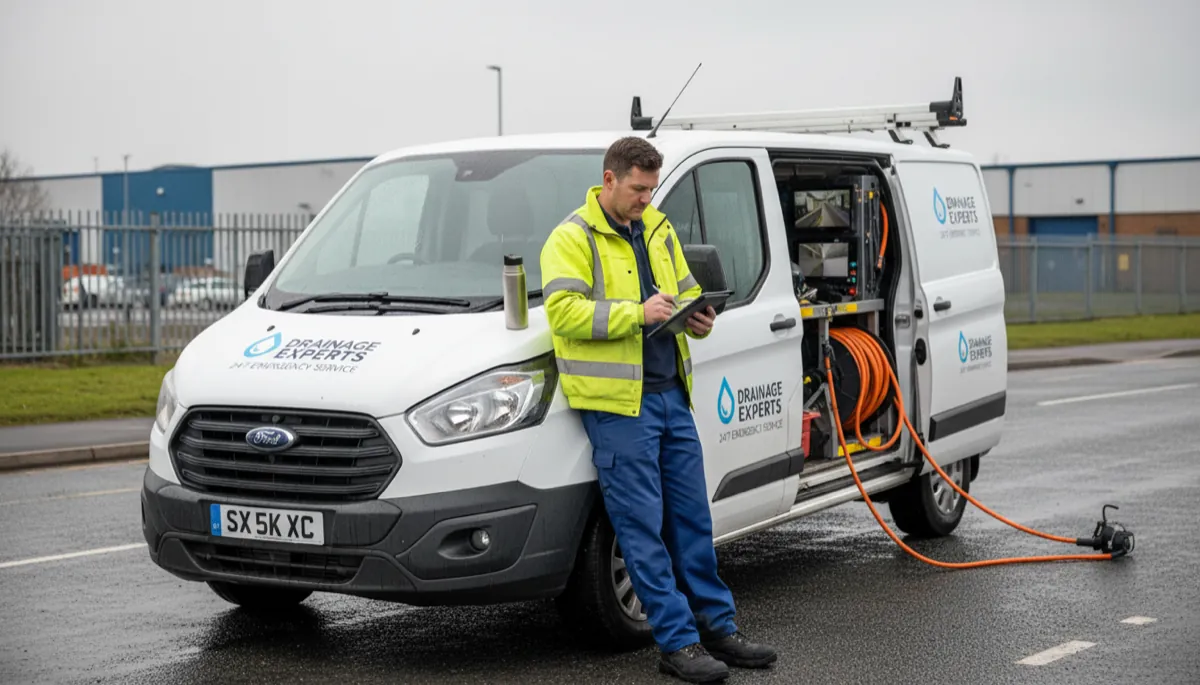
| CCTV survey van causes a trip hazard and a member of public is injured | Yes |
| Excavation for drainage installation damages a neighbour’s boundary wall | Yes |
| Blocked drain work causes sewage to back up into an adjacent property | Yes |
| A customer’s garden is damaged during pipe inspection access | Yes |
| Drain lining work fails and causes water ingress to a building | Yes — if covered under completed works |
| Your tools or equipment are stolen from a job site or van | No — needs tools insurance |
| You are injured working in a confined space | No — needs personal accident cover |
| You give drainage survey advice that leads to costly follow-on work | No — professional indemnity covers advice-based claims |
| Your jetting equipment breaks down mid-job | No — needs plant and equipment insurance |
Completed works cover is worth confirming explicitly with your insurer. Drainage failures — a relining that fails, a pipe joint that leaks — sometimes only become apparent weeks or months after the job is finished. A completed works extension covers claims made after you’ve left the site.
How Much Does PLI Cost for Drainage Specialists?
Drainage is considered a mid-risk trade by most insurers. The specific work you do makes a significant difference to your premium.
| Contractor Type | Annual Turnover | Typical Annual Premium | Cover Level |
|---|---|---|---|
| Sole trader (domestic drain clearing) | Under £50,000 | £150–£300 | £1m–£2m |
| Sole trader (jetting + CCTV surveys) | Under £100,000 | £200–£500 | £2m–£5m |
| Small drainage company | £100,000–£300,000 | £400–£900 | £5m |
| Drainage contractor (public sewer work) | £300,000+ | £700–£1,500+ | £5m–£10m |
These figures are estimates based on typical market pricing for UK drainage contractors. Your actual premium depends on:
- Annual turnover — the primary pricing factor for most insurers
- Type of work — high-pressure jetting, sewer rehabilitation, and environmental drainage carry a higher risk profile than basic domestic unblocking
- Claims history — a clean record keeps premiums down at renewal
- Cover level — £1m, £2m, £5m, and £10m policies are priced differently; commercial clients typically require £2m minimum, water companies may require £5m
- Number of operatives — sole traders pay less than a three-person team doing industrial drainage work
- Use of subcontractors — if you hire in additional teams, some policies require them to hold their own PLI; check your policy wording
Specialist trade insurers — including Simply Business, Tradesman Saver, Rhino Trade Insurance, and Coversure — cover drainage contractors. A specialist broker who understands the trade is usually more useful than a generic comparison site, particularly if your work includes public sewer connections or industrial jetting.
What Level of Cover Do Drainage Specialists Need?
Most drainage contractors need a minimum of £2 million PLI. Commercial clients and local authority contracts often require £5 million.
| Work Type | Recommended Minimum Cover |
|---|---|
| Domestic drain clearing and unblocking | £1m–£2m |
| Drain surveys and CCTV inspection | £2m |
| Drain lining, relining, and repair | £2m–£5m |
| Commercial drainage installation | £5m |
| Public sewer connections | £5m–£10m |
| Industrial or utility drainage work | £5m–£10m |
If you’re unsure what level to buy, check the specific requirements in your contracts. Working below the minimum specified by a client means any claim could be contested.
Other Insurance Drainage Contractors Need
PLI is the foundation, but drainage contractors typically carry several policies:
Employers’ liability insurance — legally required under the Employers’ Liability (Compulsory Insurance) Act 1969 the moment you employ anyone, including seasonal workers or labour-only subcontractors. The legal minimum is £5 million, but most policies start at £10 million. See our employers’ liability insurance guide for tradespeople for more detail.
Tools and equipment insurance — jetting machines, CCTV survey equipment, and specialist tooling are expensive. Tools cover protects against theft, accidental damage, and loss on site or in transit.
Van and commercial vehicle insurance — your work van may be covered as standard for standard business use, but check it’s rated for carrying specialist drainage equipment. See our guide to van insurance for tradespeople for what to check.
Professional indemnity insurance — if you produce drainage surveys, written reports, or advice that clients rely on for decision-making, PI insurance covers you if that advice turns out to be wrong or incomplete. Relevant for drainage consultants and survey specialists.
Plant and equipment insurance — for contractors using larger machinery (excavators, vacuum tankers), plant insurance covers accidental damage and breakdown.
Frequently Asked Questions
Do I need public liability insurance to clear a blocked drain? No regulation requires it for domestic drain clearing. But if your work causes flooding or property damage — even through no fault of your own — you’ll face the claim personally without PLI. Most drainage contractors buy it regardless of whether clients ask.
What does public liability insurance not cover for drainage contractors? PLI doesn’t cover injury to you or your employees (needs employers’ liability or personal accident cover), theft of tools and equipment (needs tools insurance), advice-based claims from drainage surveys (needs professional indemnity), or breakdown of your jetting equipment (needs plant and equipment cover).
How much does £5 million PLI cost for a drainage contractor? For a sole trader with turnover under £100,000 doing general drainage work, a £5 million PLI policy typically costs between £250 and £600 annually. Higher turnover, specialist work like industrial jetting or public sewer rehabilitation, and a claims history will push this up.
Do I need insurance to work on public sewers? Work on public sewers requires approval under the Water Industry Act 1991 and typically needs you to hold approved contractor status with your regional water company (such as through the Water Industry Registration Scheme, or WIRS). Most water companies require drainage contractors to hold a minimum of £5 million PLI as a condition of that accreditation.
Is drainage work high risk for insurance purposes? It’s considered mid-to-high risk. Confined space working, high-pressure jetting, and any work involving public sewers or environmental drainage will attract higher premiums than basic domestic unblocking. Tell your insurer exactly what work you do — underinsuring by describing only the low-risk parts of your work could invalidate a claim.
Getting Your Business Ready to Win Better Contracts
A current PLI certificate opens doors to local authority drainage contracts, insurance-referred work, and utility subcontracting. But it’s rarely the only thing clients check. Alongside your insurance, having a professional web presence helps clients find you and confirm you’re a legitimate, established contractor rather than a sole trader without a visible track record.
Digital Tradies builds professional websites for drainage and groundworks contractors from £49/month — no upfront cost, live in 3 days. It’s a straightforward way to show clients your certifications, accreditations, and work examples before they pick up the phone. See what’s included.
This article is for general information only and does not constitute insurance or legal advice. Always speak with a qualified insurance broker before purchasing cover for your business.