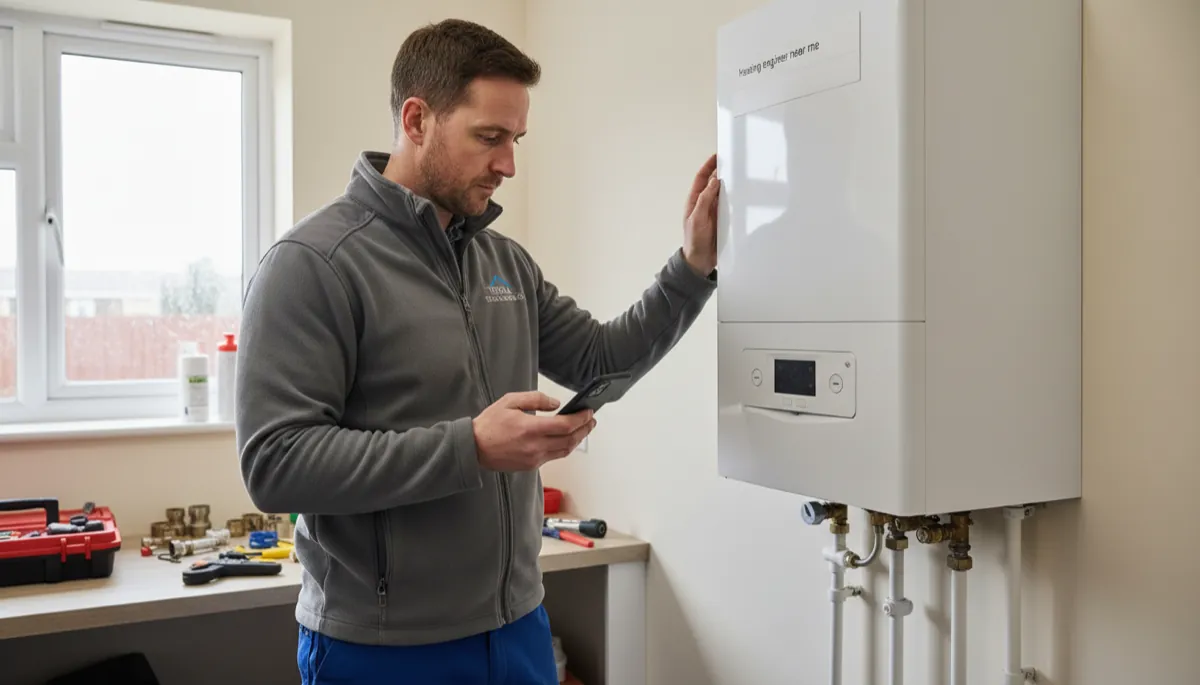
Most heating engineers rely on repeat customers and word of mouth. That works — until a quiet spell hits or a competitor starts appearing at the top of Google. Marketing fills that gap. It builds a lead pipeline that runs alongside your existing work, so you’re not dependent on any single source.
Marketing for heating engineers means being visible in the right places when a homeowner’s boiler breaks down, when a landlord needs CP12 certificates, or when a customer is researching heat pump grants. This guide covers 10 marketing channels and tactics that work specifically for heating engineers — not generic business advice repainted with a boiler emoji.
Key Takeaways
- Your Google Business Profile controls whether you appear in Google Maps when someone searches “heating engineer near me” — it’s free and takes under two hours to set up properly
- Heating engineers with 40+ Google reviews consistently win more enquiries before a call is even made, because customers check reviews before they pick up the phone
- MCS certification allows you to install heat pumps under the Boiler Upgrade Scheme — the government offers grants of £7,500 for air source heat pumps, making this a strong sales argument
- According to BrightLocal’s 2025 Local Consumer Review Survey, 98% of consumers used the internet to find a local business in the past year
- A professional website with separate pages for boiler installation, boiler repair, and central heating gives you far better Google visibility than a single-page site
- Gas Safe branding on your van, social profiles, and website is a trust signal most homeowners actively look for before booking
1. Set Up Your Google Business Profile
Your Google Business Profile (GBP) is how you appear in Google Maps and the local pack — the three businesses shown under the map when someone nearby searches for a heating engineer. It’s free and it’s the most impactful thing you can do to generate local enquiries.
Claim your profile at business.google.com. Set your primary category to Heating Contractor, then add secondary categories: Boiler Installation, HVAC Contractor, and Plumber (Google uses this for broader visibility). List every area you cover, upload photos of installations and your van, and write a description that includes your Gas Safe number.
According to Google, businesses with complete, optimised profiles are 2.7x more likely to be considered reputable by customers.
2. Build Your Google Reviews
Reviews are the second-biggest ranking factor in Google Maps — and they’re what turn a browsing customer into a booking. A heating engineer with 45 reviews at 4.9 stars will almost always get the call over someone with 6 reviews at 5.0.
Ask for a review straight after every job. Text the customer: “Really glad you’re happy with the installation — if you have two minutes, a Google review helps my business enormously.” Include a direct link to your Google review page.
Aim for 40+ reviews as a baseline. After that, maintain the habit — consistent new reviews signal an active business to Google’s algorithm. Customers also notice whether your last review was yesterday or six months ago.
3. Get a Professional Website
A Facebook page tells people you exist. A professional website tells them you’re worth calling. When someone searches “boiler installation [your town]”, a website with separate service pages, photos of actual installations, and clear contact details gives you a far stronger shot at the enquiry than a directory listing.
A heating engineer website doesn’t need to be complicated. It needs these pages: homepage, boiler installation, boiler repair, central heating, landlord services (CP12 and gas safety), and contact. Each service page should target the keywords your customers actually search.
Digital Tradies builds professional heating engineer websites from £49/month with no upfront cost — live within 3 days, with hosting and support included. If you want to understand what a strong heating engineer site looks like and why it converts, it’s worth a look before building your own.
4. Build a Dedicated Page for Each Service
One of the biggest mistakes heating engineers make with their website is putting everything on one page. Google works best when each page has a clear, specific topic.
If you do boiler installations, boiler servicing, landlord CP12 certificates, and central heating repairs, each of those should be a separate page with its own keyword-focused title and description. “Boiler Installation [Town]” and “Boiler Service [Town]” are different searches — you need a separate page for each to rank for both.
This applies to heat pumps too. If you’re MCS certified, a dedicated “Heat Pump Installation [Town]” page captures a completely different search audience.
5. Get MCS Certified and Market the Boiler Upgrade Scheme
The heat pump market is growing and most homeowners don’t know where to find a reliable installer. If you’re not MCS certified yet, it’s worth considering — not just for the work, but for the marketing angle.
Under the Boiler Upgrade Scheme (BUS), homeowners can claim a £7,500 grant toward an air source heat pump and £7,500 toward a ground source heat pump. To install under the scheme, you must be MCS certified. That means every MCS-certified heating engineer has access to a market that non-certified engineers can’t touch.
| Heat Pump Type | BUS Grant (2025/26) | MCS Required |
|---|---|---|
| Air source heat pump | £7,500 | Yes |
| Ground source heat pump | £7,500 | Yes |
| Biomass boiler (off-gas areas) | £5,000 | Yes |
Market this clearly: on your website, GBP listing, and social media. The grant amount is the most effective message — “Install an air source heat pump with a £7,500 government grant” is a headline that converts because the financial benefit is specific and immediate.
6. Local SEO for Heating Engineers
Local SEO means ranking in Google search results without paying per click. For heating engineers, it’s about appearing when someone in your area searches “boiler repair [town]” or “central heating engineer near me.”
The three pillars are: a complete GBP, a website with service-specific pages targeting local keywords, and an accumulation of Google reviews. Local SEO takes 3–6 months to build properly, but once you’re ranking well, the enquiries come in without you paying per lead.
The keywords worth targeting: “boiler installation [your town]”, “boiler repair [your town]”, “gas engineer [your town]”, “central heating service [your town]”, and “heat pump installation [your town]” if you’re MCS certified. According to Gas Safe Register, there are approximately 130,000 registered Gas Safe engineers in the UK — local visibility is what separates the busy ones from the quiet ones.
For a deeper guide on local SEO, see our SEO for tradesmen guide.
7. Try Google Local Services Ads
Google Local Services Ads (LSAs) appear above regular Google Ads in search results. You pay per lead — only when a customer contacts you directly through the ad — not per click. For heating engineers, this works particularly well for boiler breakdowns and emergency callouts, where customers search and book quickly.
LSAs require a background check and verification of your Gas Safe registration, which actually helps your credibility. Verified businesses show a “Google Guaranteed” badge in the ad. Budget around £200–400/month initially to get a sense of what a qualified heating lead costs you in your area.
8. Use Social Media for Before-and-After Installs
Heating engineers often overlook social media because it feels like a consumer-facing tool. But Facebook is where homeowners in your area share recommendations, ask for tradesperson referrals, and scroll through local business ads.
The most effective content is simple: before-and-after photos of boiler replacements, new heat pump installations, or central heating upgrades. Caption them with the location, the job type, and a sentence about what was improved. “New Vaillant combi fitted in Stockport — customer had no hot water for three days. All sorted same day.”
This content costs nothing to produce, it’s shareable, and it puts your work in front of people in your local area — including people who didn’t know they needed a new boiler until they saw yours.
9. List on Trade Directories
Checkatrade, TrustATrader, and Which? Trusted Traders still drive a meaningful share of domestic heating enquiries — particularly from older homeowners who prefer the reassurance of a vetted directory.
| Directory | Typical cost | Lead type |
|---|---|---|
| Checkatrade | £700–1,000/yr | Domestic boiler and heating |
| TrustATrader | £400–600/yr | General heating and plumbing |
| Which? Trusted Traders | £350–600/yr | Mid-market homeowners |
| Gas Safe installer finder | Free | Included with Gas Safe registration |
The Gas Safe installer finder is worth checking first — it’s free with your registration and it’s where homeowners go specifically to find a Gas Safe registered engineer. Make sure your listing is complete with contact details, areas covered, and the types of work you do.
10. Brand Your Van
Your van covers your patch every day. Treated as a moving billboard, it’s one of the lowest-cost, longest-lasting forms of local advertising available. A heating engineer’s van with a clear name, Gas Safe logo, phone number, and website URL is remembered by homeowners in the streets and estates you work in.
Full wrap vinyl typically costs £800–1,500. Even a basic decal set with your logo, number, and Gas Safe registration badge costs £100–300 and lasts years. The return on investment for a single job won through van visibility covers the cost many times over.
Building a Pipeline That Doesn’t Depend on Word of Mouth
Word of mouth is valuable, but it’s unpredictable. The heating engineers who stay consistently busy combine it with a professional online presence — a Google profile with strong reviews, a website that shows up for local searches, and a small number of paid channels to fill any gaps.
For more on building recurring work through operational tactics like service reminder systems and landlord contracts, see our guide to getting more heating and boiler work.
If you’re ready to get a professional website working for your heating business, Digital Tradies builds trade websites from £49/month — no upfront cost, live in 3 days.
Frequently Asked Questions
How do heating engineers get more customers? The most effective combination is a complete Google Business Profile, a steady stream of Google reviews, and a professional website with separate pages for each service. These three together put you in front of customers searching online, which is now how most heating enquiries start.
Is Google Local Services Ads worth it for heating engineers? Yes, particularly for boiler repairs and emergency callouts. You pay per lead rather than per click, and the Google Guaranteed badge from verification builds credibility. Budget £200–400/month to start and track your cost per booked job.
Do heating engineers need a website or is a Facebook page enough? A Facebook page is better than nothing, but a website converts significantly better. A website can rank on Google for local searches, which a Facebook page can’t. It also looks more professional when potential customers vet you before calling.
What is MCS certification and why does it matter for marketing? MCS (Microgeneration Certification Scheme) certification is required to install heat pumps under the government’s Boiler Upgrade Scheme (BUS). MCS-certified engineers can help customers access grants of up to £7,500 — a powerful marketing message that non-certified competitors can’t offer.
How many Google reviews should a heating engineer aim for? Aim for 40 as a baseline. Engineers with 40+ reviews consistently rank higher in Google Maps and convert more enquiries than those with fewer. After 40, keep asking — recent reviews signal an active business to Google and to customers.