Locksmith marketing is different from almost any other trade. Most of your calls come from people who are locked out, have just been burgled, or need a lock changed urgently. They’re not browsing comparison sites — they’re searching on their phone right now, picking whoever appears first with decent reviews. That changes where your marketing time should go.
Marketing for locksmiths means owning the moments when someone needs you most: emergency search results, Google Maps, and the first impression your profile makes under pressure. This guide covers the practical steps that get more calls, not just more clicks.
Key Takeaways
- Emergency searches like “locksmith near me” and “locksmith [town]” drive the majority of UK locksmith enquiries — appearing at the top of Google Maps for these terms is the single most important marketing priority
- According to BrightLocal’s Local Consumer Review Survey 2024, 87% of consumers read online reviews before choosing a local business — for locksmiths, trust signals are especially critical because rogue trader scams are well-documented
- Master Locksmiths Association (MLA) membership and clear pricing are conversion factors, not just trust badges — customers in distress look for proof you’re legitimate before calling
- Checkatrade, Rated People, and Which? Trusted Traders drive meaningful locksmith referrals, particularly for non-emergency work like lock upgrades and security assessments
- A professional website with clear service areas, 24/7 availability, and pricing transparency converts far better than a Facebook page for emergency enquiries
- Rogue locksmith adverts consistently appear near the top of Google search results — organic and Google Business Profile visibility protects customers and wins credible locksmiths the work
1. Get Your Google Business Profile Right
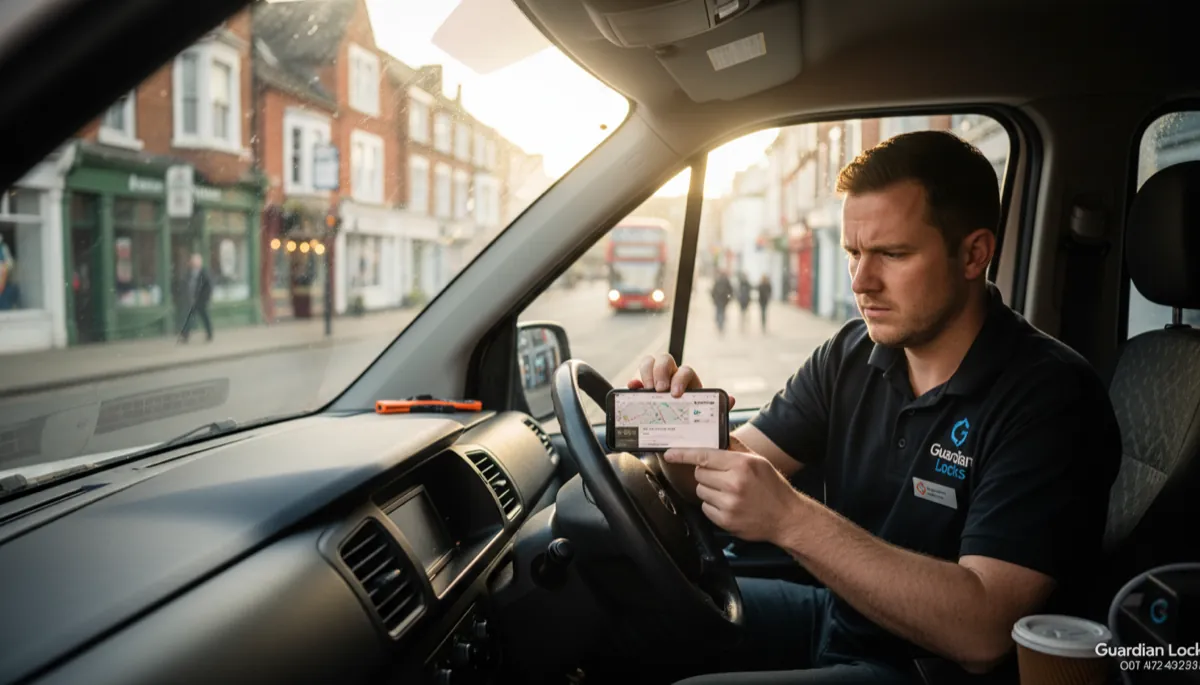
Your Google Business Profile (GBP) is where most locksmith leads start. When someone types “locksmith near me” on their phone in a panic, Google Maps results appear at the top — above websites, above ads. If you’re not in the local 3-pack, you’re losing a large share of emergency callouts.
Claim your profile at business.google.com. Set your primary category to Locksmith and add your full service area — list every town and suburb you cover. Add photos of your van, your team, and examples of jobs (lock replacements, door repairs, key cutting). Add your emergency callout hours — if you’re 24/7, say so.
According to Google’s own data, businesses with fully completed profiles get 7x more clicks than incomplete ones. For a locksmith, this isn’t just good marketing — it’s the difference between getting the call and watching it go to a competitor.
2. Build Reviews — Especially After Emergency Jobs
Reviews matter for every trade. For locksmiths, they matter more, because customers searching in distress are scanning for trust signals fast. A locksmith with 60+ reviews at 4.8 stars looks completely different from one with 8 reviews and no responses.
The best time to ask for a review is immediately after completing a job, while the relief is still fresh. Send a WhatsApp or text: “Really glad we got you sorted — if you’ve got 2 minutes, a Google review makes a big difference to my business.” Include a direct link.
Focus on Google reviews first. Trustpilot is worth building up too. Respond to every review — both positive and negative. A professional response to a complaint demonstrates exactly the trustworthiness that anxious customers are looking for.
Target 50+ Google reviews as your baseline goal. Beyond that, keep asking consistently — review count is an ongoing ranking factor, not a one-time achievement.
3. Get Listed as a Trusted Locksmith
The locksmith industry has a well-documented rogue trader problem. Fake locksmiths advertise cheap callouts, then inflate bills massively once they’re on-site. Customers know this — which is why accreditation and directory listings carry more weight for locksmiths than for most other trades.
Master Locksmiths Association (MLA) membership is the most recognised mark of legitimacy in the UK locksmith sector. MLA-approved locksmiths appear on the MLA’s own directory, which ranks well for searches like “approved locksmith [town]”. Membership costs around £300-400/year and includes vetted status and industry training access.
Which? Trusted Traders and Checkatrade are both worth listing on. Which? Trusted Traders carries particular weight with older homeowners (often the ones dealing with break-ins or ageing locks) and can drive non-emergency work like security audits and lock upgrades.
For non-emergency residential and commercial work, Rated People and MyBuilder are worth a free listing at minimum, to pick up customers actively comparing quotes.
4. Target Emergency Keywords with Local SEO
Local SEO for locksmiths means ranking for the high-intent, location-specific searches that happen right before someone picks up the phone. The most valuable ones:
| Search type | Example | Intent |
|---|---|---|
| Emergency near me | ”locksmith near me” | Locked out, needs help now |
| Town-specific | ”locksmith Manchester” | Urgent, location-specific |
| Service-specific | ”locked out of house” | Classic emergency trigger |
| Security upgrade | ”lock change after break in” | Post-incident, ready to book |
| Commercial | ”office locksmith [city]“ | Business client, scheduled work |
Your website needs individual pages or sections targeting each of your main towns. If you cover Manchester, Salford, and Stockport, each should be mentioned explicitly on your site — ideally with a dedicated service area page per location.
For a full breakdown of how local SEO works for tradespeople, our SEO for tradesmen guide walks through the keyword, website, and review fundamentals in detail.
5. Have a Website That Converts Under Pressure
Most locksmith websites lose jobs because they make a distressed customer work too hard. Someone locked out at 11pm on a wet Tuesday isn’t reading your ‘About Us’ page — they need to see a phone number, your coverage area, and confirmation you’re available right now.
A high-converting locksmith website needs:
- Phone number visible at the top of every page — click-to-call on mobile, no digging required
- 24/7 badge if you offer it — prominently above the fold
- Clear service area list — towns and postcodes you cover, so customers know immediately if you can help
- Pricing transparency — even a rough callout rate removes the fear of rogue-locksmith price gouging
- MLA logo and any other accreditation badges — front and centre, not buried in the footer
- Reviews visible on the homepage — not just a link, but the stars showing
Managed services like Digital Tradies build locksmith websites from £49/month with no upfront cost, live in 3 days. You get a professional site with mobile-first design, hosting, and ongoing support included. If you want to see what converts, our guide on what a tradesman website should include covers the essentials.
6. Run Google Ads for Emergency Keywords (Carefully)
Organic SEO takes months to build. For emergency locksmith work, Google Ads can bridge the gap — especially if you’re in a competitive city where the top organic spots are already taken.
The problem is that rogue locksmiths also heavily use Google Ads, which has driven up costs and made some customers ad-sceptical. If you do run ads, conversion depends almost entirely on your Google reviews — a high-quality ad pointing to a listing with 60+ 5-star reviews will convert; the same ad pointing to an empty profile won’t.
Focus ad spend on high-intent keywords: “emergency locksmith [town]”, “locked out [town]”, “lock change [town]”. Set geographical targeting tightly to your actual coverage area. Set a callout extension so your phone number appears directly in the ad. Track which keywords produce actual calls, not just clicks, and cut anything that isn’t converting.
Keep your daily budget controlled — £15-25/day is workable for most coverage areas. Pause campaigns if your job diary is already full.
7. Build a Referral Network
Most locksmiths underuse the professional relationships that could be their most consistent referral source. Estate agents, letting agents, property managers, and facilities managers all regularly need locksmith services — either because tenants are locked out, because landlord regulations require lock changes between tenancies, or because they need security assessments on new properties.
One well-placed relationship with a local letting agency can be worth dozens of jobs a year. Visit them in person, leave a few business cards, and offer them a commercial rate for repeat work. Do the same with local building firms — they regularly need locksmiths on site during construction or renovation.
Domestic customers are also worth nurturing. Locksmiths who leave a card after an emergency callout, follow up with a text a week later to check everything’s fine, and offer an annual security review find a meaningful share of their work comes back through the same customers — window locks, padlocks, car keys.
8. Use Before-and-After Content Selectively
Locksmiths aren’t a naturally visual trade — there’s no dramatic garden transformation or fresh plasterwork to photograph. But there is useful content you can create:
- Photos of upgraded lock installations (Euro cylinders, smart locks, multipoint systems) with brief explanations of why they’re more secure
- Videos explaining how anti-snap locks work and why they matter after a burglary
- Advice posts on common break-in entry points and how to address them
This kind of content positions you as an expert, not just a callout service, which matters for the non-emergency part of your work — security upgrades, new builds, commercial contracts. Post it on Facebook (where your local residential audience is) and LinkedIn (for commercial leads).
Frequently Asked Questions
How do I get more emergency locksmith calls? The biggest lever is your Google Business Profile. Fully complete it, collect 50+ reviews, and make sure your service area covers all the towns and postcodes you want to appear for. Emergency searches like “locksmith near me” are won or lost at the Google Maps stage before customers even visit a website.
Is MLA membership worth it for marketing? Yes, for two reasons. First, it adds you to the MLA’s directory, which ranks for trust-based locksmith searches. Second, the MLA logo on your website and van is a genuine conversion signal — customers in distress look for it specifically because of awareness around rogue locksmiths. Membership costs around £300-400/year.
How much should I spend on Google Ads as a locksmith? For most market areas, £15-25/day covering emergency search terms is a reasonable starting point. Track actual calls, not clicks. The return on ads is highly dependent on your review count — ads work best once you have 30+ solid Google reviews. Without reviews, ad spend tends to be wasted.
Should locksmiths use Checkatrade or build their own website? Both, at different stages. Checkatrade and similar directories drive enquiries for non-emergency and quote-based work. A professional website gives you a platform that works 24/7, builds your Google organic ranking over time, and doesn’t charge per year or per lead. Build both, but prioritise getting your Google Business Profile and website established first.
How do I stand out in a market with rogue locksmith adverts? Transparency is your biggest differentiator: list your callout rate clearly, display your accreditation, show your reviews, and respond to every enquiry fast. Customers who’ve been burned or are worried about being scammed will choose the locksmith who gives them clear pricing and looks legitimate — even if that locksmith isn’t the cheapest result on the page.
Marketing a locksmith business is less about broadcasting your services and more about being visible and trustworthy at the exact moment someone needs help. Own your Google Business Profile, build your reviews consistently, get your accreditation in front of people, and make your website the easiest path to a phone call. The demand is there — the customers are searching right now.
If you want a professional locksmith website that works on mobile, loads fast, and shows your reviews and accreditation clearly, Digital Tradies builds sites from £49/month with no upfront cost, live in 3 days.