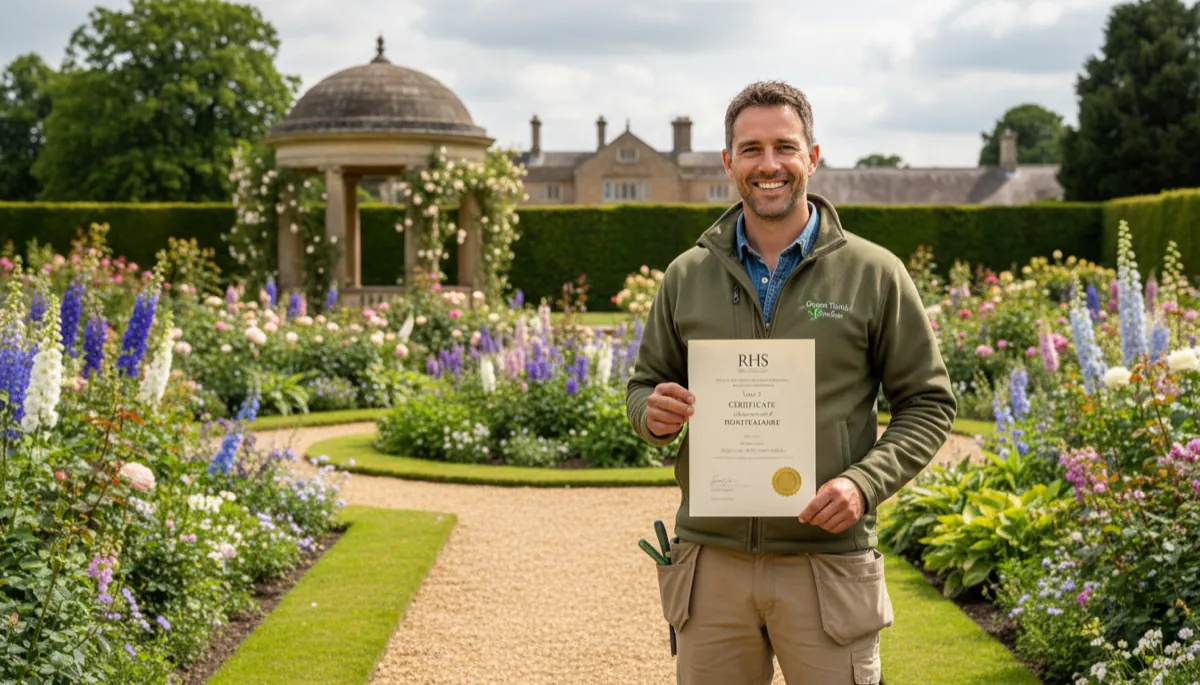
There’s no law in the UK that says a landscaper must hold a qualification before picking up a spade and working in someone’s garden. But without recognised credentials, commercial contracts are out of reach, BALI membership is off the table, and clients who check before they call will find nothing to reassure them. This guide covers the full qualifications picture for UK landscapers — from RHS courses and LANTRA awards to NVQ routes, specialist certificates, and the trade body memberships that open doors to better work.
Key Takeaways
- No mandatory licence is required to work as a landscaper in the UK, but qualifications are increasingly expected by commercial clients and main contractors
- The RHS Level 2 Award in Horticulture is the most widely recognised entry-level horticultural qualification in the UK, delivered by approved centres nationwide
- LANTRA Awards cover a wide range of land-based skills, from practical landscaping NVQs to specialist certificates in pesticide application and chainsaw operation
- BALI (British Association of Landscape Industries) membership is the main trust mark for UK landscape contractors — it requires proof of insurance, qualifying experience, and a site inspection
- PA1 and PA6 certificates are legally required if you apply pesticides or herbicides as part of your work
- Typical qualification costs range from £200 for an RHS Level 2 Award to £1,500+ for a full NVQ Level 3 depending on route and provider
Do Landscapers Need to Be Qualified?
Landscaping in the UK isn’t a regulated trade. No statutory body controls who can call themselves a landscaper, and there’s no licensing requirement comparable to [Gas Safe registration](/blog/gas-safe-registration-explained/) for heating engineers or Part P for electricians.
That said, three things make qualifications practically essential for anyone looking to grow beyond word-of-mouth referrals:
BALI and APL membership: The British Association of Landscape Industries (BALI) is the UK’s leading trade body for landscape contractors. Membership requires evidence of competence, public liability insurance of at least £2 million, and a site inspection of your work. Most commercial clients and local authorities specify BALI-registered contractors on their tender requirements.
Commercial and public sector contracts: Councils, housing associations, sports facilities, and large commercial clients will typically ask for formal qualifications and BALI or LANTRA accreditation before awarding contracts. Working in parks, housing estates, or on construction-adjacent landscaping also brings [CSCS card](/blog/cscs-card-explained/) requirements into play.
Domestic clients who research: A growing number of homeowners check landscapers before booking, particularly for larger jobs such as patios, drainage, planting schemes, or garden redesigns. RHS qualifications and BALI membership show up on directories and platforms. Without them, you’re competing on price alone.
RHS Qualifications
The Royal Horticultural Society (RHS) is the most recognised awarding body for horticultural training in the UK. RHS qualifications are regulated, industry-respected, and available through approved centres across England, Wales, Scotland, and Northern Ireland.
| RHS Qualification | Level | What It Covers | Typical Cost |
|---|---|---|---|
| RHS Level 1 Award in Horticulture | Entry | Basic plant knowledge, tools, and garden tasks | £100–£250 |
| RHS Level 2 Award in Horticulture | Foundation | Plant science, soil, pests and disease, practical gardening skills | £200–£500 |
| RHS Level 2 Certificate in Horticulture | Foundation | Wider scope than the Award — includes plant identification and garden care programmes | £400–£800 |
| RHS Level 3 Diploma in Horticulture | Advanced | Plant cultivation, garden design principles, horticultural management | £800–£2,000 |
The RHS Level 2 Award is the standard starting point for most landscapers. It’s available as a part-time course (often one evening a week over six to nine months) and doesn’t require prior horticultural experience. The qualification is assessed through a combination of written assignments and practical assessments at an approved centre.
The RHS Level 3 Diploma is the target for landscapers who want to design and manage larger garden projects, run a team, or eventually become garden designers. It’s substantially more in-depth and typically takes two to three years part-time.
To find an approved RHS examination centre near you, use the course finder at rhs.org.uk.
LANTRA Awards and NVQ Routes
LANTRA is the Sector Skills Council for environmental and land-based industries, and the primary awarding body for work-based NVQ qualifications in landscaping and horticulture in the UK.
| LANTRA / NVQ Qualification | Level | Typical Route |
|---|---|---|
| NVQ Level 2 in Amenity Horticulture | 2 | Work-based assessment or college |
| NVQ Level 2 in Landscaping | 2 | Work-based assessment |
| NVQ Level 3 in Horticulture | 3 | Work-based assessment or college |
| LANTRA Level 2 Award in Horticulture and Landscaping | 2 | Short course at approved centre |
According to LANTRA, NVQ qualifications in horticulture and landscaping are assessed in the workplace by a qualified assessor — you build a portfolio of evidence from real jobs rather than sitting exams. This makes the LANTRA NVQ route well-suited to landscapers who are already working in the trade but don’t yet hold formal paper qualifications.
City & Guilds also provides land-based qualifications through its 0175 Land-Based and Environmental framework, delivered through FE colleges across the UK. These map closely to the LANTRA NVQ structure and are widely accepted by employers.
Specialist Certificates Every Landscaper Should Consider
Beyond core qualifications, several specialist certificates are commonly required for day-to-day landscaping work:
Pesticide Application (PA1 / PA6)
If you apply herbicides, fungicides, or any other pesticide products as part of your landscaping work, you are legally required under the Plant Protection Products (Sustainable Use) Regulations 2012 to hold a recognised certificate of competence.
- PA1 is the Foundation Certificate in the Safe Use of Pesticides. It covers legislation, storage, disposal, and PPE. Required before you can apply for any pesticide-specific certificate.
- PA6 is the Certificate for using a Knapsack Sprayer — by far the most common method for landscapers applying selective weedkillers on paths, driveways, and planting beds.
Both are assessed by LANTRA or the National Proficiency Tests Council (NPTC) and are available through approved test centres. Expect to pay £100–£200 per certificate. Once achieved, they have no fixed expiry date, though evidence of continuing practice is expected.
Chainsaw Certificates (CS30 / CS31)
Landscapers who fell trees or process timber on site need:
- CS30 — Assess and process felled trees and extract timber
- CS31 — Fell small trees (up to a specified diameter)
These are LANTRA-certified competences assessed at approved centres. Costs typically run to £300–£500 per unit including assessment fees. Most landscape contractors who offer tree removal, garden clearance, or hedge work alongside planting will need at least CS30.
First Aid
The Health and Safety Executive (HSE) recommends at least one qualified first aider for any team working outdoors with power tools and machinery. The First Aid at Work certificate (QCF Level 3) is valid for three years and costs around £200–£350 through approved providers.
BALI Membership: The Main Trust Mark
BALI (British Association of Landscape Industries) is the UK’s leading trade association for landscape contractors. It’s the qualification-adjacent credential that domestic clients, commercial clients, and public sector bodies use as a quality benchmark.
There are two main membership categories:
| Membership Type | Requirements | Annual Cost (approx.) |
|---|---|---|
| BALI Associate | Registration, insurance, and basic business criteria | £250–£350 |
| BALI Registered | Site inspection of work quality, insurance of £2m+, relevant experience | £400–£700 |
| BALI Accredited | Advanced accreditation for larger contractors | On application |
The BALI Registered status (indicated by the BALI Register mark) is what most commercial clients and local authorities look for when specifying landscaping contractors. It signals that your work has been physically inspected and meets BALI’s quality standards. More information at bali.org.uk.
The Association of Professional Landscapers (APL) is another trade body worth considering, particularly for landscapers focused on residential garden design and contracting. APL membership also requires insurance and evidence of qualification.
Qualifications Costs at a Glance
| Qualification / Certificate | Typical Cost | Provider |
|---|---|---|
| RHS Level 2 Award in Horticulture | £200–£500 | RHS-approved centres |
| RHS Level 2 Certificate in Horticulture | £400–£800 | RHS-approved centres |
| RHS Level 3 Diploma | £800–£2,000 | RHS-approved centres |
| NVQ Level 2 in Amenity Horticulture | £500–£1,200 | LANTRA / College |
| NVQ Level 3 in Horticulture | £800–£1,500 | LANTRA / College |
| PA1 Certificate | £100–£150 | LANTRA / NPTC centres |
| PA6 Certificate | £100–£150 | LANTRA / NPTC centres |
| CS30 Chainsaw Certificate | £300–£500 | LANTRA centres |
| CS31 Chainsaw Certificate | £300–£500 | LANTRA centres |
| BALI Registered membership | £400–£700/yr | BALI (bali.org.uk) |
Apprenticeships: The Funded Route
If you’re starting out in landscaping, an apprenticeship is the most cost-effective path to getting qualified.
The Horticulture or Landscape Construction Apprenticeship Standard (at Level 2) is available through employers and training providers across the UK. Apprenticeships are funded by the government through the apprenticeship levy — for employers with a payroll under £3 million, 95% of training costs are covered, with the apprentice earning a wage throughout.
Apprenticeships typically take 18 months to two years and result in a Level 2 qualification that meets LANTRA’s NVQ standard. The government’s Find an Apprenticeship service at gov.uk/apply-apprenticeship lists current vacancies across the UK.
Frequently Asked Questions
Do landscapers need any qualifications to work in the UK? No. There’s no legal requirement for UK landscapers to hold a qualification. However, commercial contracts, BALI membership, and pesticide application all require recognised credentials. Most landscapers working beyond word-of-mouth referrals find qualifications essential in practice.
What’s the difference between RHS and LANTRA qualifications? RHS qualifications focus on horticultural knowledge — plant science, soil, design, and garden care. They’re well-recognised for garden-focused work. LANTRA NVQ qualifications are work-based assessments of practical landscaping competence, preferred by employers and contractors. Many landscapers hold both over time.
Do I need a licence to apply weedkiller? Yes. Under UK law, commercial use of pesticides (including herbicides like glyphosate) requires a Certificate of Competence. The standard route is PA1 followed by PA6 for knapsack spraying. Using pesticides commercially without a certificate is illegal and invalidates most public liability insurance policies.
How do I join BALI as a landscaper? Start with BALI Associate membership, then progress to BALI Registered once you have sufficient work history and can pass a site inspection. Requirements and application forms are at bali.org.uk. Expect to hold public liability insurance of at least £2 million before applying for Registered status.
Is a chainsaw certificate required for landscaping work? Yes, if you use a chainsaw as part of your work. CS30 and CS31 are the standard LANTRA/NPTC certificates. Using a chainsaw professionally without a recognised certificate also typically voids your public liability insurance.
Building Your Landscaping Business
Qualifications are the foundation — but getting found by the right clients is what turns credentials into bookings. Once you’re qualified, marketing your landscaping business and showing up in local searches becomes the next priority. A professional website that lists your RHS or LANTRA qualifications, shows BALI membership, and demonstrates your work portfolio is one of the most effective ways to convert enquiries into jobs. If you’re just starting out, our guide on landscaper day rates can help you set prices that reflect your qualifications.
Digital Tradies builds websites specifically for UK tradespeople, including landscapers. From £49 a month with no upfront cost, you get a professional site live within three days — ready to display your qualifications and attract the clients who care about them.