Starting a landscaping business in the UK is more accessible than many trades. There’s no mandatory licence, demand for garden work is strong year-round, and the startup costs are lower than most construction-based businesses. A sole trader with a van, decent tools, and a few satisfied customers can build a full order book within six to twelve months.
That said, going solo as a landscaper takes more than digging a few borders and planting some shrubs. Getting the business side right from the start — registration, insurance, pricing, and marketing — is what separates the landscapers who build a real business from those who limp along on referrals and undercharge for every job.
This guide covers each step in order.
Key Takeaways
- There’s no mandatory licence to start a landscaping business in the UK, but qualifications like the RHS Level 2 Award and BALI membership build client trust and open doors to commercial work
- Registering as a sole trader with HMRC is free and takes around 10 minutes online — you need to do it within three months of starting to trade
- Public liability insurance (PLI) is essential before your first job; landscaping PLI typically costs £120–£350/year depending on turnover and the type of work you do
- Startup tool and equipment costs realistically range from £3,000–£15,000 depending on whether you’re doing soft landscaping only or taking on hard landscaping work
- Setting your day rate correctly from the start is critical — most UK landscapers charge £150–£300/day for solo work depending on location and specialism
- A professional online presence matters from day one — most landscaping enquiries now start with a Google search or a recommendation followed by a Google search
Step 1: Get Your Qualifications in Order
Landscaping in the UK is unregulated — you don’t need a licence to start trading. But qualifications matter in practice, especially for commercial work, BALI membership, and for reassuring domestic clients who don’t know you personally.
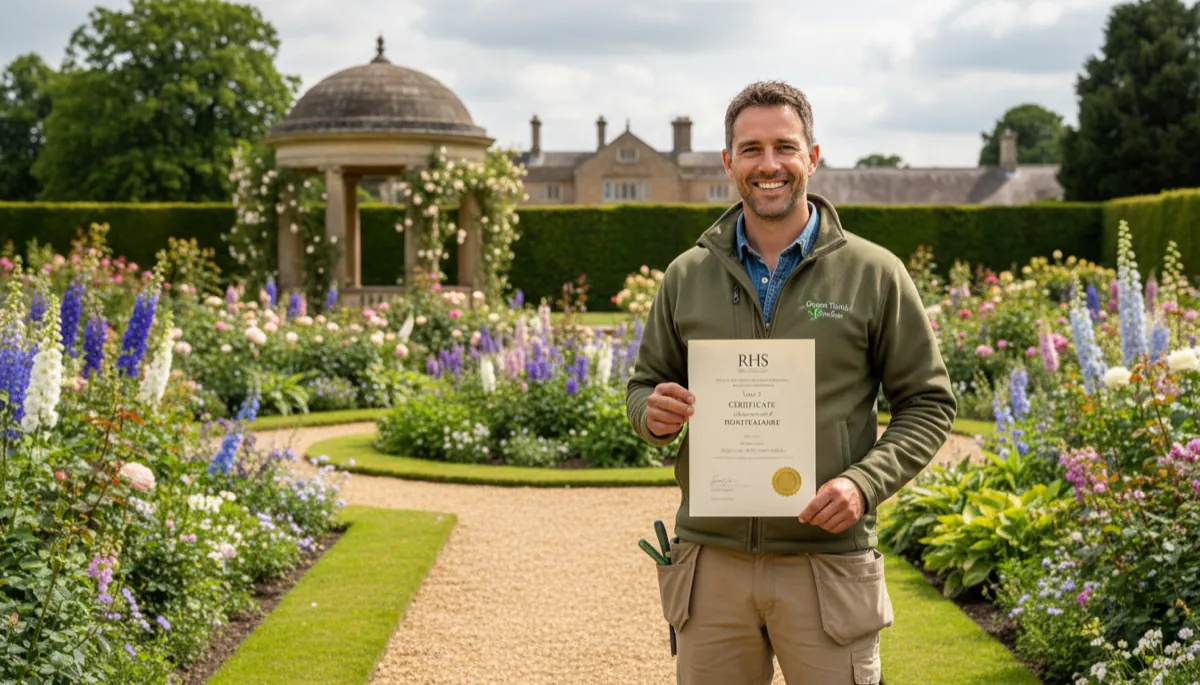
The most widely recognised entry point is the RHS Level 2 Award in the Principles of Horticulture, which costs around £200–£400 through approved providers and gives you a solid foundation in plant knowledge, soil science, and cultivation techniques. For more practical, site-focused training, LANTRA Awards cover everything from hard landscaping NVQs to chainsaw licences and forklift tickets.
One legal requirement that catches people out: if your work involves applying pesticides or herbicides — weedkiller on a patio, algae treatment on a driveway — you legally need a PA1 and PA6 certificate. Training and testing costs around £200–£400 through approved LANTRA or BASIS providers. Without these, you can’t apply pesticides commercially in the UK under the Plant Protection Products Regulations 2011.
For a full breakdown of which qualifications are worth pursuing at each career stage, see our guide to landscaper qualifications UK.
Step 2: Register Your Business
Most landscapers starting out choose sole trader status. It’s free, simple, and you can upgrade to a limited company later when the tax benefits make sense (usually around £40,000–£50,000 annual profit).
| Structure | Setup Cost | Annual Filing | Best For |
|---|---|---|---|
| Sole trader | Free | Self-assessment return | Starting out, under £50k/year |
| Limited company | £12 via Companies House | Corporation tax + confirmation statement | Higher earners, commercial clients |
| Partnership | Free | Shared self-assessment | Two landscapers going into business together |
To register as a sole trader, go to gov.uk/register-for-self-assessment. HMRC will send you a Unique Taxpayer Reference (UTR) number within 10 working days. Register as soon as you start trading — HMRC’s deadline is 5 October following the end of your first tax year, but earlier is better.
You’ll file a self-assessment tax return each January covering the previous tax year. Every legitimate business expense reduces your taxable income: tools, van running costs, fuel, insurance, PPE, training, phone, and materials all count. Keep receipts for everything from day one.
Step 3: Get Insurance Sorted
You need insurance before you take your first paid job. The essentials for a landscaping business:
| Cover Type | What It Pays For | Typical Annual Cost |
|---|---|---|
| Public liability (PLI) | Third-party injury or property damage | £120–£350/year |
| Tools and equipment | Theft or damage to your kit | £100–£300/year |
| Employers’ liability | Legally required if you employ anyone, even temporarily | £150–£400/year |
| Van insurance | Commercial vehicle cover for tools and business use | £800–£2,000/year |
PLI for landscapers typically starts at £1 million cover, but check your client contracts — some commercial customers and local councils require £5 million minimum. Specialist providers like Tradesman Saver, Simply Business, and Hiscox all offer trade-specific policies that bundle PLI with tools cover at a competitive rate.
Step 4: Budget for Your Tools and Equipment
This is where the numbers vary most. A soft landscaping business — lawn maintenance, planting, weeding, pruning — can start with relatively modest kit. Hard landscaping — patios, driveways, retaining walls — needs more serious investment.
| Type of Work | Minimum Kit | Realistic Startup Cost |
|---|---|---|
| Soft landscaping (lawn, planting) | Mowers, strimmers, hand tools, trailer | £3,000–£6,000 |
| Mixed (soft + hard) | Above plus angle grinder, plate compactor, cement mixer | £6,000–£12,000 |
| Full hard landscaping | Full toolkit, possibly a mini digger or plant hire account | £10,000–£20,000+ |
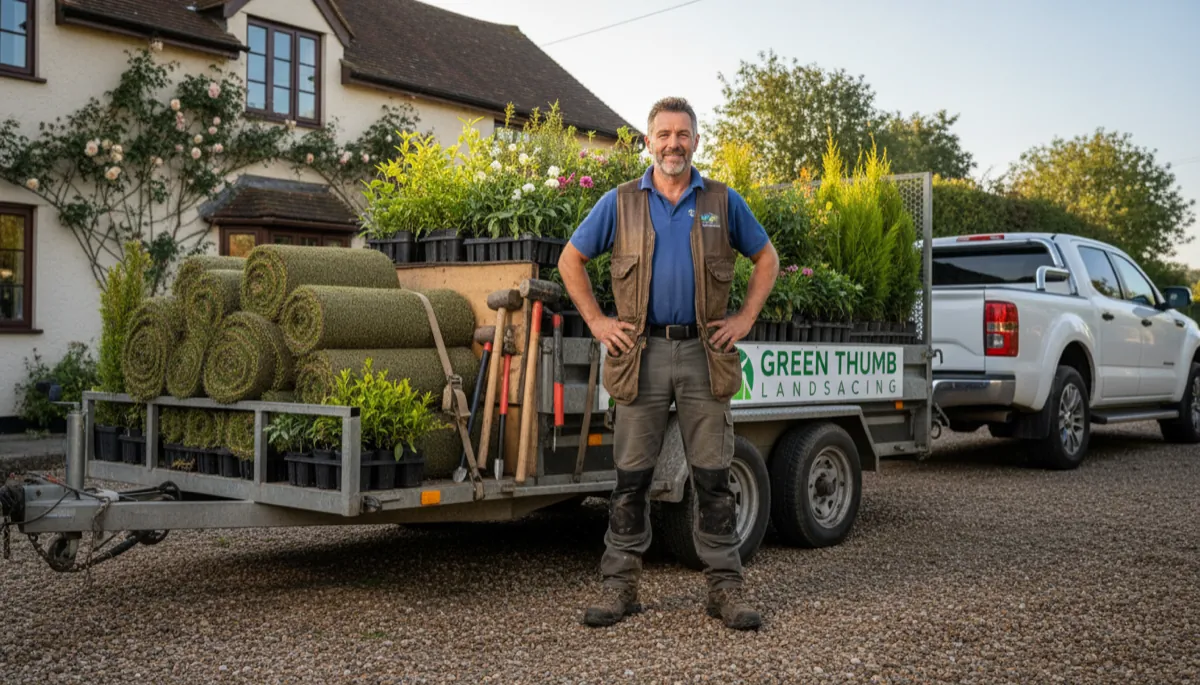
Buying second-hand keeps costs down significantly. Check Facebook Marketplace, eBay, and local tool auctions. A reliable second-hand van with a tow bar, a decent trailer, and good-quality hand tools will take you a long way in the first year without tying up capital in new kit you’re still learning to use.
Mini diggers can be hired from Speedy Hire, HSS, or local plant hire companies for around £150–£250/day. Until you have a steady stream of hard landscaping jobs, hiring beats buying.
Step 5: Set Your Rates
Most landscapers in the UK charge a day rate for project work, with smaller maintenance jobs either day-rated or quoted as a fixed price.
According to industry data, UK landscaper day rates typically range from £150/day for basic maintenance work up to £300+/day for skilled hard landscaping in higher-cost areas like London and the South East. Location, specialism, and experience all affect where you land in that range.
Whatever your day rate, make sure your quotes cover:
- Labour (your daily rate × estimated days)
- Materials (cost + 15–20% markup)
- Plant hire if needed (hire cost + your time managing it)
- Waste disposal — skip hire, green waste, or tip runs add up fast
For a full pricing breakdown by job type, see our landscaper day rate guide.
Step 6: Get Your First Customers
Word of mouth is how almost every landscaping business starts. Tell everyone you know, do excellent work on the first few jobs, ask for a Google review immediately after, and the phone will start ringing.
But word of mouth has a ceiling. To build a business that generates steady enquiries without relying on who you know, you need to be findable online.
The fastest free win is your Google Business Profile. Set it up at business.google.com, add photos of your work, list your services and service area, and start collecting reviews. When someone nearby searches “landscaper near me”, a complete, well-reviewed profile puts you in the local results ahead of most competitors.
Trade directories — Checkatrade, Rated People, MyBuilder — can supplement this, but they charge per lead or per year. A professional website generates enquiries without an ongoing lead cost and gives you something to send people to when they ask “have you got a website I can look at?”
For a detailed breakdown of marketing channels and what actually works for landscapers, see our marketing for landscapers guide.
Getting a Website for Your Landscaping Business
A website isn’t a nice-to-have when you’re starting out. According to Google, 76% of people who search for a local service visit or contact a business within 24 hours. If you’re not findable, those enquiries go to the landscapers who are.
You don’t need anything elaborate. A homepage with your services, a gallery of before-and-after photos, your service area, and a clear way to contact you is enough to turn a Google search into a phone call. A professional site also makes you look more established than a Facebook page alone.
At Digital Tradies, we build websites specifically for tradespeople — including landscapers — from £49/month with no upfront cost. You’re live within three days.
Frequently Asked Questions
Do I need a licence to start a landscaping business in the UK? No. Landscaping isn’t a licensed trade in the UK. Anyone can legally start a landscaping business without a mandatory qualification or registration. That said, working with pesticides requires a PA1/PA6 certificate, and any tree surgery work near roads may require council permits. BALI membership and qualifications like the RHS Level 2 improve your credibility with commercial clients even though neither is legally required.
How much does it cost to start a landscaping business? For a basic soft landscaping setup — a reliable van, trailer, mowers, hand tools, and insurance — budget around £5,000–£8,000. Hard landscaping adds significantly to that figure, particularly if you need power tools and access to plant hire. Second-hand kit and a hired digger-as-needed approach can reduce startup costs considerably.
Do I need public liability insurance as a landscaper? Yes, practically speaking. While not legally mandatory for sole traders, working without PLI means any accident on a client’s property — a broken greenhouse, a damaged fence, a trip on displaced turf — comes out of your own pocket. Most clients, especially commercial ones, require proof of PLI before you start. Landscaping PLI typically costs £120–£350/year.
How do I get my first landscaping customers? Start with your existing network — friends, family, neighbours, and anyone you’ve worked for previously. Do excellent work, take before-and-after photos, and ask every satisfied customer for a Google review. Set up a Google Business Profile immediately. Once you have three or four genuine reviews, enquiries will start coming through organically without you chasing them.
When should I go limited company? For most sole trader landscapers, the switch to a limited company makes financial sense around £40,000–£50,000 annual profit. Below that, the additional admin burden (filing accounts, running payroll, Companies House confirmation statements) rarely justifies the tax savings. A good accountant can run the numbers for your specific situation — this is worth paying for once your business is established.