Roofing work has a rhythm that most other trades don’t. Spring phones start ringing. Summer books up fast. Winter gets quiet — sometimes dangerously so. If you’re not actively building your workload outside of peak season, you’re always chasing your tail.
Getting more roofing work consistently comes down to being easy to find, easy to trust, and smart about which relationships you build. This guide covers 12 specific tactics, many of which cost nothing, that experienced roofers use to keep their diaries full year-round.
Key Takeaways
- NFRC (National Federation of Roofing Contractors) membership lists your business on an approved installer database that homeowners and property managers actively search
- Storm damage creates urgent, less price-sensitive enquiries — having a process ready to handle insurance work quickly converts these into reliable revenue
- Scaffolding companies are one of the most overlooked referral sources: they see every job in your area before it starts and can recommend you directly to homeowners
- Roof surveys offered as a free or low-cost service generate paid work — a homeowner who has just had a survey done almost always uses the same roofer to carry it out
- According to BrightLocal’s 2025 Local Consumer Review Survey, 98% of consumers used the internet to find a local business in the past year — if you don’t appear on Google, those calls are going somewhere else
- Booking summer work in spring prevents the summer rush from running out — proactive customers who plan ahead are easier to work with and rarely haggle on price
1. Answer the Phone — and Fast
Homeowners searching for a roofer usually call two or three at once. A leaking roof in November isn’t something people delay on. Whoever answers quickest, or calls back within 15 minutes, almost always gets the job.
If you’re on the tools and can’t answer, your voicemail matters. “Hi, I’m on site — leave your number and I’ll call you back within the hour” is better than silence or a generic message. Set a reminder and call between jobs. The ones who disappear into a missed call log usually don’t get rebooked.
2. Join the NFRC and Get on Installer Locators
The National Federation of Roofing Contractors (NFRC) is the UK’s largest roofing trade body. Homeowners, architects, and property managers regularly use their Find a Contractor tool to locate vetted roofers.
Membership also carries credibility in quotes and estimates. “NFRC member” tells a customer you’ve been vetted, that you carry proper insurance, and that there’s somewhere to go if things go wrong. For customers comparing quotes from two unfamiliar roofers, that signal can tip the decision.
Once a member, make sure your listing is complete: service area, trades covered (pitched, flat, lead, chimney), and a current contact number.
3. Build Storm Damage Into Your Business
Storm damage work is different to planned re-roofing. The homeowner is stressed, often dealing with a leak inside the house, and wants someone there quickly — not next week. Price sensitivity is low. Speed matters more than anything else.
When a named storm comes through, expect enquiries to spike within 24–48 hours. If you respond fast, do a quick inspection, provide a clear written report, and can reference experience working alongside insurance adjusters, you’re well ahead of the competition.
The Association of British Insurers reported that weather-related property claims in the UK exceeded £500 million in 2023. That’s a consistent source of reactive work for roofers who position themselves for it.
Keep a simple template ready: a written survey report with photos, a clear description of damage, and a repair quote. Some insurers will accept this directly. Others need a loss adjuster visit first, but having the documentation ready speeds the process for the customer and builds trust.
4. Partner With Scaffolding Companies
Scaffolding firms see roofing work before it happens. When a homeowner books scaffolding, they either have a roofer lined up or they need one. A scaffolding company who recommends you means the lead arrives pre-qualified — the homeowner has already committed to spending money.
Approach two or three local scaffolding firms and introduce yourself. Explain you’re looking for a reciprocal arrangement: you recommend them for any job that needs a scaffold, they pass on your number when someone asks for a roofer. Put the relationship on a solid footing by following through on both sides.
You can also do this with guttering companies, chimney specialists, and loft conversion contractors — all trades that regularly work alongside roofers on the same properties.
5. Book Summer Work in Spring
The roofers who have a full summer diary usually start filling it in March and April. Homeowners who book early are often planning work rather than reacting to a problem — they’re easier to deal with, rarely price-match obsessively, and often have more than one job on the list.
Run a simple ‘book now for summer’ approach from March: mention it on your Google Business Profile, in follow-up messages to enquiries that didn’t convert in winter, and in any social media posts. A small discount for deposits on bookings made before May can also move customers who are sitting on the fence.
6. Offer Roof Surveys as a Lead Generator
A free or low-cost roof inspection gives homeowners a reason to contact you before they have an obvious problem. Older properties in particular — anything built before the 1980s — often have degraded flashing, failing pointing around chimneys, or cracked tiles that the owner doesn’t know about.
Once you’re on the roof and can show the customer photos of issues you’ve found, the conversion to paid work is high. You’ve done the survey, you’re already there, you know the job — the path of least resistance for the customer is to book you.
7. Target Landlords With Flat Roofs
Commercial properties, older terraced rental houses, and converted flats often have flat roofs that need regular maintenance and periodic replacement. Unlike domestic homeowners who make a one-off decision, landlords with multiple properties are repeat customers.
Flat roof felt or EPDM membrane has a lifespan of 15–25 years depending on specification and maintenance. A landlord with six properties is a multi-job customer relationship over time. Contact local letting agents and property management firms — explain that you specialise in flat roofing and that you can produce written condition reports they can share with owners.
The table below shows typical flat roof job types and price ranges in the UK in 2026:
| Job type | Typical price range | Lifespan |
|---|---|---|
| Felt flat roof replacement (garage) | £700–£1,500 | 10–15 years |
| GRP fibreglass flat roof (garage) | £1,200–£2,500 | 20–30 years |
| EPDM rubber roof replacement | £1,500–£4,500 | 20–25 years |
| Flat roof repair (patch/blister) | £200–£600 | Varies |
8. Follow Up on Quotes You Didn’t Win
Roofers submit a lot of quotes that go quiet. Some of those homeowners are comparing prices. Some just got busy. A few are waiting to see if a leak gets worse before spending the money.
A text message four or five days after sending a quote rarely offends anyone: “Hi, just checking if you had a chance to look over the quote for the roof repair — happy to answer any questions.” You’ll occasionally convert one that would otherwise have been written off. Over a year, that adds up to real work.
9. Ask for Referrals After Every Job
Customers who’ve had a good experience will recommend you — but most do it only when someone asks them directly. At the end of a job, once the scaffold is down and the customer is happy, say: “If you know anyone with a roof job coming up, I’d really appreciate you passing on my number.”
Roof jobs are referred constantly. Neighbours notice scaffolding. Family members mention it. A single referral from a happy customer on a re-roofing job could be worth thousands of pounds of work.
10. Get on Lead Generation Sites
Checkatrade, MyBuilder, and TrustATrader connect homeowners with local trades. They’re not a long-term strategy on their own, but they can fill gaps while you build your own profile.
Compare cost-per-lead against your average job value before committing to a membership. A roofing re-cover on a 3-bed house runs £3,000–£8,000 depending on specification. A lead generation site that costs £150/month and delivers even one completed re-roof job per month is paying for itself several times over.
11. Use Your Van Properly
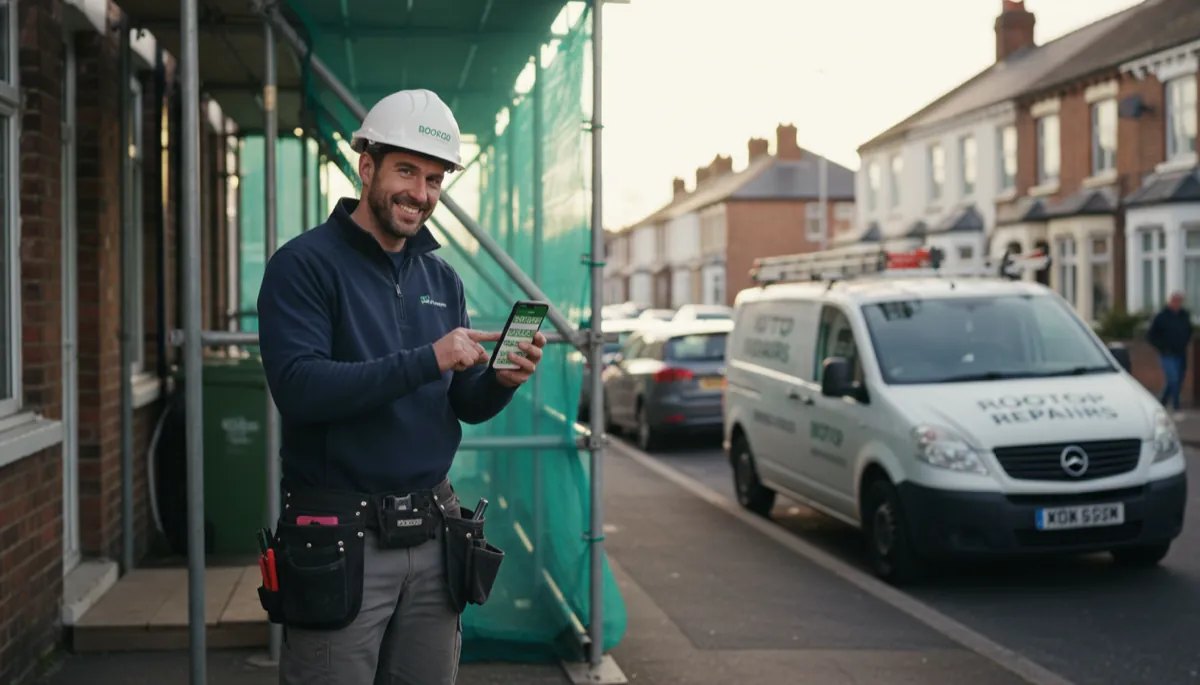
A branded van parked outside a job is advertising that reaches your local area every day you’re working. Neighbours notice it. People taking photos of your scaffold also see the van.
Keep it clean and professionally sign-written: your name, number, key services (NFRC member, flat roofing, emergency repairs), and a website address if you have one. A sharp-looking vehicle reinforces the impression made by a tidy job site. A faded or unbranded one is a missed opportunity on every street you park on.
12. Make Your Online Presence Do the Work
Most people search for a roofer online before they call anyone. According to BrightLocal’s 2025 Local Consumer Review Survey, 98% of consumers used the internet to find a local business in the past year. If your Google Business Profile has no reviews, or your website looks like it hasn’t been updated since 2015, some of those searches convert to someone else’s phone ringing.
You don’t need an expensive website. You need one that loads fast, lists your services clearly, shows you’re a real business (NFRC membership, insurance, certifications), and makes it obvious how to call or message you.
For more on the digital side, see our guide to marketing for roofers and SEO for roofers.
If you need a professional site quickly, Digital Tradies builds websites for roofers from £49/month — no upfront cost, live in three days.
Frequently Asked Questions
Is there a shortage of roofers in the UK? Yes. The CITB’s 2024–2028 Construction Skills Network report identifies roofing as one of the trades with persistent workforce shortages, driven partly by an ageing workforce and limited new entrants. For skilled roofers already working, that shortage generally means more enquiries and less price pressure.
What is the biggest problem roofers face getting more work? Seasonality and competition at the lower end of the market. Most roofers are busy in summer and quiet in winter. The roofers who handle this best have built relationships — with landlords, property managers, scaffolding companies — that send work throughout the year rather than relying entirely on homeowners reacting to problems.
What types of roofing work have the best margins? Flat roof replacement in EPDM or fibreglass tends to offer better margins than felt re-roofs, with less material waste and faster installation. Lead valley and flashings work, chimney rebuilds, and full pitched roof replacements also carry good margin. Emergency repairs are lower value individually but arrive in clusters after storms and carry premium rates.
How do I handle the quiet winter months? Use winter to price and plan summer work, maintain existing customer relationships, and pitch landlords on pre-spring roof surveys and maintenance contracts. Some roofers take on fascia, soffit, and guttering work in winter as a complementary income stream that uses the same scaffold and van.
Steady roofing work doesn’t usually come from one big change. It comes from a few habits applied consistently — answering fast, following up, and building relationships that send work without you having to chase it.
If you’re ready to sharpen your online presence, see the roofer hourly rate guide for pricing context, or check out Digital Tradies if a professional website is the next step. Sites for roofers start from £49/month with no upfront cost.