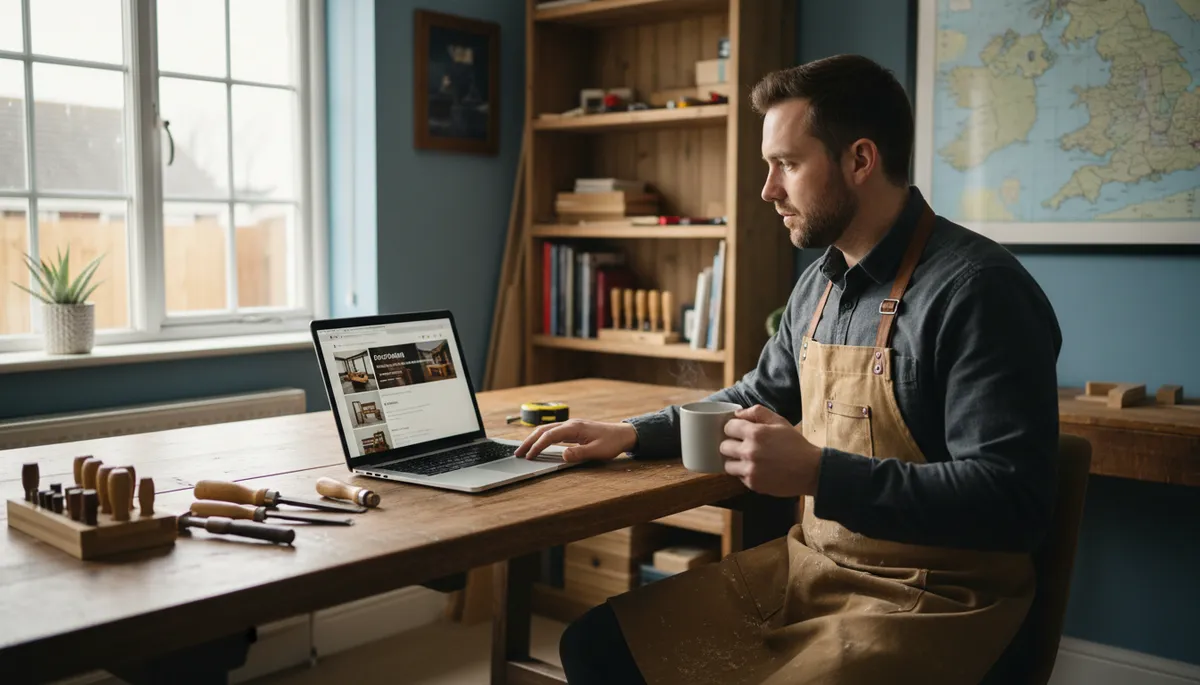
Yes, joiners need a website. Joinery is one of the most visual trades there is, and most joiners already know this — which is why many rely on Instagram or Facebook to show off their work. The problem is that social platforms don’t rank in Google when someone searches for a joiner in your area. A website does.
This article covers what a website gives joiners that Instagram can’t, which joinery jobs come from online searches, and how the right website helps you win premium work.
Key Takeaways
- Bespoke joinery — staircases, fitted wardrobes, custom furniture — is a planned, high-value purchase where customers research for days before contacting anyone
- Instagram shows your work to people who already follow you; a website brings in customers who’ve never heard of you through local Google searches
- According to BrightLocal’s 2024 Local Consumer Review Survey, 98% of UK consumers used the internet to find local business information in the past year
- A professional website lets you organise your portfolio by category — staircases, fitted wardrobes, doors, furniture — in a way no social platform allows
- A clear, high-quality web presence helps justify premium pricing before the first call; managed joiner websites start from £49/month with no setup fee
The Instagram Trap
Joiners create genuinely photogenic work. A bespoke staircase or a run of hand-built fitted wardrobes photographs beautifully, and Instagram rewards that kind of content. It’s easy to build up a following, get likes, and feel like you’ve got your marketing covered.
The issue is that Instagram doesn’t put you in front of new customers who are actively looking for a joiner. Those customers go to Google. They type “joiner near me” or “fitted wardrobes [town]” — and Google returns websites, not Instagram profiles.
Your Instagram followers are mostly people who already know you: past customers, other trades, friends, people who enjoy craft content. That’s warm audience work, and it has value. But the customer who’s planning a loft conversion and needs a bespoke staircase, or the homeowner who wants a run of fitted wardrobes in two bedrooms — they start on Google, not Instagram.
If you’re not visible on Google for those searches, that work goes to whoever is.
Which Joinery Jobs Come From Online Searches
Not every joinery enquiry involves research. A neighbour recommendation for a door fitting might not involve Google at all. But the higher-value joinery jobs — the ones that make a real difference to your turnover — involve customers doing their homework first.
| Job type | Typical value | Customers research online? |
|---|---|---|
| Bespoke fitted wardrobes | £1,500–£5,000 | Almost always |
| Bespoke staircase | £2,000–£8,000 | Almost always |
| Custom kitchen units (joinery component) | £3,000–£10,000+ | Always |
| Loft room fitout (built-ins, storage) | £1,500–£4,000 | Usually |
| Bespoke home office / study fitout | £1,000–£3,500 | Usually |
| Custom furniture (bookcases, dining tables) | £500–£3,000 | Often |
| Door hanging / external door fitting | £100–£350 per door | Rarely |
Fitted wardrobes, staircases, and custom kitchen work are planned projects. Customers spend time looking at examples, comparing quality, reading reviews, and checking that the joiner they contact does the kind of work they’re looking for. A website is where all of that research leads — and without one, you’re not in the running.
Portfolio Organisation: Where Websites Win
Joinery covers a lot of ground. A skilled joiner might do fitted wardrobes, hardwood staircases, bespoke doors, built-in storage, garden rooms, and custom furniture — sometimes for the same customer. The problem with Instagram and Facebook is that all of your work sits in one undifferentiated scroll.
A customer who’s planning fitted wardrobes and lands on your Instagram sees your staircase photos, your furniture, your door fittings — everything mixed together. They have to scroll to find examples of what they actually want, and many won’t bother.
A website lets you organise by category. A “Fitted Wardrobes” gallery shows only wardrobes. A “Staircases” gallery shows only staircases. The customer who wants wardrobes sees only relevant examples, gets confident quickly, and contacts you.
That structure also helps with Google rankings. A website with a dedicated page for “fitted wardrobes in [your area]” is more likely to appear when someone searches that exact phrase than a general Instagram profile with no location context.
According to BrightLocal’s research, consumers read an average of 7 reviews before trusting a business. Reviews sit permanently on your website. On Instagram, they don’t appear at all — customers have to go hunting on Google or Checkatrade to find them.
A Website Helps You Charge What You’re Worth
There’s another reason a professional website matters specifically for joiners: positioning.
Bespoke joinery is not cheap to produce. Hand-cut dovetails, solid hardwood, precision fitting, site-made staircases — these take time and skill that justifies a premium price. The problem is that without a professional web presence, customers have no way to gauge your quality before they call.
A customer who finds you through a recommendation, Googles your name, finds nothing, then calls you cold has no frame of reference for your work or your pricing. They’re comparing you on price alone because they’ve got nothing else to go on.
A well-built website changes that. Before they call, they’ve seen your gallery, read your reviews, understood the quality of your work. They arrive at the first conversation already expecting to pay a fair rate for craft joinery — not shopping for the cheapest quote.
The British Woodworking Federation (BWF) has over 600 member companies across the UK. Displaying your BWF membership or any other trade accreditation on your website tells customers you’re professionally accountable before a word has been spoken. That’s the kind of credibility signal that makes a difference when you’re pitching for £5,000 staircase work.
What About Checkatrade and Leads Sites?
Leads platforms like Checkatrade and MyBuilder can generate enquiries, but they come with a cost: you’re always listed next to several other joiners competing for the same customer. Price becomes the main differentiator because all profiles look similar.
Your own website is the only place online where you’re the only joiner. Customers who find you through your site are already looking at your work specifically — not comparing you side-by-side with three others.
The two approaches work differently. A leads site provides volume; your website builds preference. The longer-term business comes from customers who chose you specifically, not customers who were price-shopping and happened to pick you.
For a fuller picture of how joiners can grow their business online, the SEO guide for tradesmen covers how to improve your Google visibility step by step.
Frequently Asked Questions
Do I need a website if I already get enough work through word of mouth?
Referrals are the most reliable source of work when business is strong, but they’re hard to predict and impossible to scale. A website doesn’t replace referrals — it captures the people those referrals almost convert but don’t, and brings in new customers who haven’t been recommended to you yet. Most joiners who invest in a site find it opens a second, more consistent enquiry channel alongside word of mouth.
Can’t I just use Instagram or Facebook instead of a website?
Instagram is excellent for visual trades, but it doesn’t appear in Google search results for service queries. When someone searches “fitted wardrobes [your town]”, they find websites — not Instagram pages. Social platforms keep you visible to your existing audience; a website brings in people who’ve never heard of you. Both have a role, but they do different jobs.
How much does a joiner website cost?
Managed joiner websites start from £49/month through services like Digital Tradies, with no upfront cost and the site live within 3 days. That covers professional design, hosting, SEO foundations, and ongoing support. A single fitted wardrobe job won through the website typically pays for more than a year of that monthly cost.
What should a joiner website include?
The essentials are a portfolio organised by job type, clear contact details, your location and service area, any trade accreditations (BWF, CSCS), and customer reviews. A short section on your process and lead times helps customers understand what working with you involves — reducing back-and-forth before the first call.
The Bottom Line
Joinery is skilled, visual, premium work. Customers planning bespoke fitted wardrobes or a hardwood staircase will research before they call — and they research on Google. A professional website makes sure you’re visible when that research happens, shows your work in its best light, and gives customers the confidence to choose you over someone with a cheaper-looking profile.
If you want to stop relying entirely on word of mouth and build a steady flow of enquiries from customers actively looking for a joiner, Digital Tradies builds professional websites for joiners from £49/month — no upfront cost, live in 3 days.