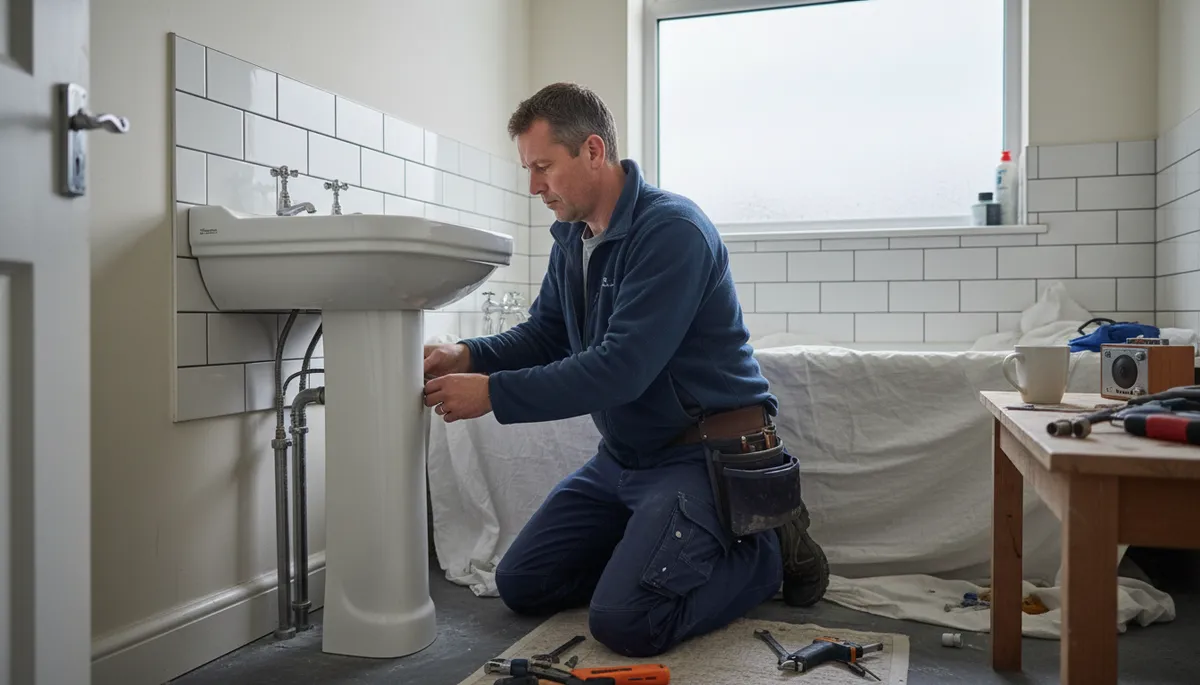
Most self-employed bathroom fitters in the UK charge between £150 and £300 per day for labour-only work in 2026. That range is wide because location, experience, and job type all pull the number in different directions. According to data from Checkatrade and Hamuch, the national average sits around £200–£250 per day, with London and the South East pushing closer to £300–£400. If you’re a sole trader pricing jobs from guesswork or copying what the last company charged, this guide gives you the actual figures — and the logic for setting a rate that works for your business.
Key Takeaways
- UK bathroom fitter day rates average £200–£250/day for labour-only work nationally
- London and South East rates reach £300–£400/day for experienced fitters
- Employed bathroom fitters typically earn £100–£180/day — sole traders earn more because they carry more risk and overhead
- A complete bathroom installation usually takes 5–7 working days depending on scope; factor this into your total quote
- Your day rate must cover insurance, van costs, tools, non-billable admin time, and unpaid sick days — not just labour hours
- Labour-only jobs carry different pricing logic to supply-and-fit work
What Is a Bathroom Fitter’s Day Rate?
A bathroom fitter’s day rate is the labour charge for one full working day — typically 8 hours on site. It covers your time and skill. Materials — suite, tiles, pipes, sealant, waste fittings — are priced separately and either supplied by the customer or itemised in a supply-and-fit quote.
Day rates are most practical for multi-day jobs: full bathroom replacements, en suite fits, or wet room conversions. For smaller work — a tap change, a toilet replacement, a single tray and screen — most fitters quote per job rather than splitting the cost across a part-day.
UK Bathroom Fitter Day Rates 2026
Based on data from Checkatrade’s 2026 pricing guide and Hamuch’s national rate analysis, here’s where day rates typically fall for labour-only bathroom fitting:
| Experience Level | Typical Day Rate (Labour Only) |
|---|---|
| Apprentice / trainee (supervised) | £60–£100 |
| Newly qualified (under 3 years solo) | £100–£160 |
| Experienced sole trader, regions | £160–£250 |
| Experienced sole trader, Midlands / North | £150–£230 |
| Experienced sole trader, South East | £220–£320 |
| Experienced sole trader, London | £280–£400 |
| Multi-skilled fitter (plumbing + tiling + electrics) | £250–£400+ |
Hamuch’s data puts the UK average across all locations at approximately £248/day. Checkatrade notes that employed bathroom fitters earn around £132/day, while sole traders set their own rates significantly above that to account for overheads and risk.
Regional Day Rates: What the Market Pays
Location has a direct effect on what you can realistically charge. Here’s a regional snapshot based on trade data and Hamuch’s 2026 analysis:
| Region | Average Day Rate (Labour Only) |
|---|---|
| London | £280–£400 |
| South East | £220–£320 |
| East of England | £190–£270 |
| South West | £170–£250 |
| East Midlands / West Midlands | £155–£230 |
| Yorkshire & Humber | £150–£220 |
| North West | £150–£225 |
| North East | £140–£200 |
| Scotland | £155–£220 |
| Wales | £145–£200 |
If you’re working in Manchester and charging London rates, expect to lose quotes to local competitors. If you’re working in London and charging £180/day, you’re significantly undervaluing your work relative to your running costs in that market.
Labour-Only vs Supply-and-Fit: Different Pricing Logic
Labour-only means the customer buys the bathroom suite themselves and you charge purely for installation. Your day rate is your income. The upside: no capital tied up in materials, no supplier invoice chasing. The downside: if the customer buys the wrong cistern or orders tiles short, you wear the delay.
Supply-and-fit means you source the materials and mark them up. Typical trade markup on sanitaryware runs 20–40%; on tiles, 25–50%. Your quote includes both the materials cost and your labour. This increases turnover but adds admin, supplier relationships, and working capital.
Many sole traders do both, depending on job size. For small jobs, labour-only is simpler. For full bathroom fits where you’re managing the whole project, supply-and-fit gives you better control of quality and timeline.
When quoting supply-and-fit, don’t reduce your labour rate to make the total look more competitive. Materials and labour are separate costs — the labour component should still reflect your going day rate.
How Long Does a Bathroom Fit Take?
Knowing your day rate only helps if you’re realistic about how long jobs take. A common pricing mistake is quoting optimistically, then underearning when the job runs long.
| Job Type | Typical Duration (Labour Days) |
|---|---|
| Straight swap (same layout, no structural work) | 3–5 days |
| Full bathroom renovation (new layout) | 5–8 days |
| En suite from scratch (existing shell) | 4–6 days |
| Wet room conversion | 5–7 days |
| Shower enclosure only | 1–2 days |
These estimates assume one fitter. If you subcontract the tiling or plastering, those days don’t sit in your quote — but you need to build in coordination time.
If you’re working on a full renovation and it’s a 6-day job at £220/day, your labour quote is £1,320. That’s before materials. According to Drench’s 2025 cost guide, total bathroom installation costs (including materials) typically run £3,500–£8,000+ for a mid-range full renovation, with labour accounting for roughly 35–45% of that total.
What Your Day Rate Needs to Cover
A lot of self-employed bathroom fitters set their day rate by looking at what a local company charges, then going slightly lower. That approach doesn’t account for your actual costs as a sole trader.
Your day rate must cover:
| Cost Item | Annual Estimate |
|---|---|
| Public liability insurance | £400–£900/year |
| Van insurance | £1,200–£2,500/year |
| Van running costs (fuel, servicing, tyres) | £3,000–£6,000/year |
| Tools — replacement, repairs, new purchases | £500–£1,500/year |
| Waste disposal / skip costs (if charged to you) | Variable |
| Unpaid sick days (self-employed = no sick pay) | 5–10 days/year |
| Non-billable admin (quotes, calls, invoices) | 1–2 days/week |
| Tax and National Insurance (Class 4) | ~30% of profit |
If you work 220 billable days per year and your total annual overhead (excluding materials) is £15,000, you need to earn at least £68/day just to break even on overheads — before paying yourself anything. That’s why pricing below £150/day as a sole trader leaves very little margin once you account for real costs.
The related guide on how to price a bathroom installation covers the full breakdown including materials, markup, and contingency allowances for hidden issues.
Bathroom Fitter vs Plumber Day Rates
There’s sometimes confusion between what a bathroom fitter charges and what a plumber charges. The two roles overlap but aren’t the same.
A bathroom fitter typically handles the full installation — floor prep, suite fitting, tiling coordination, accessories, sealant. A plumber focuses specifically on the pipework connections and may not tile or do carpentry. On a full bathroom renovation, you might have both on the job at different stages.
Plumber day rates in 2026 run £200–£350/day nationally, reaching £350–£500 in London. A multi-skilled bathroom fitter who can also handle the plumbing connections often commands similar rates — and reduces the need for a separate contractor, which saves the customer coordination and cost.
Frequently Asked Questions
What do bathroom fitters charge per day in the UK? Most self-employed bathroom fitters charge £150–£300 per day for labour-only work in 2026. The national average sits around £200–£250, with London and the South East reaching £280–£400. Rates vary based on experience, location, and whether the job is labour-only or supply-and-fit.
How much does labour cost to fit a bathroom? For a full bathroom renovation taking 5–7 days, labour costs typically run £1,000–£2,100 at standard regional rates. In London, expect £1,500–£2,800 for the same scope. These figures cover fitting only — materials are additional. According to Drench’s 2025 bathroom cost guide, total renovation costs run £3,500–£8,000+ depending on fixtures and finish level.
Do bathroom fitters make good money? A self-employed bathroom fitter working 200 billable days per year at £220/day earns £44,000 gross. After overheads (insurance, van, tools: typically £8,000–£12,000/year) and tax, net take-home is roughly £22,000–£28,000. London rates and supply-and-fit margins can push this higher. The key variable is utilisation — how many days you actually bill versus the days you’re quoting, travelling, or off sick.
Should I charge a day rate or a fixed price? Most bathroom fitters use a fixed price for full project quotes — it gives customers certainty and helps you win work. But you arrive at that fixed price by estimating the number of days and multiplying by your day rate, then adding materials and contingency. Your day rate is the building block of every quote, even when the customer never sees it itemised.
Is it worth being VAT registered as a bathroom fitter? If your annual turnover exceeds £90,000, VAT registration is compulsory. Below that threshold, registering voluntarily can benefit you if your customers are businesses who can reclaim VAT. For residential customers (homeowners), adding 20% VAT makes you 20% more expensive than non-registered competitors — so most sole traders trading below the threshold don’t register early.
Building Your Profile Online
Bathroom fitting is a competitive local market. Many fitters find work through word-of-mouth for years, then hit a ceiling when referrals slow down. A professional website changes that — it gives you somewhere to send Google searchers, display your work, and collect enquiries without depending entirely on Checkatrade listings.
At Digital Tradies, websites for tradespeople start from £49/month with no upfront cost. You get a professional five-page site, hosting, and ongoing support — live in three days. For bathroom fitters building a steady local client base, it’s worth considering alongside the usual directory listings.